
This post may contain affiliate links. Please see my disclosure policy for details.
Start With Your Bed (Because Duh, Right?)
Contents
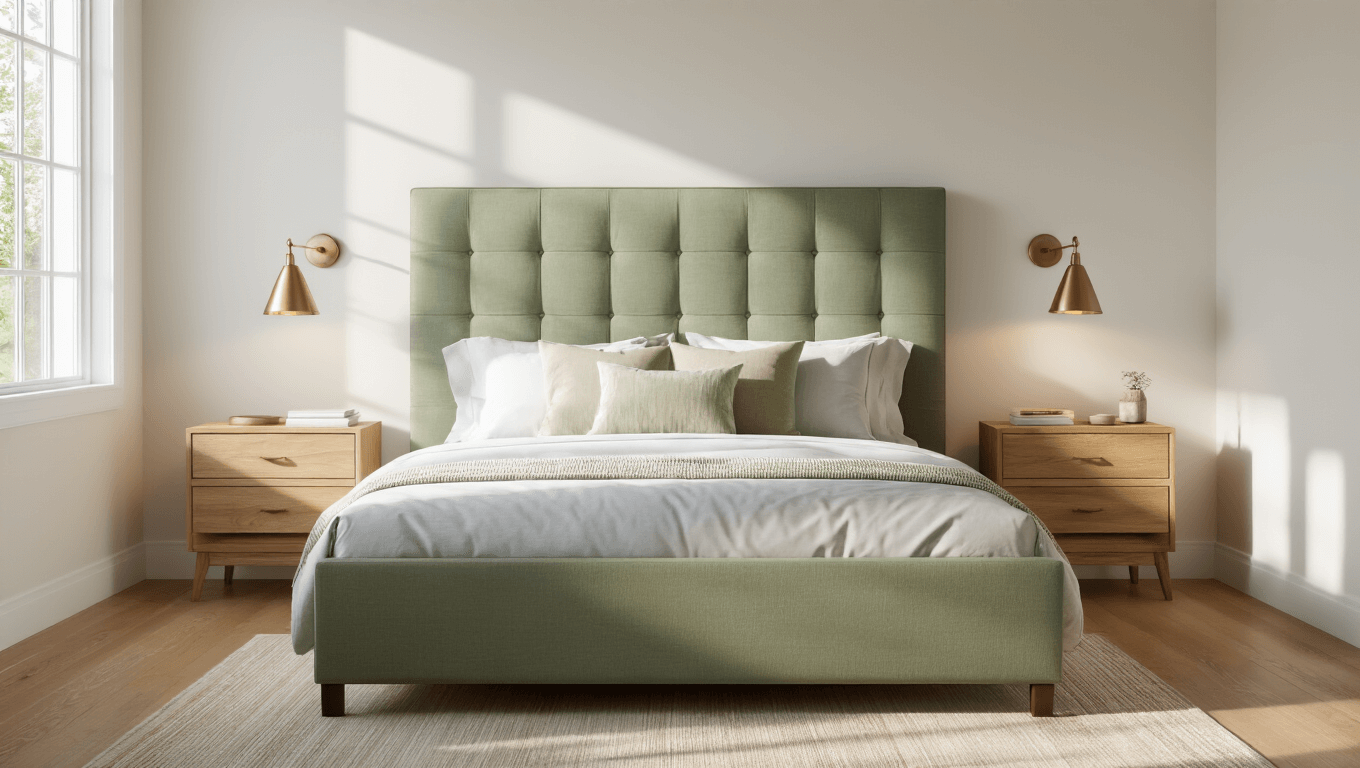
Your bed isn’t just furniture—it’s the entire point of the room. Everything else orbits around it like planets around the sun.
The centered bed approach changed my life. I placed my upholstered bed frame smack in the middle of the longest wall, facing the door. Suddenly, my room felt intentional instead of like I’d just shoved things wherever they’d fit.
This setup gives you:
- Equal access from both sides (no more crawling over your partner at midnight)
- Natural symmetry that your brain loves
- Space for matching nightstands without the squeeze
But here’s the thing—centered doesn’t work for everyone. My sister’s bedroom has a massive window on that wall, so she pushed her bed against the side wall instead. It freed up floor space and let her actually enjoy that view instead of staring at her headboard.
Small Bedroom? Join the Club
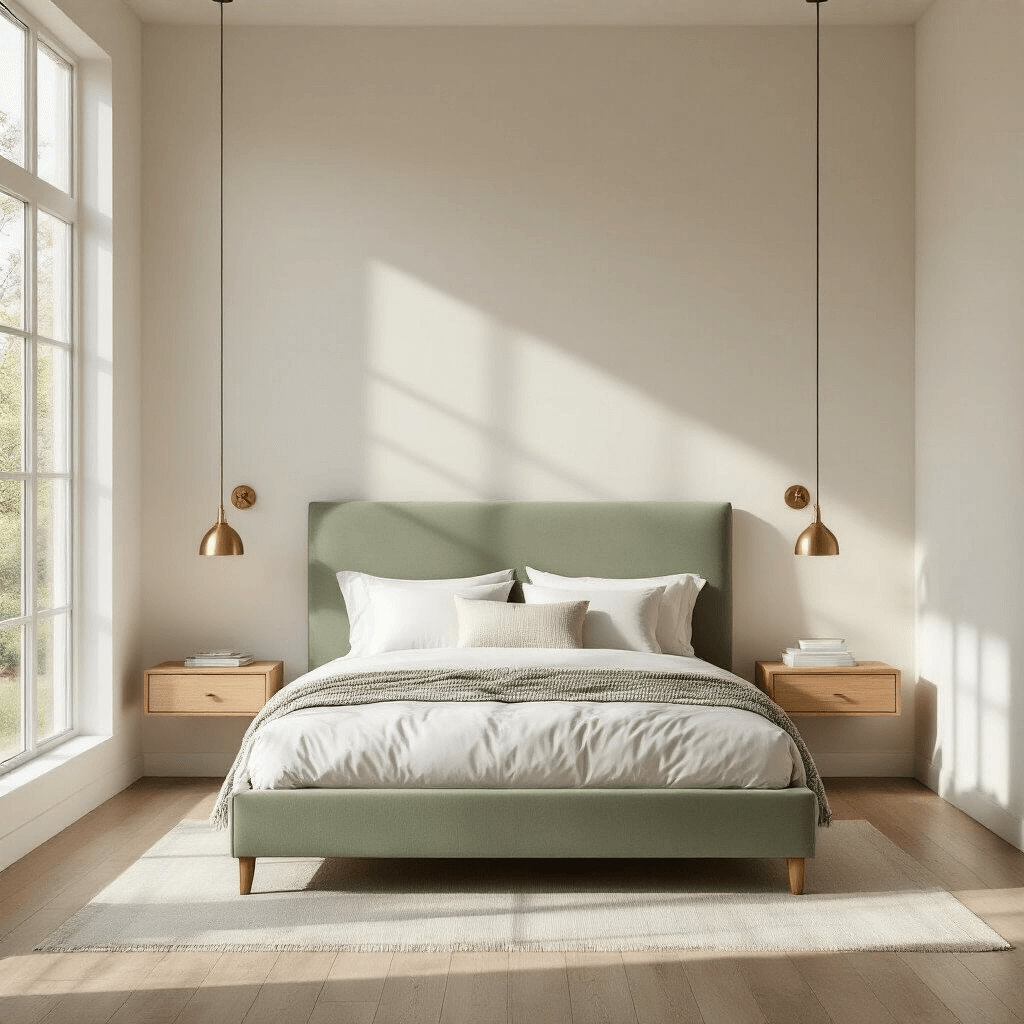
My first apartment bedroom was 10×10 feet. Ten. By. Ten. I thought I’d need to choose between a bed and literally anything else.
The five-piece miracle saved me: bed, two slim nightstands, one dresser, and strategic restraint. That’s it. No clutter, no chaos, just breathing room.
For tiny spaces, try these game-changers:
- Wall-mounted everything: I swapped bulky nightstands for floating nightstand shelves with a single drawer
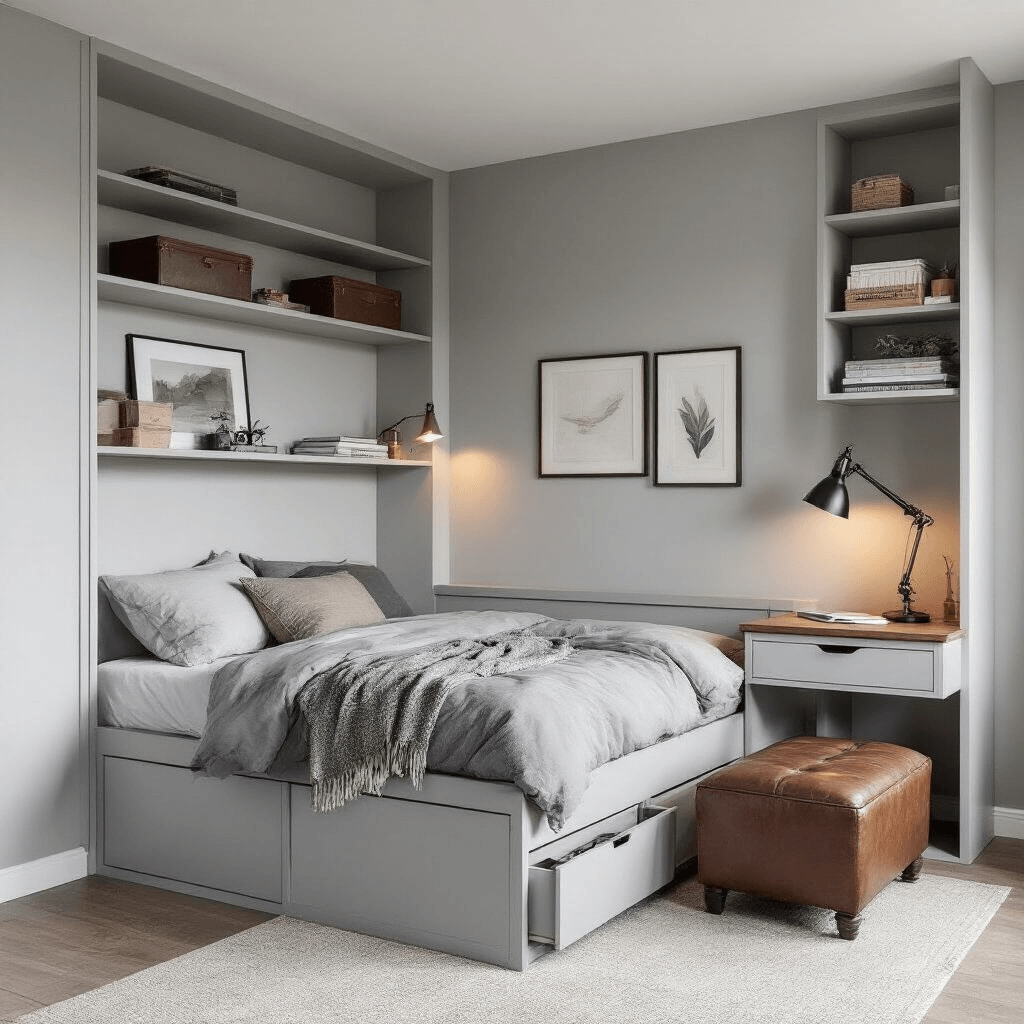
- Under-bed storage: Got a platform bed with storage drawers and ditched half my dressers
- Corner rotation: Angled my bed into the corner (yes, really) and suddenly had room for a reading chair
- Vertical thinking: Installed floor-to-ceiling shelving in the dead space beside my closet
The corner bed thing sounds weird, I know. But in a genuinely tiny room, it can create more usable floor space than any other configuration. Just make sure you can still change your sheets without requiring a yoga certification.
The Nightstand Situation Nobody Talks About
You don’t actually need two nightstands. Revolutionary, I know. When I moved into a narrow bedroom, I kept one nightstand on my side and put a small upholstered storage bench at the foot of the bed instead. My partner uses a wall-mounted shelf above his side. Problem solved, relationship intact.
Nightstand alternatives that actually work:
- Stacked vintage suitcases (I’m not even being hipster—they look cool and hold stuff)
- A slim bookshelf turned sideways
- A small ladder shelf leaning against the wall
- An acrylic side table that disappears visually
- Literally nothing—gasp!—with an overhead reading light instead
The design police aren’t coming for you if things don’t match.
When Your Room Is Shaped Like a Shoebox
Long, narrow bedrooms are architectural revenge for something we did in a past life. The worst move? Putting your bed across the narrow width. It turns your room into a hallway with a mattress.
The fix: Bed goes lengthwise along the long wall, headboard centered. I added a tall dresser at one end and kept the other end open for flow. This setup makes narrow rooms feel like intentional corridors of calm instead of claustrophobic tunnels.
Skip the bulky furniture on the opposite wall—use floating shelves or keep it bare. Your eyes need somewhere to rest.

Furniture That Pulls Double Duty
Every piece in a bedroom should earn its keep. My bedroom dresser? Also my TV stand. The bench at the end of my bed? Storage inside for extra blankets and my seasonal wardrobe overflow.
Multifunctional heroes:
- Ottoman with storage: Sits at the foot of the bed, holds blankets, provides seating
- Desk that folds: Work from home without sacrificing floor space permanently
- Mirror on the closet door: Full-length check without wall space
- Headboard with shelves: Built-in nightstand vibes without the footprint
- Dresser as TV stand: Two birds, one beautifully organized stone
I resisted the storage bed for years because I thought they looked clunky. Then I found one that didn’t look like a captain’s bed from 1987, and my bedroom storage problems evaporated. No more under-bed dust bunnies, just organized drawers.
The Light Situation Changes Everything
Natural light dictates more than you realize. I once positioned my bed directly under a window because a design blog said it looked “romantic.” Know what’s not romantic? Sun in your face at 6 AM every summer morning and a drafty head all winter.
Light-smart positioning:
- Bed perpendicular to windows (light floods the room, not your face)
- Mirrors opposite or adjacent to windows (bounces light without the glare)
- Avoid blocking windows with tall furniture (learned this after buying blackout curtains I didn’t actually need)
- Position your desk or reading chair in the natural light path
If you’re stuck with limited windows, add a modern floor lamp in the darkest corner. It balances the light and makes the whole room feel less cave-like.
Traffic Flow (Or Why You Keep Stubbing Your Toe)
If you’re navigating your bedroom like an obstacle course, your layout is wrong. Full stop. I measured a 30-inch pathway from my bedroom door to my closet after reading it was the minimum comfortable width. Turns out, design blogs occasionally tell the truth.
Flow rules I actually follow:
- Clear path from door to bed (minimum 24 inches, but 30+ is better)
- Space to walk around the bed without turning sideways
- Dresser drawers that can open fully without hitting anything
- Closet doors that don’t require furniture rearrangement to access
When I moved furniture six inches away from the wall, suddenly I could pull out dresser drawers without a wrestling match. Those six inches matter more than you think.
The Accent Wall Trap
Pinterest lied to us about accent walls in small bedrooms. There, I said it. Painting one wall dark and then shoving your bed against it makes the


