This post may contain affiliate links. Please see my disclosure policy for details.
Hey there, fellow DIY enthusiasts! Ready to jazz up your living room with some seriously cool canvas art? I’ve got you covered with some killer ideas that’ll transform your space from drab to fab in no time. Whether you’re into abstract DIY canvas painting kits, colorful acrylic paint sets, or even textured designs with modeling paste, there’s a style here for everyone.
Let’s dive in and get those creative juices flowing—your walls are about to become a gallery-worthy masterpiece!
Bold Abstracts: Go Big or Go Home!
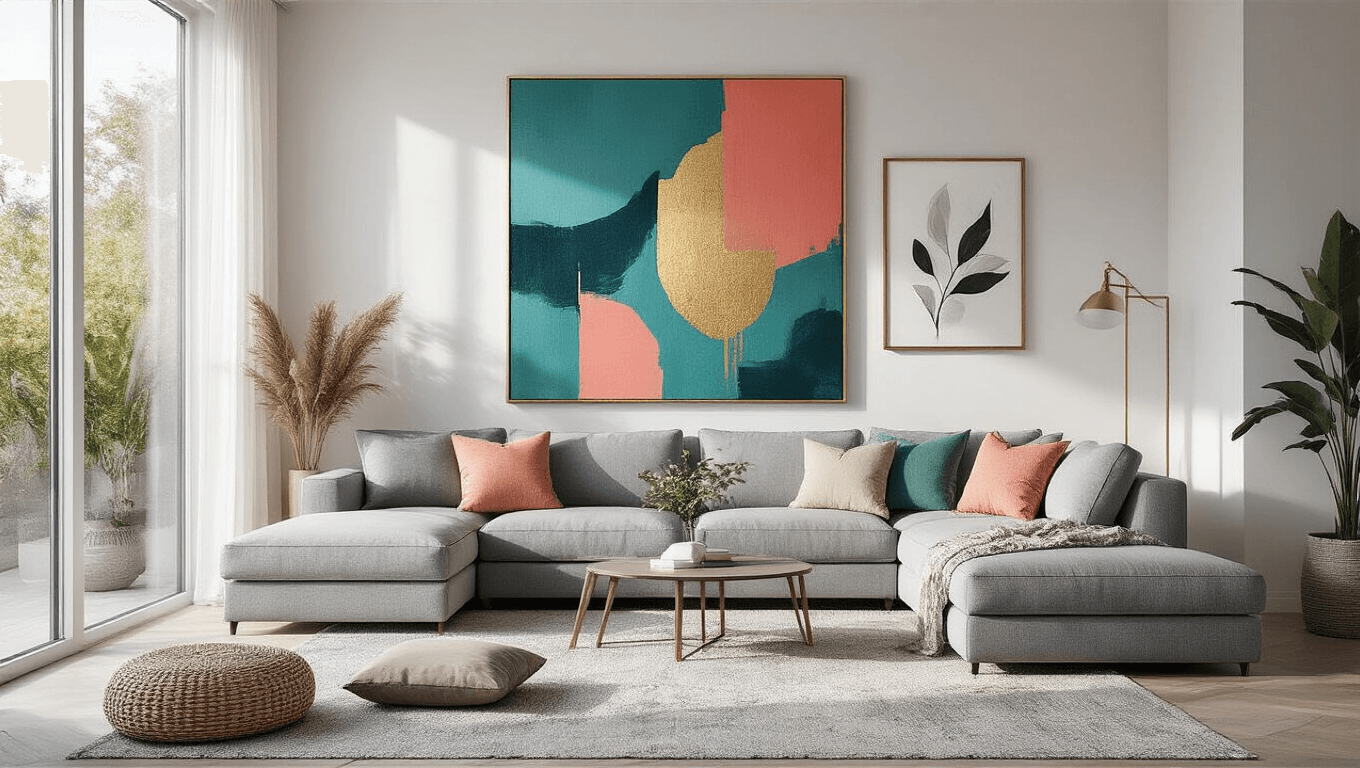
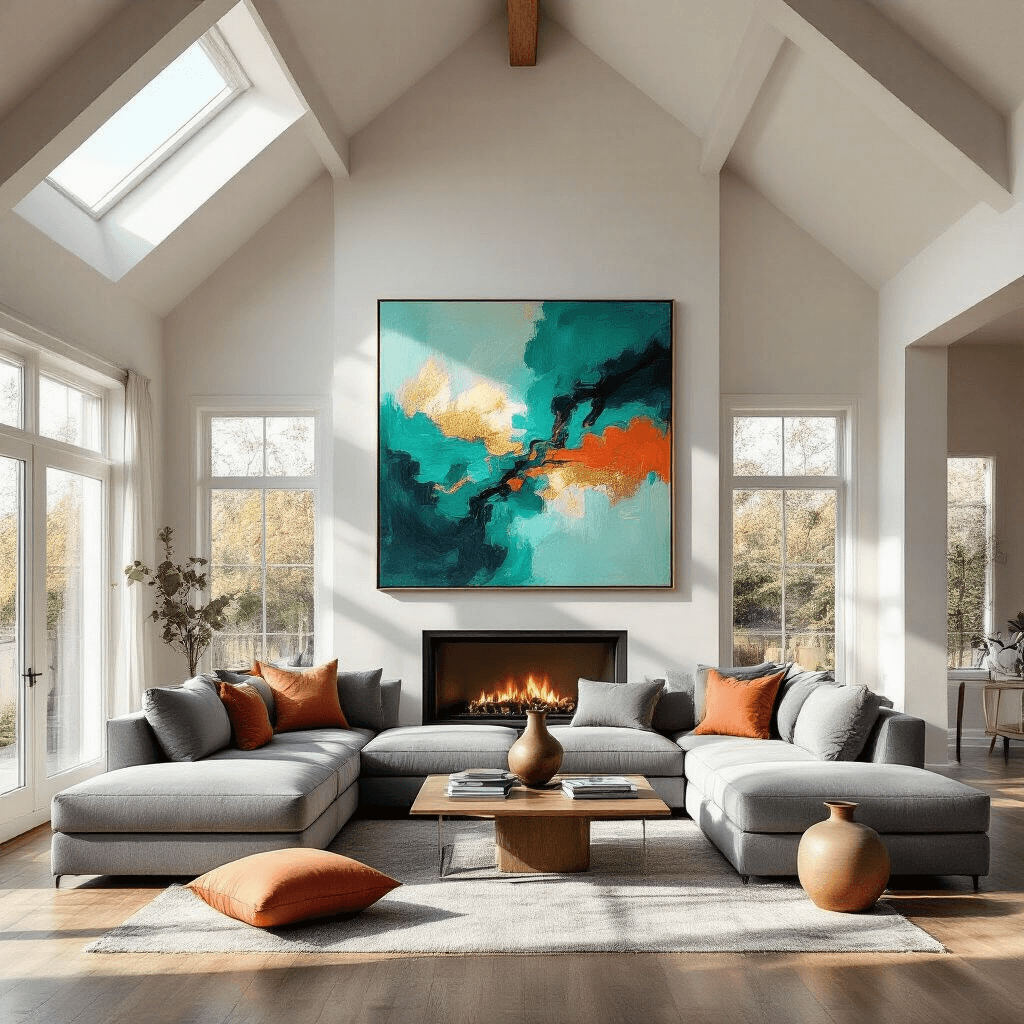
Alright, picture this: a massive canvas above your sofa, exploding with vibrant colors and wild brushstrokes. Sounds pretty epic, right? Here’s how to make it happen:
- Grab the biggest large blank canvas you can handle (seriously, bigger is better here).
- Choose 3–4 shades from an acrylic paint set that complement your room’s vibe.
- Start with a base layer using your lightest color, applying it with a wide flat paintbrush.
- Go wild with broad strokes of your other colors, overlapping and blending as you go.
- Step back, squint, and add more where needed for balance.
- Don’t overthink it—the beauty is in the chaos!
🏠 Steal This Look
- Paint Color: Sherwin-Williams Agreeable Gray SW 7029
- Furniture: low-profile charcoal velvet sectional with clean arms
- Lighting: oversized arc floor lamp with matte black finish and linen drum shade
- Materials: raw linen, oxidized brass, reclaimed wood, hand-troweled plaster
There’s something deeply satisfying about walking into your living room and feeling that rush of energy from a piece you made yourself—it’s confidence you can’t buy off a shelf.
DIY Canvas Painting Ideas with Geometric Goodness: Clean Lines, Big Impact
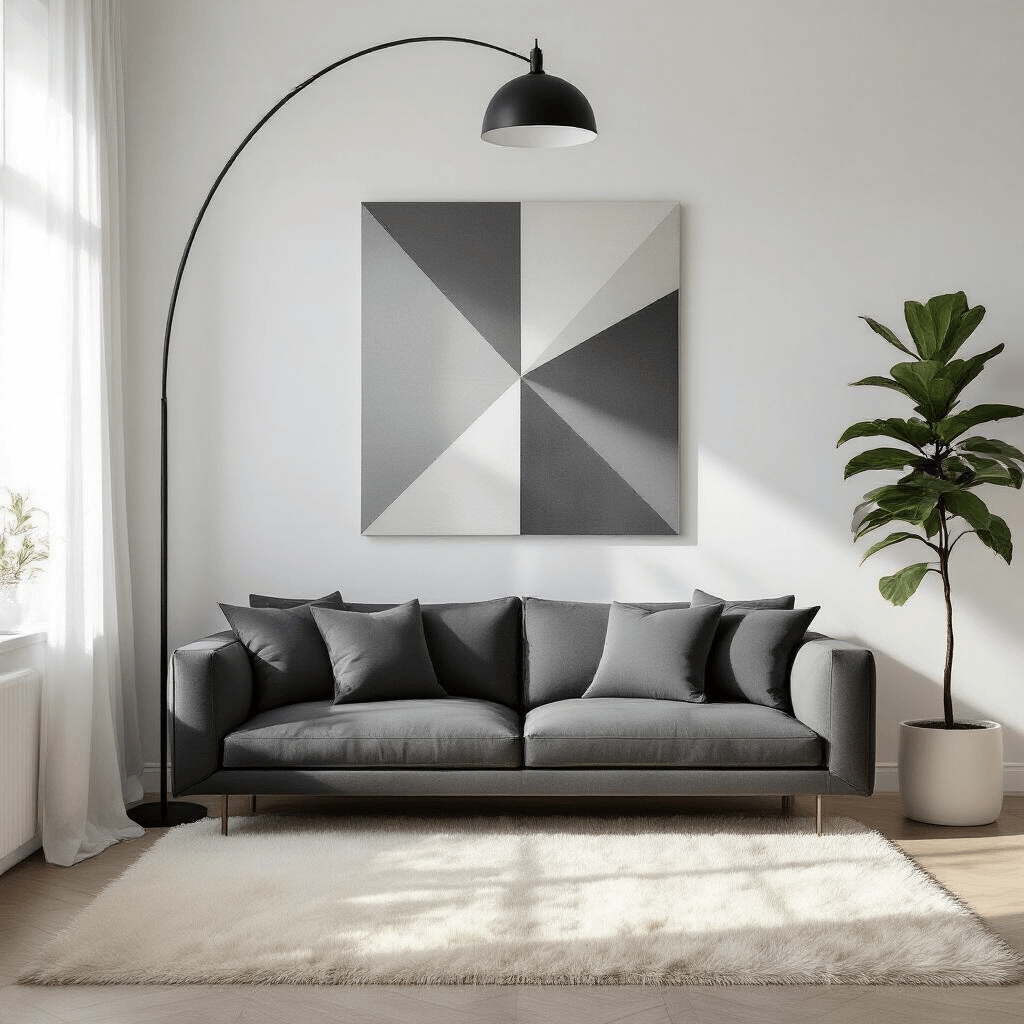
If you’re more of a neat freak (no judgment here), geometric designs are your new best friend. They’re modern, sleek, and surprisingly easy to pull off:
- Grab a roll of painter’s tape and go to town creating shapes on your blank canvas.
- Pick a color scheme—monochrome acrylic paints work wonders here.
- Paint each section carefully, peeling the tape off while it’s still wet for crisp, clean edges.
- For extra pop, add shimmer with metallic acrylic paints on a few shapes.
DIY Canvas Painting Ideas with Minimalist Magic: Less is More (and Easier!)
Listen, sometimes simple is best. A minimalist approach can be incredibly striking and takes way less time:
- Start with a light base using white or cream acrylic paint on your blank canvas.
- Use black acrylic paint and a fine detail brush to create simple shapes or clean lines.
- Try painting a single word in elegant script, or keep it abstract with a circle, triangle, or other basic shape.
- Embrace the power of negative space—sometimes less truly is more!
Save this article
Enter your email and we'll send it straight to your inbox.
🏠 Steal This Look
- Paint Color: Benjamin Moore Chantilly Lace OC-65
- Furniture: low-profile charcoal gray sectional with clean track arms
- Lighting: arched brass floor lamp with drum shade
- Materials: matte black metal, light oak wood, brushed brass accents, natural linen
There’s something deeply satisfying about peeling that painter’s tape to reveal a perfect edge—it’s the grown-up version of those crisp lines you loved in coloring books, and it genuinely makes your living room feel like you know what you’re doing.
Texture Time: Get Your Hands Dirty
Want to add some serious depth to your art? Texture is the way to go, my friends:
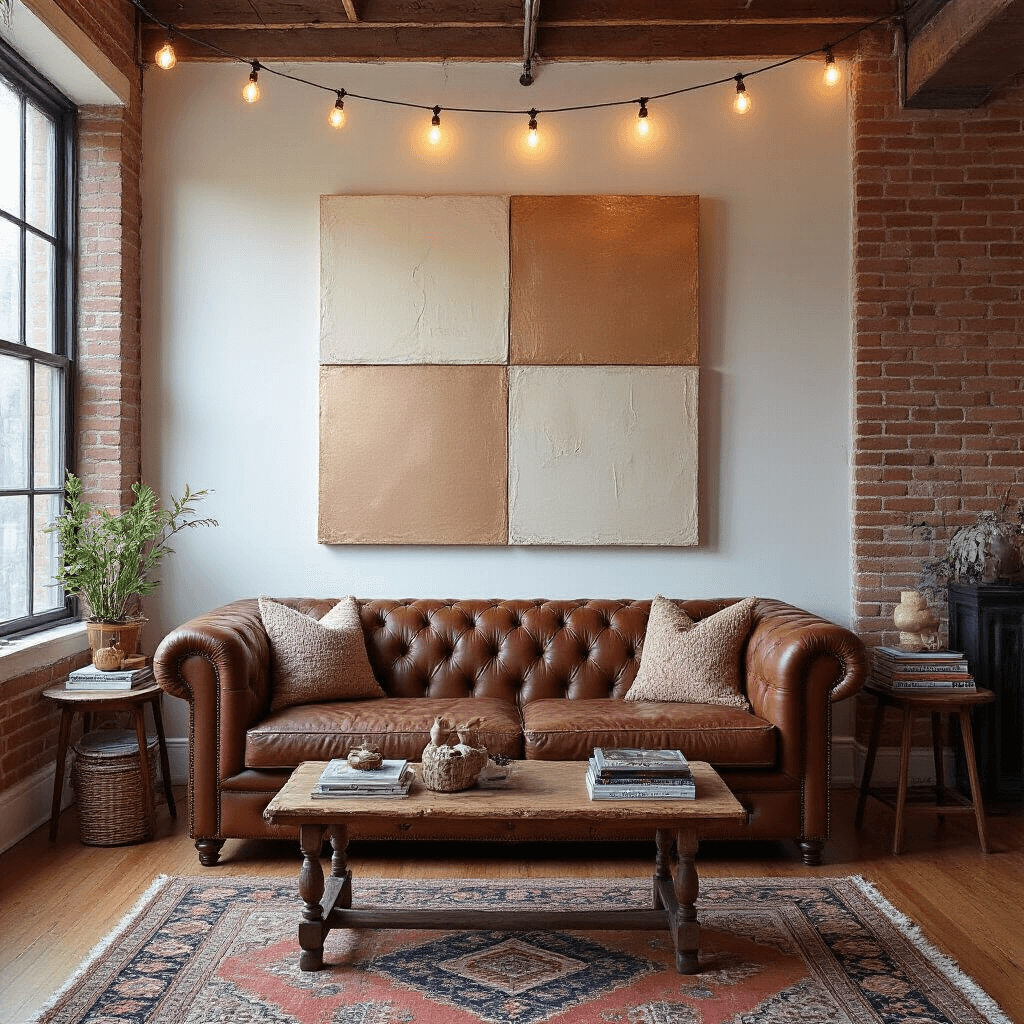
- Mix modeling paste into your acrylic paint for a thick, sculptural effect.
- Use a palette knife set to spread, swirl, and shape the paint, creating peaks, ridges, and valleys.
- Once fully dry, add a wash of metallic paint over the top for a luxe, dimensional finish.
- Pro tip: This style looks especially stunning in neutral tones like beige, taupe, and gray for a sophisticated vibe.
★ Steal This Look
- Paint Color: use Farrow & Ball brand. Match the ACTUAL wall color in the image. Format: Farrow & Ball ColorName CODE
- Furniture: low-profile linen sofa in natural oatmeal, raw edge walnut coffee table, oversized boucle accent chair
- Lighting: arched brass floor lamp with linen drum shade
- Materials: hand-troweled plaster, unbleached Belgian linen, live-edge wood, brushed brass, chunky wool weaves
There’s something deeply satisfying about art you can almost feel through your eyes—this technique transforms your living room into a gallery of your own making, where imperfections become the very thing guests lean in to examine.
Nature’s Calling: Bring the Outdoors In
Nothing beats nature-inspired art for creating a calm, zen atmosphere:
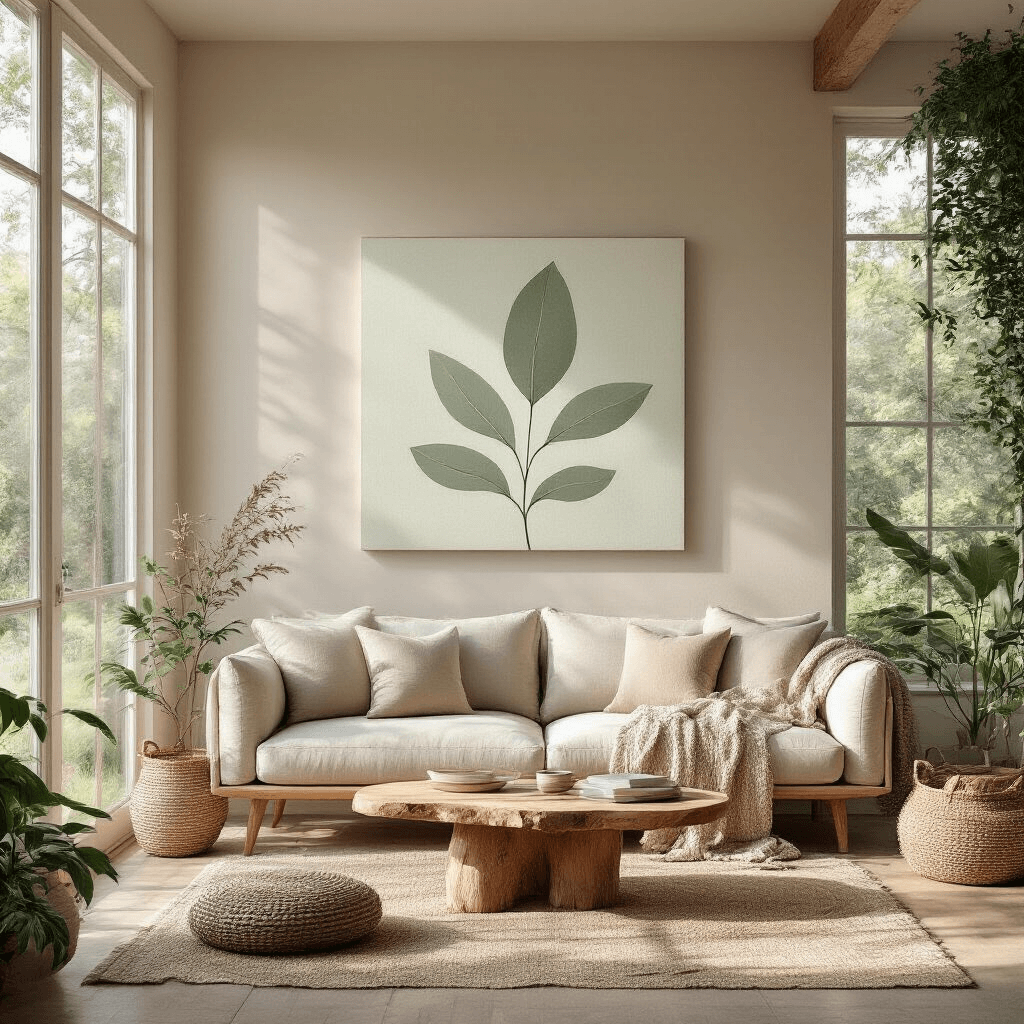
- Lightly sketch or use reusable stencils to create simple leaf or flower shapes on your blank canvas.
- Fill in the designs with soft watercolor-effect acrylics or muted pastel shades for a gentle, airy look.
- For bold simplicity, try a single large botanical silhouette stencil to make your canvas a statement piece.
- Add accents of metallic gold paint for just the right touch of glam.
Heart to Heart: Negative Space Technique
Ready for a cool trick? Negative painting is easier than it sounds and looks amazing:
- Start by painting your entire blank canvas a light base color, such as white, cream, or soft pastel tones.
- Use painter’s tape or contact paper sheets to create heart shapes—or any design you like.
- Paint over the canvas with a darker shade from your acrylic paint set, blending the color outward for a gradient effect.
- Carefully peel off the tape or paper while the paint is still slightly wet to reveal crisp, clean shapes.
- Pro tip: Try using metallics or glitter paint for the darker layer if you want a bold, statement-making finish.
Family Matters: Personalized Pieces
Make your art truly unique with some family-inspired touches:
- Paint oversized initials using alphabet stencils or freehand in a funky font with acrylic paint markers.
- Create abstract silhouettes of family members with the help of silhouette stencil kits for a modern, artsy effect.
- Write out a meaningful quote or family motto using calligraphy paint pens for elegant lettering.
- Let your kids dip their hands into washable non-toxic paints and press handprints onto the canvas for a colorful and sentimental keepsake.
- Pro tip: Combine all these elements on a large multi-panel canvas set for a gallery wall that tells your family’s unique story.
Seasonal Switcheroo: Keep It Fresh
Why settle for one look when you can have four? Create a set of seasonal canvases:
- Spring: Use pastel acrylic paints and floral stencils to create soft, romantic motifs.
- Summer: Go bold with bright paint sets and add tropical leaf stencils for that beachy vibe.
- Fall: Capture cozy vibes with earth-tone paints and leaf stencils to bring autumn indoors.
- Winter: Embrace frosty elegance with metallic silver paints and snowflake stencils for a sparkling finish.
- Pro tip: Rotate your artwork with the seasons to keep your walls fresh and festive year-round!
Remember, the key to great DIY art is having fun and not taking it too seriously. So grab those brushes, crank up some tunes, and let your creativity run wild. Your living room (and your wallet) will thank you!
Want to keep this one?
We'll email you the link so you can find it again later.