
This post may contain affiliate links. Please see my disclosure policy for details.
Magical Garden Lighting: Transform Your Outdoor Space After Dark
Gardens aren’t just daytime retreats anymore. They’re nighttime wonderlands waiting to be illuminated.
Why Garden Lighting Matters
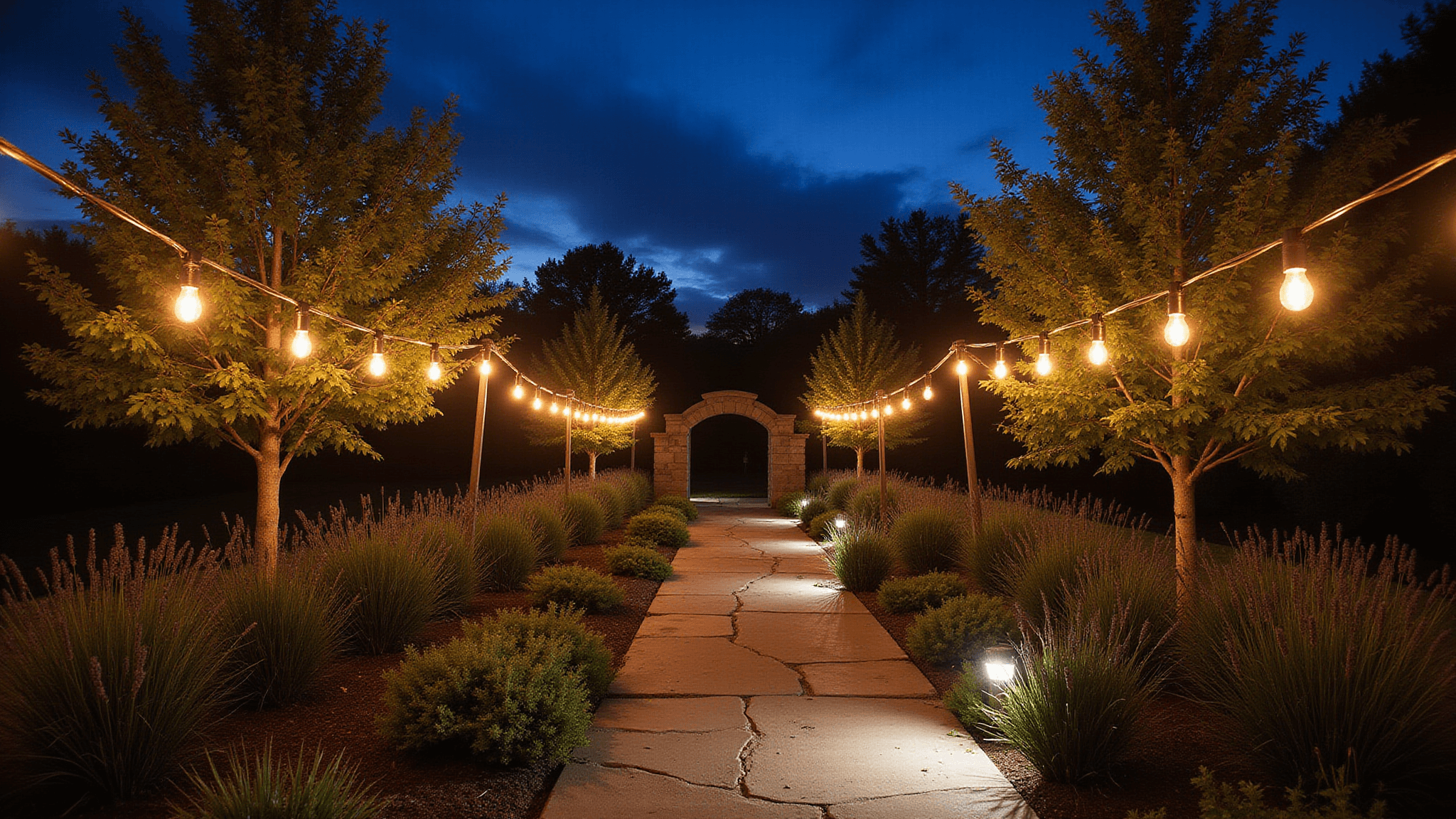
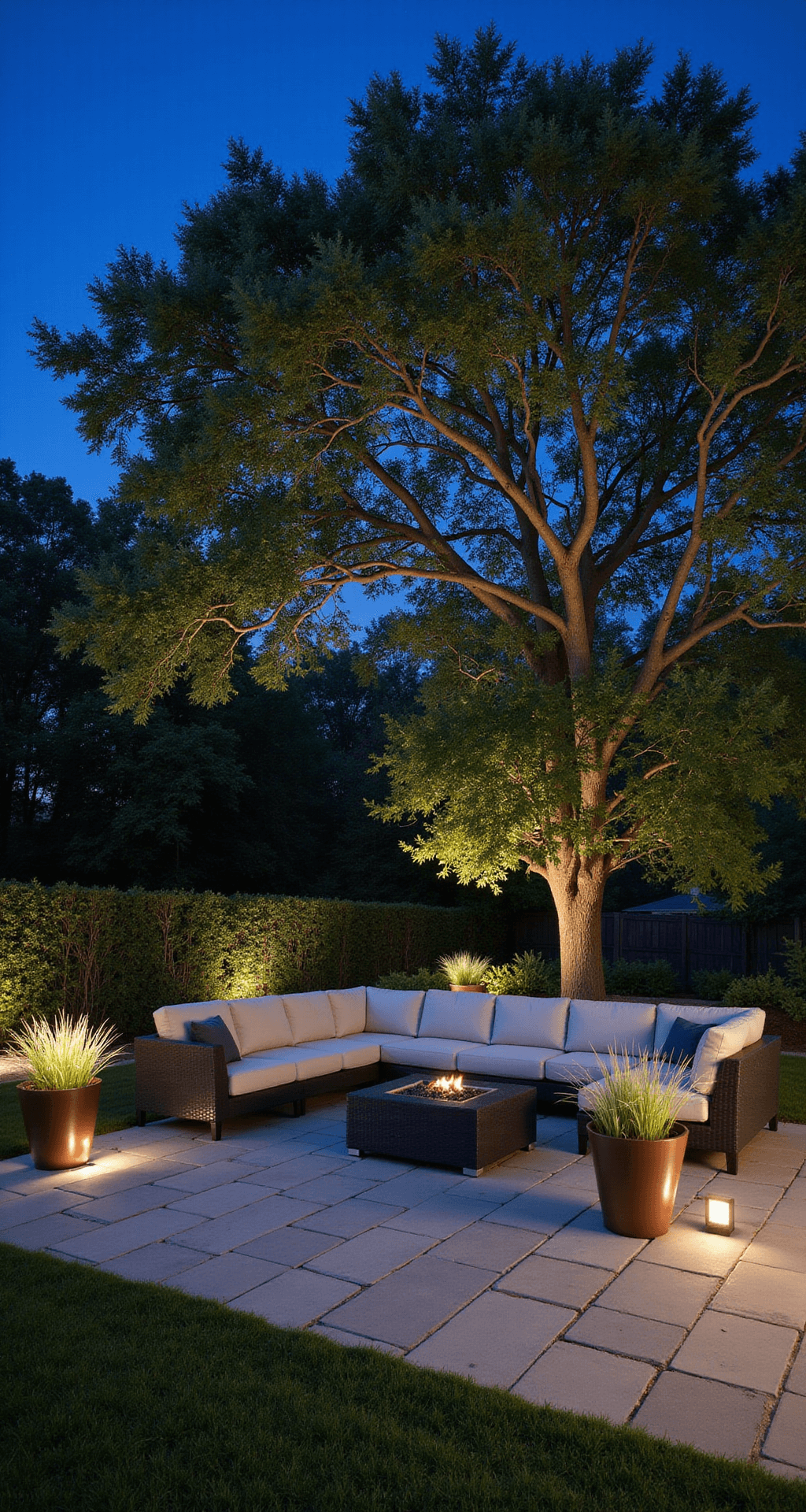
Picture this: You step outside at 8 PM, and instead of darkness, your garden glows with soft, strategic lighting. Pathways shimmer, trees cast dramatic shadows, and your entire outdoor space feels like a magical sanctuary.
The Power of Illumination
Garden lighting isn’t just about looks. It’s about:
- Creating atmosphere
- Enhancing safety
- Extending outdoor living hours
- Highlighting your landscape’s best features
🏠 Steal This Look
- Paint Color: Benjamin Moore Onyx 2133-10
- Furniture: weathered teak Adirondack chairs with Sunbrella cushions
- Lighting: low-voltage LED path lights with warm 2700K output and adjustable glare shields
- Materials: powder-coated aluminum fixtures, frosted glass diffusers, copper path lighting stakes, and textured stone pavers
There’s something quietly transformative about the first evening you flip the switch on a well-planned garden lighting scheme—suddenly your backyard becomes usable real estate rather than just daytime scenery.
Lighting Styles That Wow
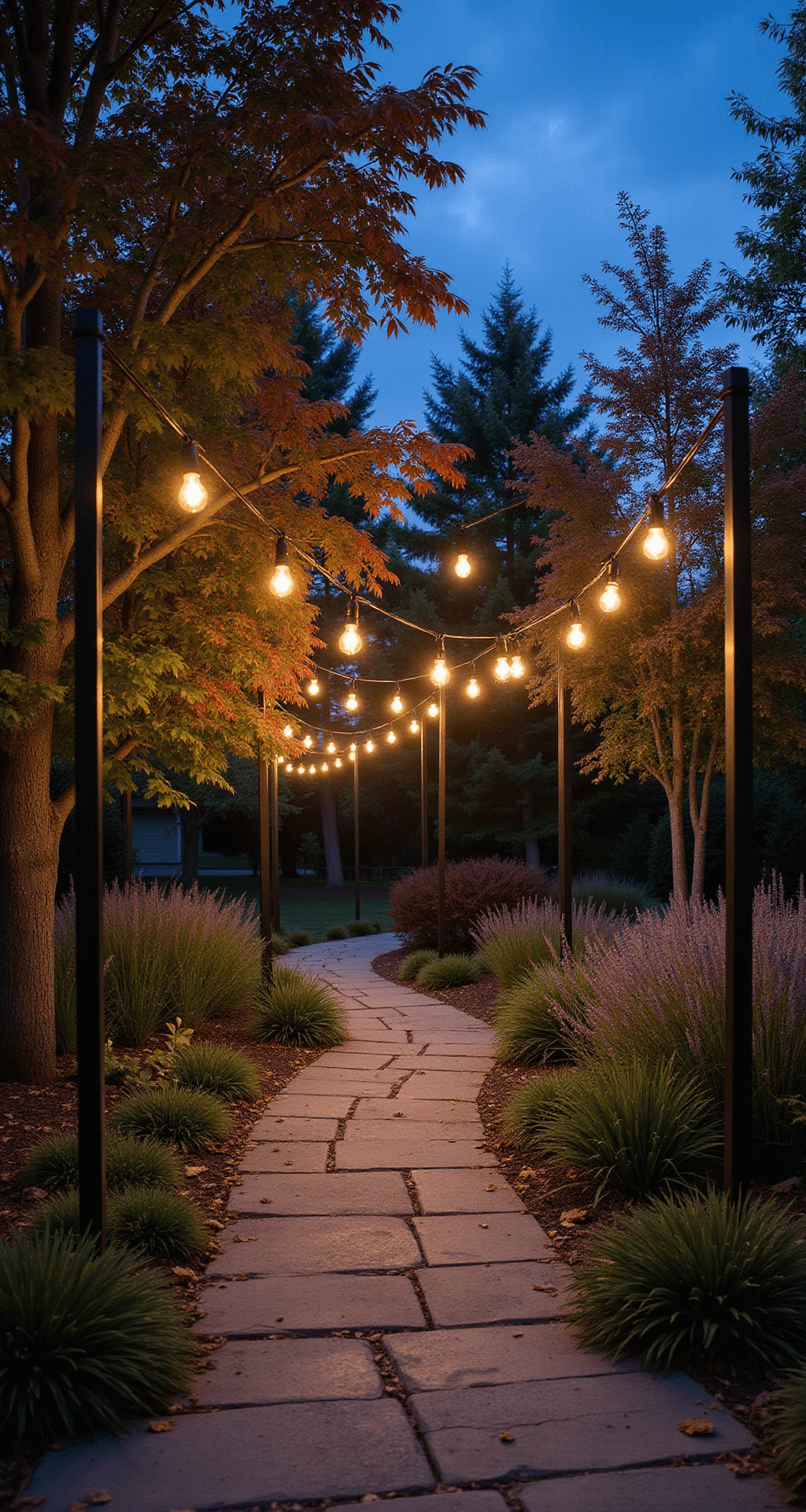
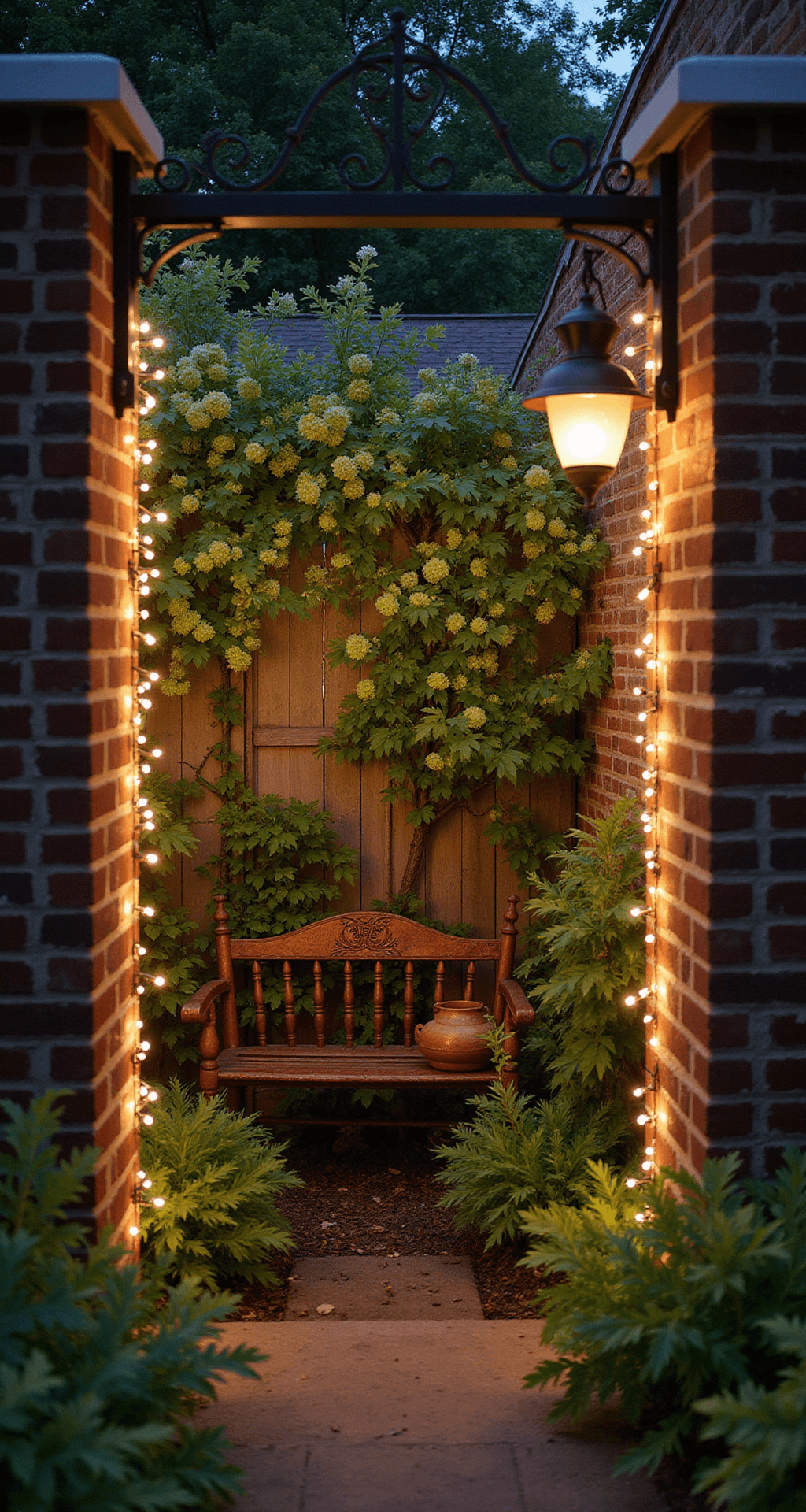
1. String Light Magic
Pro Tip: String lights are the fairy godmothers of garden lighting.
Placement ideas:
- Wrap around tree trunks
- Drape along deck railings
- Line walkways with vintage Edison bulbs
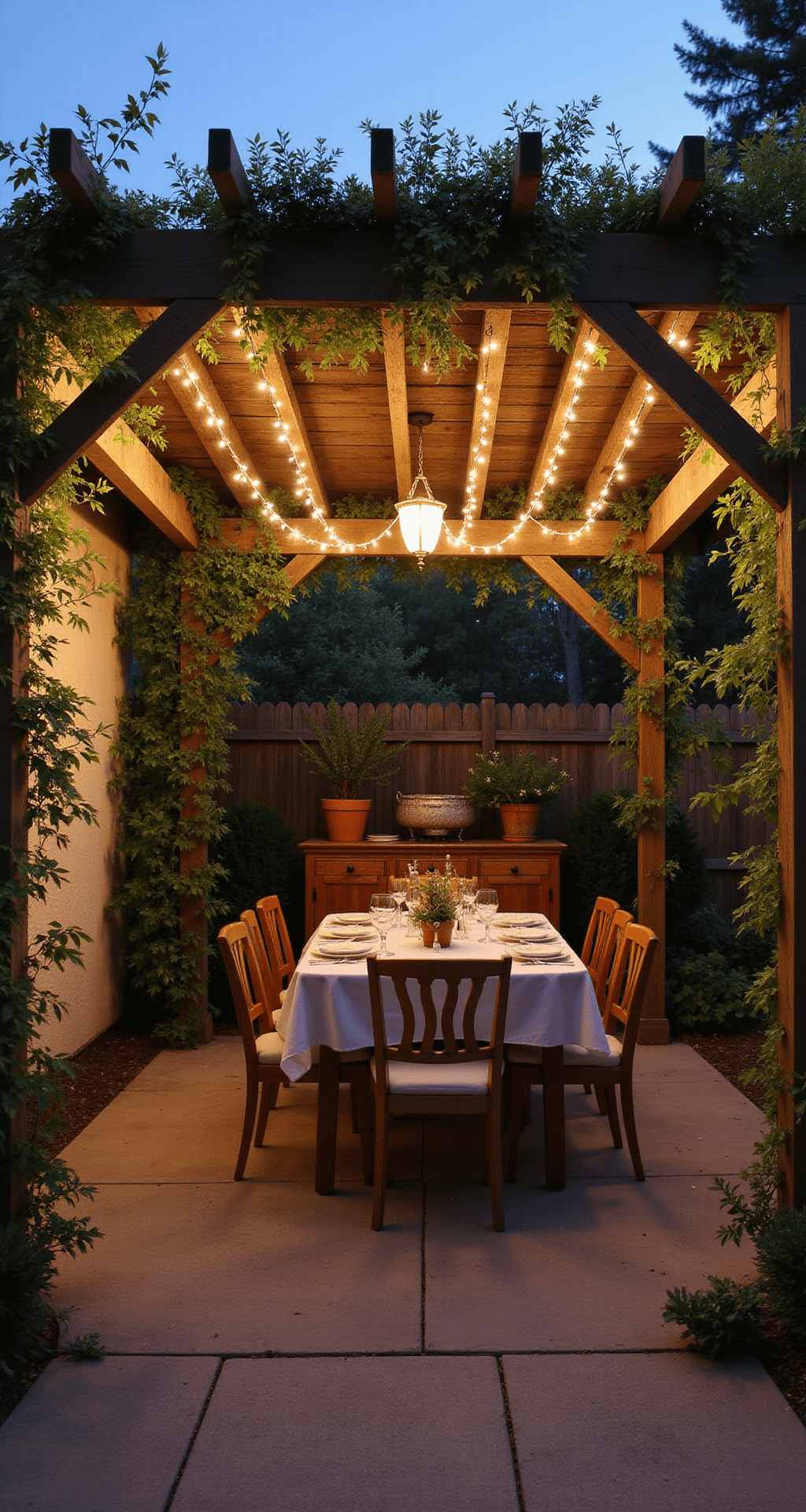
- Weave through pergolas and arbors
2. Functional Pathway Lighting
Safety meets style with these options:
- Solar-powered path lights
- LED bollard lights
- Minimalist wall-mounted fixtures
- Low-voltage post lights
3. Accent Lighting Techniques
Spotlight Strategies
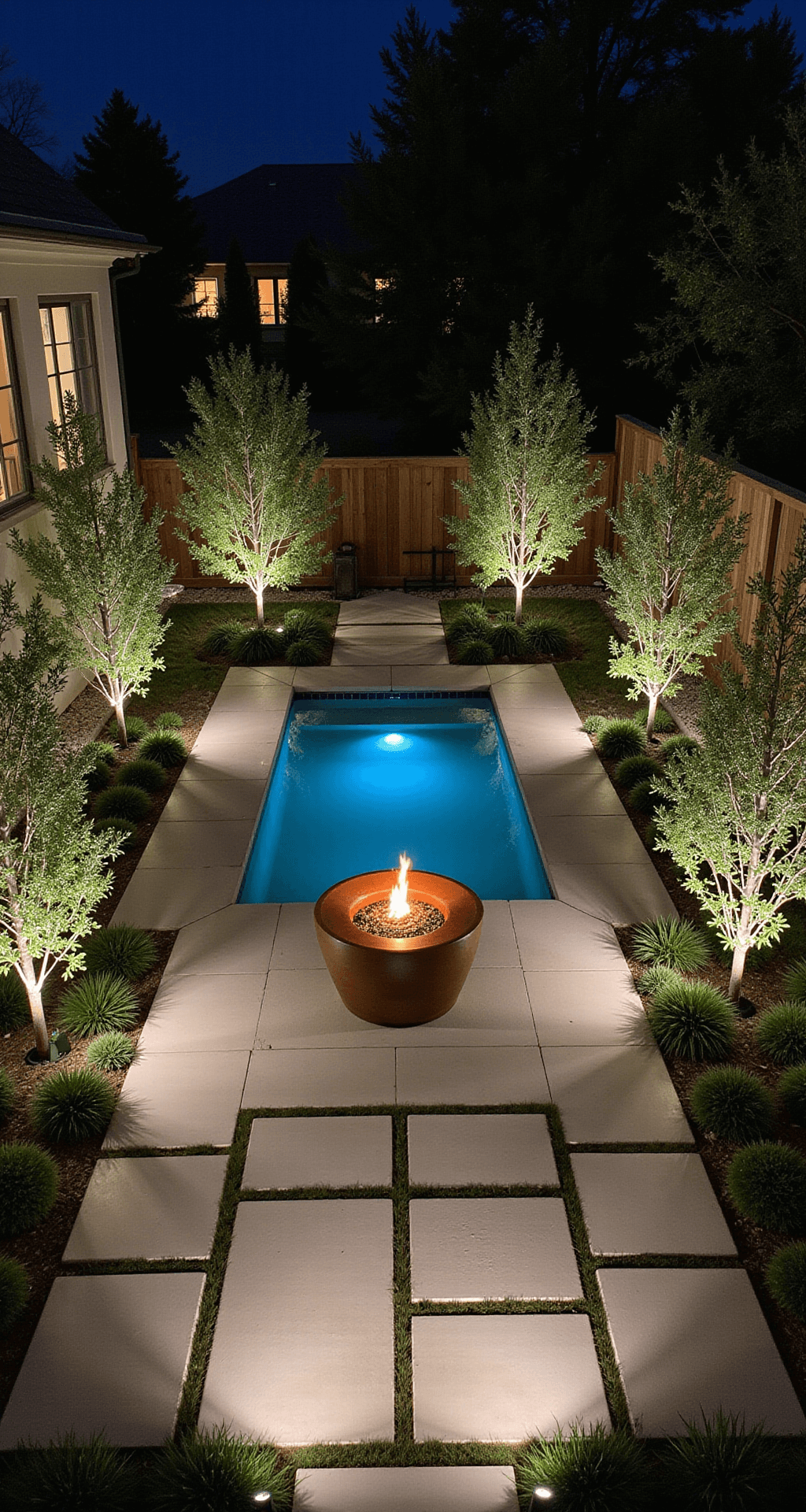
- Use narrow-beam bullets for precise feature highlighting
- Two 20-watt lights work perfectly for smaller trees
- Larger trees might need 3-5 strategic uplights
Water Feature Wow Factor
- Underwater lights create ethereal pond glows
- Adjustable spotlights let you adapt as gardens evolve
🏠 Steal This Look
- Paint Color: Farrow & Ball Green Smoke 47
- Furniture: weathered teak Adirondack chairs with olive green Sunbrella cushions
- Lighting: vintage-style Edison bulb string lights with black rubberized cable and warm 2200K amber glow
- Materials: aged copper pathway fixtures, hand-blown glass globe pendants, rough-hewn cedar pergola beams, river stone edging
There’s something deeply satisfying about walking your garden after dark when the lighting is right—it’s like discovering your own outdoor rooms for the first time, every evening.
Creative Lighting Approaches
Layered Illumination
Think of lighting like painting – you need different brushes and techniques:
- Bullet lights with 12-degree spreads
- Soft wash lights for filling spaces
- Strategically placed garden lights guiding visual flow
Save this article
Enter your email and we'll send it straight to your inbox.
Natural Effect Lighting
Moonlighting Technique
- Install downlights high in trees
- Use long shrouds to minimize side glare
- Mimic natural moonlight patterns
Backlighting Brilliance
- Illuminate potted plants from behind
- Create soft, warm background glows
- Perfect for small garden spaces
★ Steal This Look
- Paint Color: Behr Black Mocha N140-7
- Furniture: weathered teak Adirondack chair with slatted back
- Lighting: Kichler 12V adjustable bullet spotlight with 12-degree beam spread
- Materials: powder-coated aluminum fixtures, braided copper cable, rough-cut stone edging
There’s something quietly magical about walking a garden path where light seems to emerge from nowhere, guiding your feet while leaving the source itself hidden in shadow.
Practical Considerations
Power and Installation
Lighting Options:
- Solar-powered (eco-friendly)
- Battery-operated (flexible)
- Mains-powered (consistent)
DIY Installation Tips
- Choose weather-resistant fixtures (IP44 rating minimum)
- Measure space carefully
- Use transformers for safe voltage conversion

Smart Planning Checklist
Before purchasing, map out:
- Utility lighting needs
- Mood lighting zones
- Feature highlight areas
Pro Tip: Stick to one brand for seamless component compatibility.
🖼 Steal This Look
- Paint Color: Valspar Garden Gate 5005-3B
- Furniture: weatherproof teak storage bench with integrated cable management
- Lighting: Philips Hue Lily Outdoor Spot Light Base Kit
- Materials: powder-coated aluminum housings, marine-grade stainless steel hardware, UV-stabilized polycarbonate lenses, rubberized cable seals
I’ve learned the hard way that ‘water-resistant’ and ‘weatherproof’ are not interchangeable—spend the extra $30 on IP65+ rated fixtures now, or replace everything after your first hard freeze.
Final Illumination Insights
Garden lighting is an art form. It’s about creating moments, not just visibility. Each light tells a story, transforms a space, and invites exploration.
Your garden doesn’t sleep when the sun goes down – it comes alive.
💡 Steal This Look
- Paint Color: use PPG brand. Match the ACTUAL wall color in the image. Format: PPG Night Watch PPG1145-7
- Furniture: weathered teak Adirondack chair with built-in LED underarm strips
- Lighting: Hinkley Lighting Luna low-voltage LED path lights in matte bronze
- Materials: powder-coated aluminum fixtures, braided nautical rope details, frosted seeded glass shades, reclaimed barn wood accent posts
There’s something deeply satisfying about walking your garden after dark with a glass of wine, watching how shadows shift and flowers you never noticed in daylight suddenly glow like lanterns—this is the payoff for thinking beyond mere safety lighting.
Want to keep this one?
We'll email you the link so you can find it again later.


[…] fairy lights quietly change how your small garden feels after dark. They add soft, directional light that makes paths and seating areas both safer and more […]