
This post may contain affiliate links. Please see my disclosure policy for details.
Hey there, fellow food lovers and wannabe gardeners!
Are you tired of spending a fortune on tiny herb packets that wilt faster than your weekend motivation? I’m about to show you how to transform your kitchen into a fresh, fragrant herb paradise that’ll make your cooking sing and your wallet rejoice.
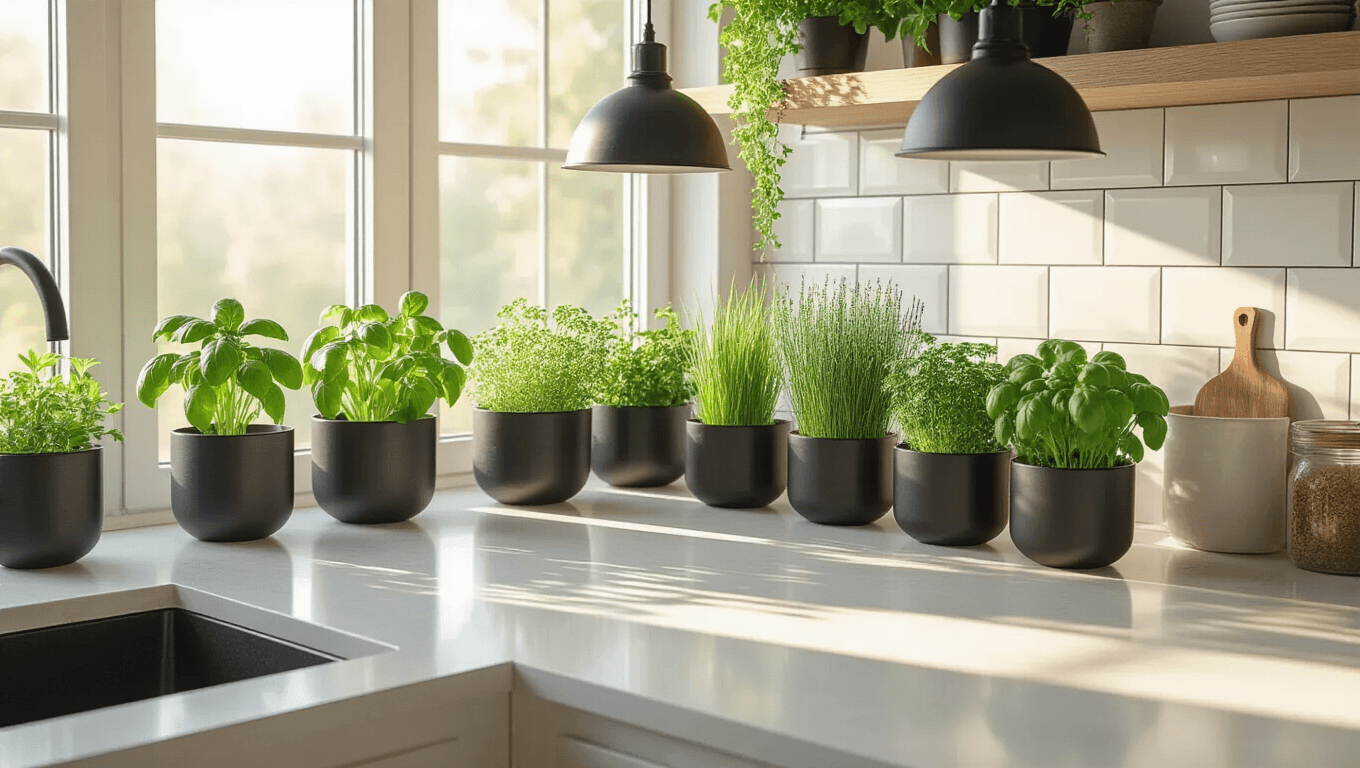
🎨 Steal This Look
- Paint Color: Sherwin-Williams Ripe Olive SW 6209
- Furniture: wall-mounted cedar herb planter box with galvanized metal liner
- Lighting: adjustable gooseneck LED grow light with full spectrum bulbs
- Materials: terracotta pots, raw edge wood shelves, matte black powder-coated metal brackets
There’s something deeply satisfying about snipping fresh basil mid-recipe with your own scissors, dirt under your nails, the kitchen smelling like a sun-warmed garden even on rainy Tuesday nights.
Why a Kitchen Herb Garden is Your New Best Friend
Let’s cut to the chase. A kitchen herb garden isn’t just a trendy decoration – it’s your personal flavor factory. Imagine reaching out and grabbing fresh basil or rosemary seconds before adding them to your dish. Pure culinary magic!
🌿 Herbs That’ll Rock Your Kitchen Garden
Top Picks for Beginners:
- Basil: The flavor bomb of Italian cuisine
- Chives: Adds instant zing to everything
- Parsley: More than just a garnish
- Mint: Cocktails and cooking’s secret weapon
- Cilantro: Love it or hate it, it’s versatile
Pro Tip: Keep mint in its own pot. This plant is basically a botanical bully that will take over everything else!
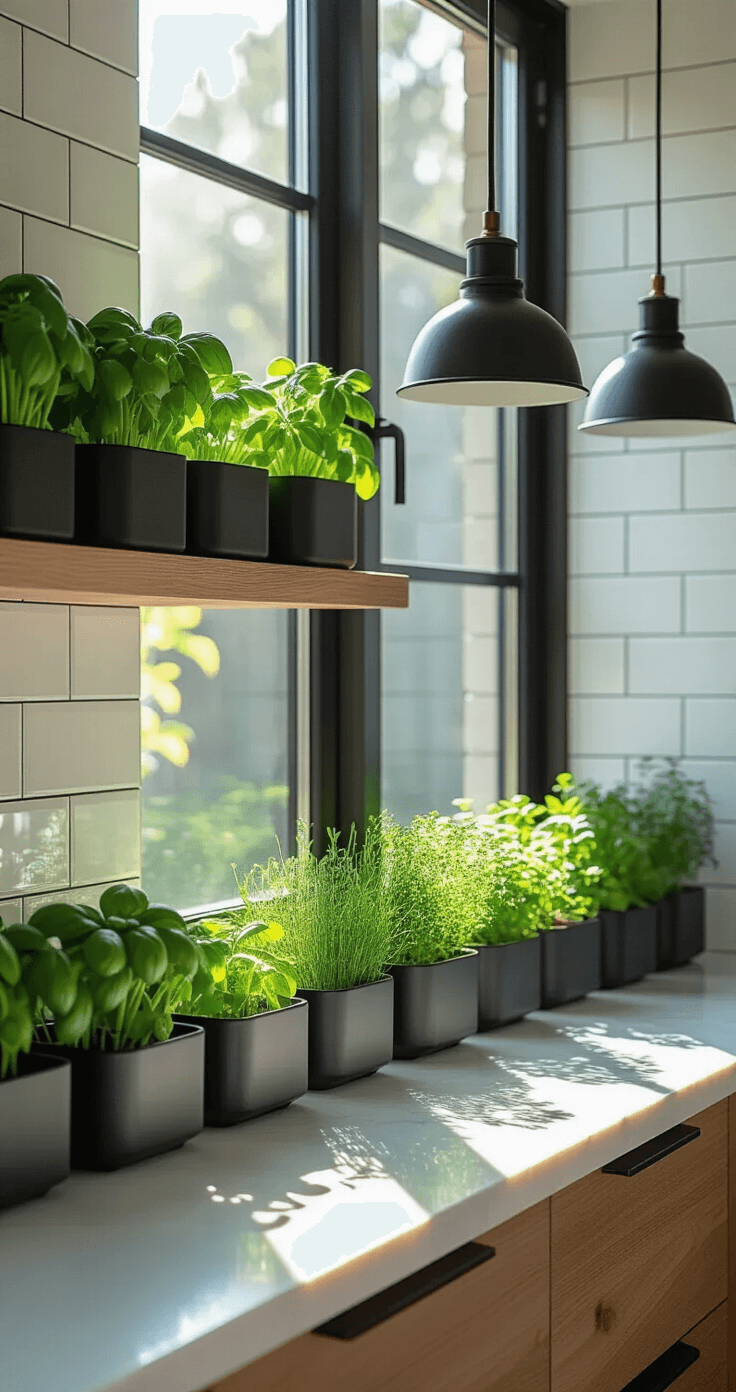
🌟 Steal This Look
- Paint Color: Farrow & Ball Green Smoke 47
- Furniture: wall-mounted wooden herb planter with chalkboard labels
- Lighting: adjustable brass gooseneck grow light with warm 3000K LED
- Materials: terracotta pots with drainage trays, reclaimed wood shelving, matte black metal brackets, unglazed ceramic herb markers
There’s something deeply satisfying about snipping fresh basil mid-recipe while your pasta water boils—this small ritual transforms cooking from chore to meditation.
Container Choices That’ll Make Your Herbs Happy
Picking the right home for your herbs is crucial. Here’s what works:
- Minimum 6-inch deep containers
- Drainage holes are non-negotiable
- Wide planters (at least 12 inches) for multiple herbs
- Cute is good, functional is better
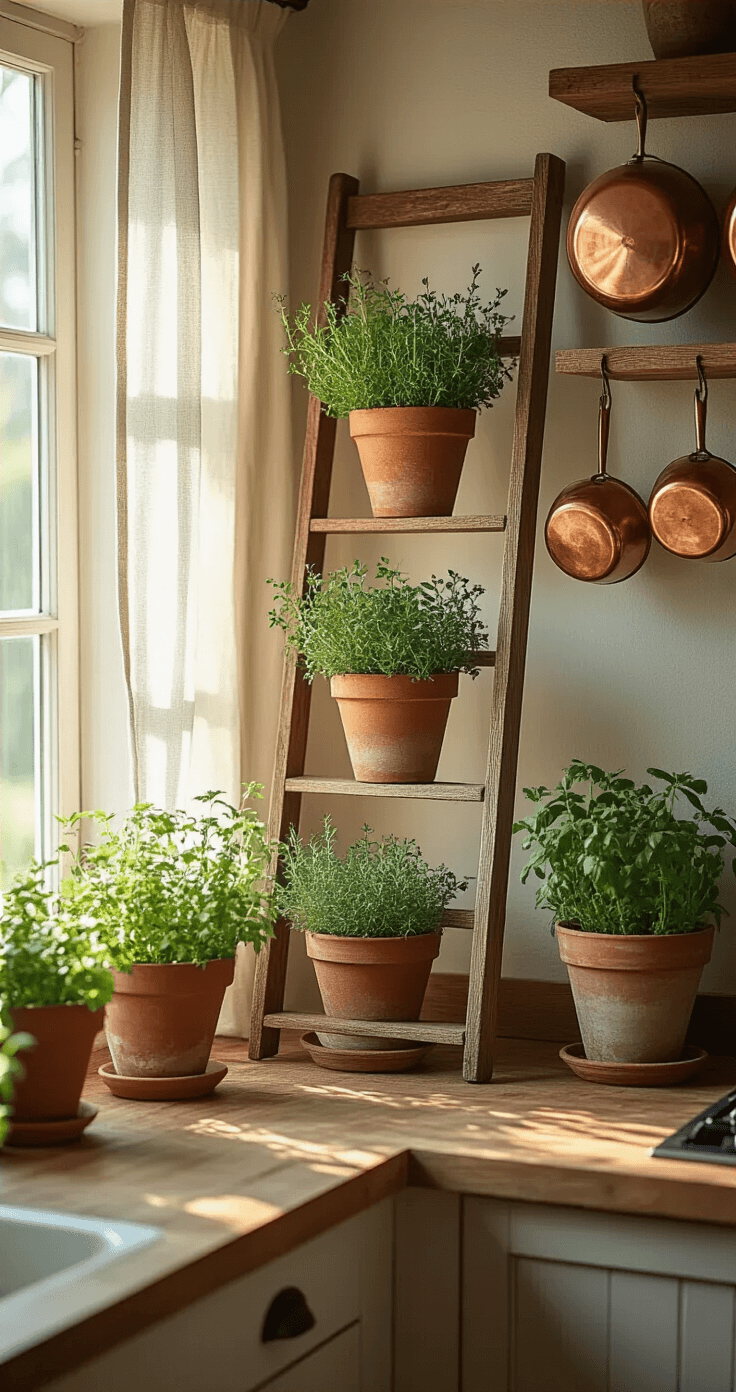
💡 Steal This Look
- Paint Color: Behr Swiss Coffee 12
- Furniture: narrow galvanized steel potting bench with slatted shelves for drainage
- Lighting: adjustable-arm brass grow light sconce with integrated timer
- Materials: unglazed terracotta, raw concrete, weathered zinc, reclaimed cedar
There’s something deeply satisfying about morning coffee surrounded by thriving rosemary and basil you’ve nurtured from seed, and the right containers make that ritual possible even in a rental kitchen.
Sunlight: The Secret Sauce of Herb Growing
Herbs are basically solar-powered flavor machines. They need:
- 6-8 hours of sunlight daily
- South or west-facing windows are ideal
- Grow lights work for darker spaces
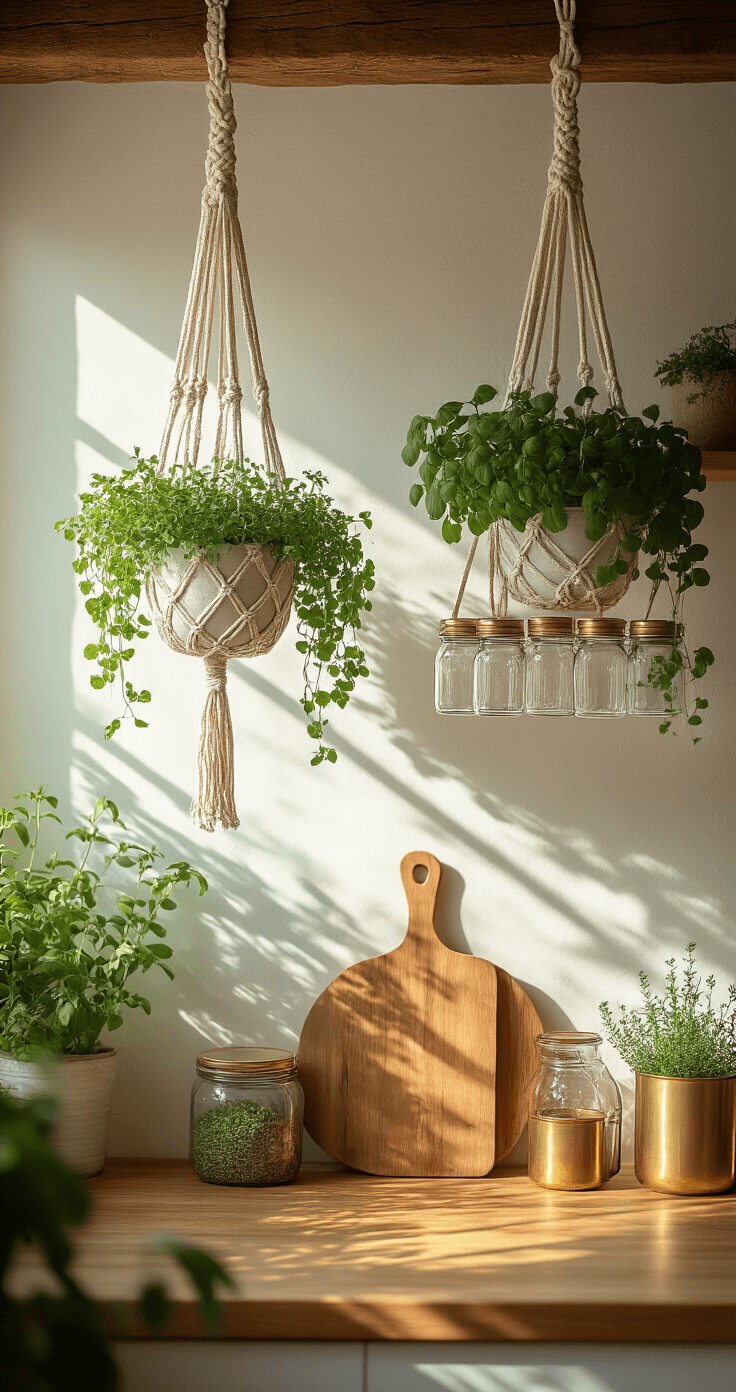
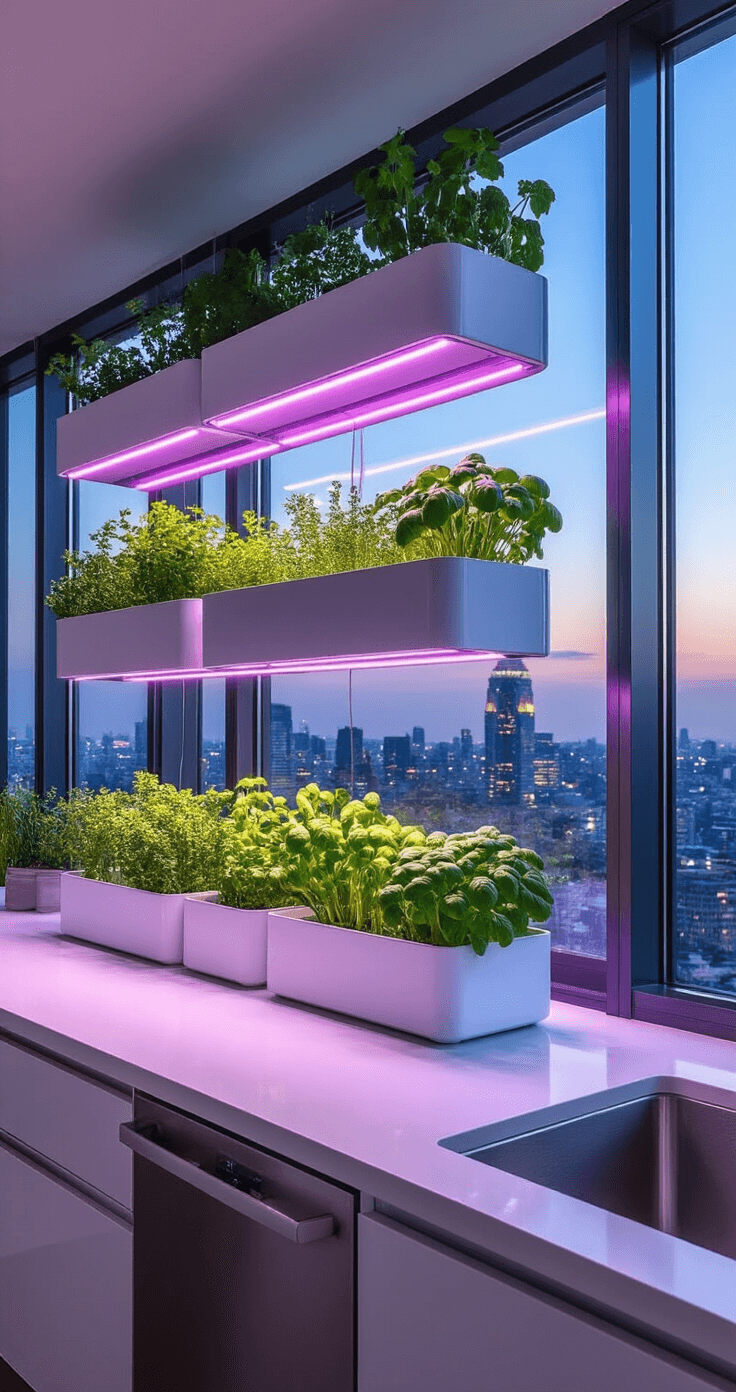
🎨 Steal This Look
- Paint Color: Valspar Solar Wind 6006-4A
- Furniture: narrow leaning ladder shelf positioned directly in window light path
- Lighting: full-spectrum LED grow light strip with timer function
- Materials: raw terracotta, untreated cedar, matte black powder-coated steel
There’s something deeply satisfying about snipping fresh basil while your morning coffee brews—this is the room where patience literally pays off in flavor, and even the most neglected cook feels like they have their life together.
Save this article
Enter your email and we'll send it straight to your inbox.
Watering Wisdom: Not Too Much, Not Too Little
Herb watering is an art:
- Let the top soil dry between waterings
- Consistent moisture, not drowning
- Drainage is your best friend
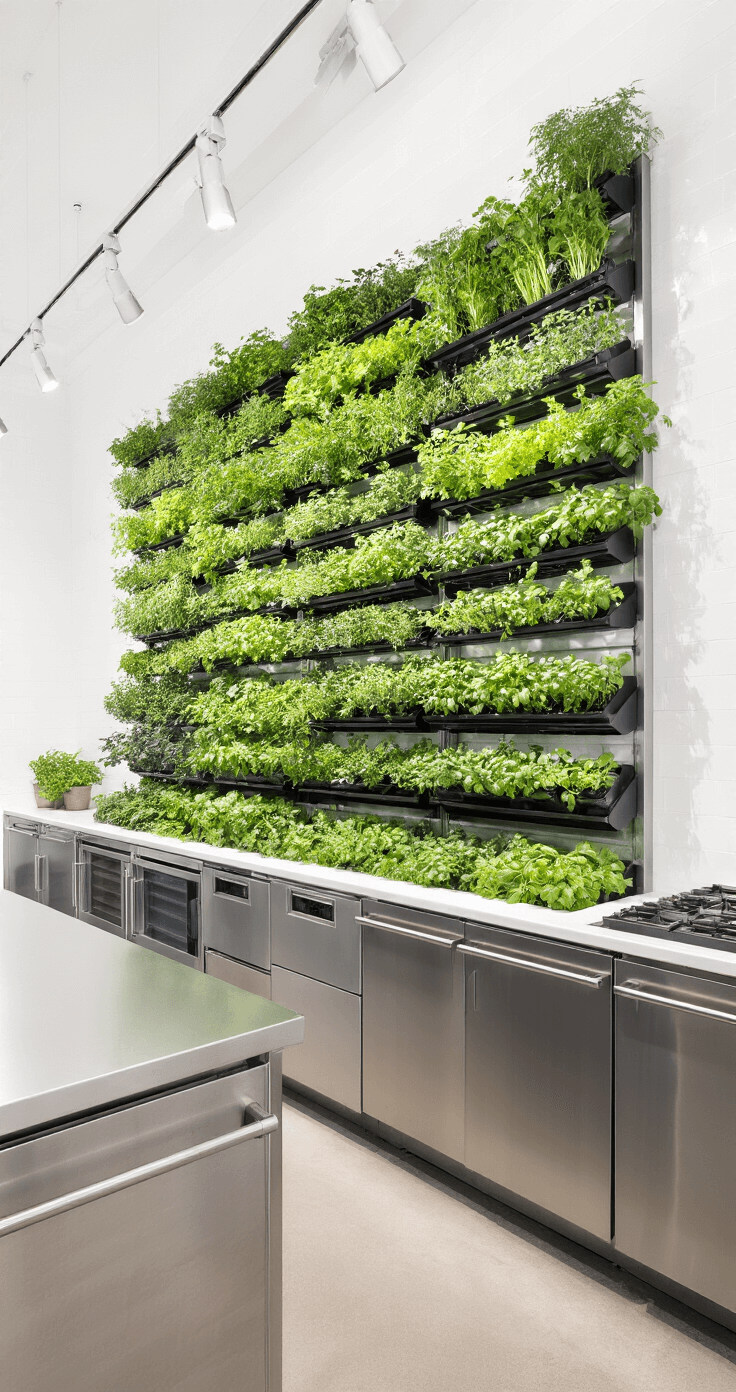
★ Steal This Look
- Paint Color: PPG Olive Grove PPG1124-6
- Furniture: wall-mounted cedar herb planter with built-in water reservoir
- Lighting: adjustable gooseneck LED grow light with timer function
- Materials: terracotta pots with drainage trays, unglazed clay, raw cedar wood, hemp mat liners
There’s something quietly satisfying about lifting a pot to check its weight—your hands learn when your herbs are thirsty before any moisture meter could tell you, and that small ritual turns watering from chore into connection.
DIY vs. Ready-Made Kits
Want to start? You’ve got options:
- DIY Route: Seeds, pots, soil
- Beginner Kits: Everything included
- Hybrid Approach: Mix and match
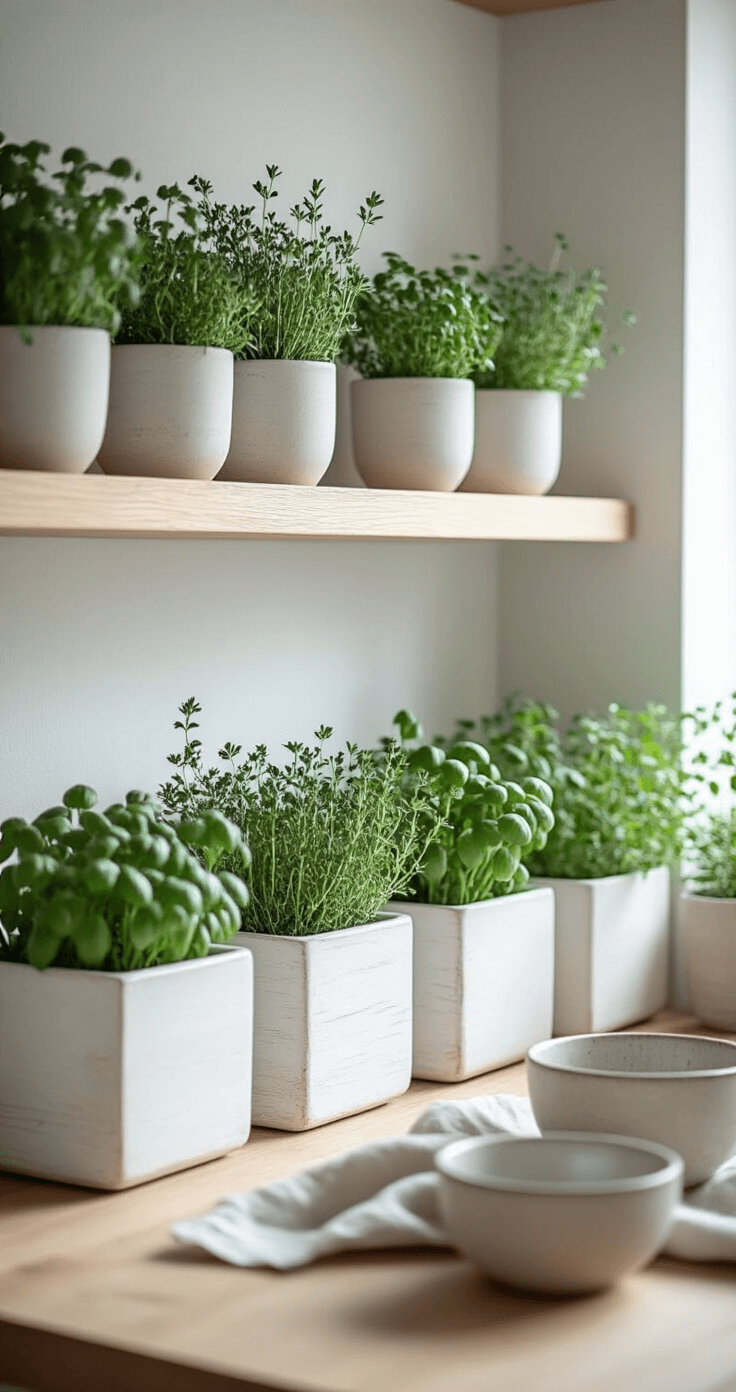
💡 Steal This Look
- Paint Color: Dunn-Edwards Gardenia DEW339
- Furniture: wall-mounted floating shelf with integrated grow light brackets, positioned above countertop height for easy herb snipping
- Lighting: full-spectrum LED grow light bar with built-in timer, under-cabinet mounted
- Materials: terracotta pots with drainage trays, untreated cedar planter boxes, organic potting mix with perlite, chalkboard labels for herb identification
There’s something deeply satisfying about snipping fresh basil you grew from seed, but I’ve also watched too many ambitious friends abandon their kitchen gardens because they started too complex—meet yourself where you actually are, not where you think you should be.
Bonus Pro Moves
- Mix herbs with decorative plants
- Use stylish containers
- Harvest regularly to encourage growth
Common Newbie Mistakes to Avoid
- ❌ Overwatering
- ❌ Ignoring drainage
- ❌ Cramming too many herbs together
- ❌ Forgetting to harvest
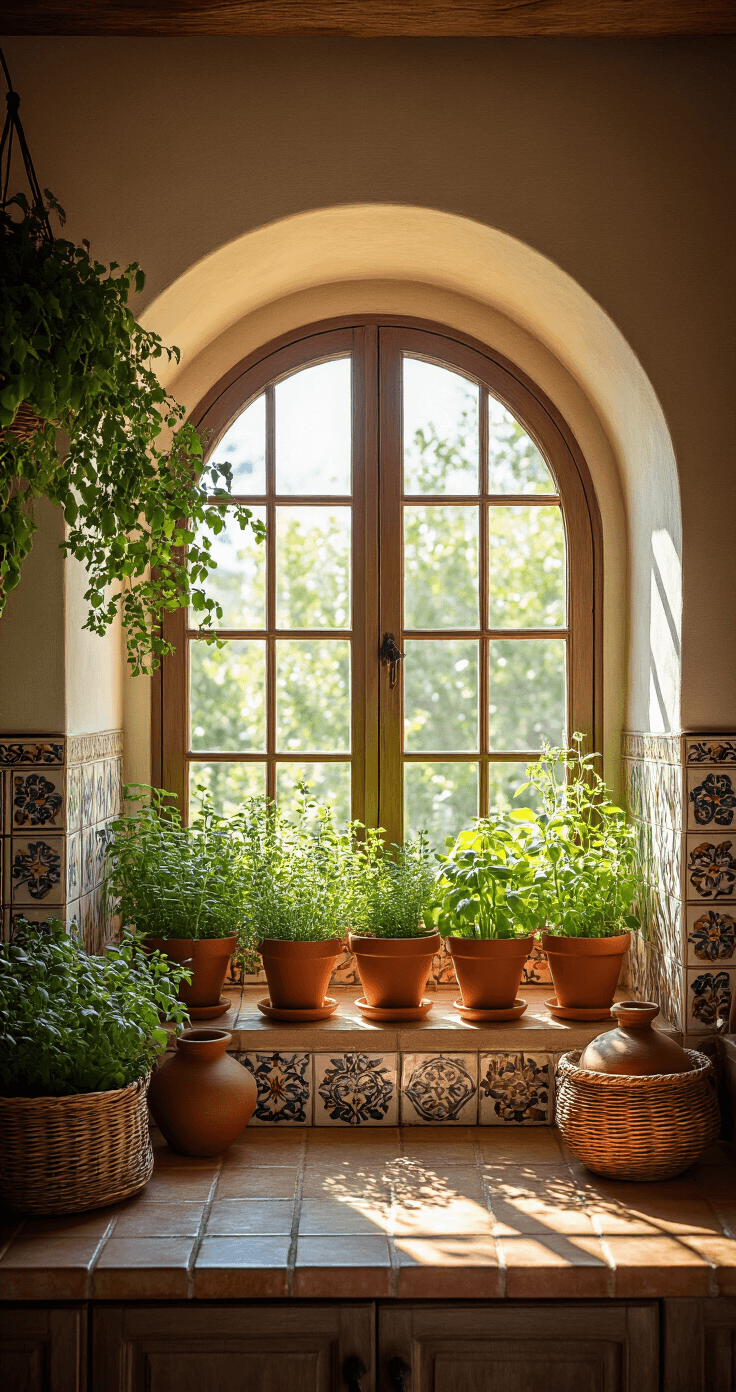
✎ Steal This Look
- Paint Color: Fine Paints of Europe Hollandlac Brilliant Farrow & Ball French Gray 18
- Furniture: wall-mounted cedar herb planter with individual 6-inch terracotta pots and slatted drainage backing
- Lighting: Barrina T5 LED grow light strips in warm white 3000K, hardwired under upper cabinets
- Materials: unglazed terracotta for breathability, raw cedar for rot resistance, porous hemp fiber drainage mats, brushed brass plant markers
Every seasoned herb gardener has killed at least one plant by drowning it with kindness—think of drainage and spacing as the foundation that lets your nurturing actually work.
Final Flavor Bomb Thoughts
A kitchen herb garden isn’t just about saving money. It’s about:
- Fresh flavors
- Instant ingredient access
- Bringing life to your kitchen
- Feeling like a culinary rockstar
Ready to start your herb adventure? Your taste buds will thank you!
Quick Start Checklist
- ✅ Choose your herbs
- ✅ Get proper containers
- ✅ Find your sunny spot
- ✅ Plant with love
- ✅ Water wisely
- ✅ Harvest and enjoy!
Pro Recommendation: Start small, learn, and grow. Your herb garden is a journey, not a destination.
Happy growing, kitchen warriors! 🌱🔪🍽️
Want to keep this one?
We'll email you the link so you can find it again later.


[…] kitchen cabinets (instant herb garden […]