

This post may contain affiliate links. Please see my disclosure policy for details.
Music Room Ideas for Small Spaces: Maximize Your Musical Haven
Every musician dreams of a perfect space to create, practice, and unwind. But what if you’re working with a tiny room or just a corner of your apartment? Don’t worry – I’ve got the ultimate guide to transforming your compact space into a musical paradise.
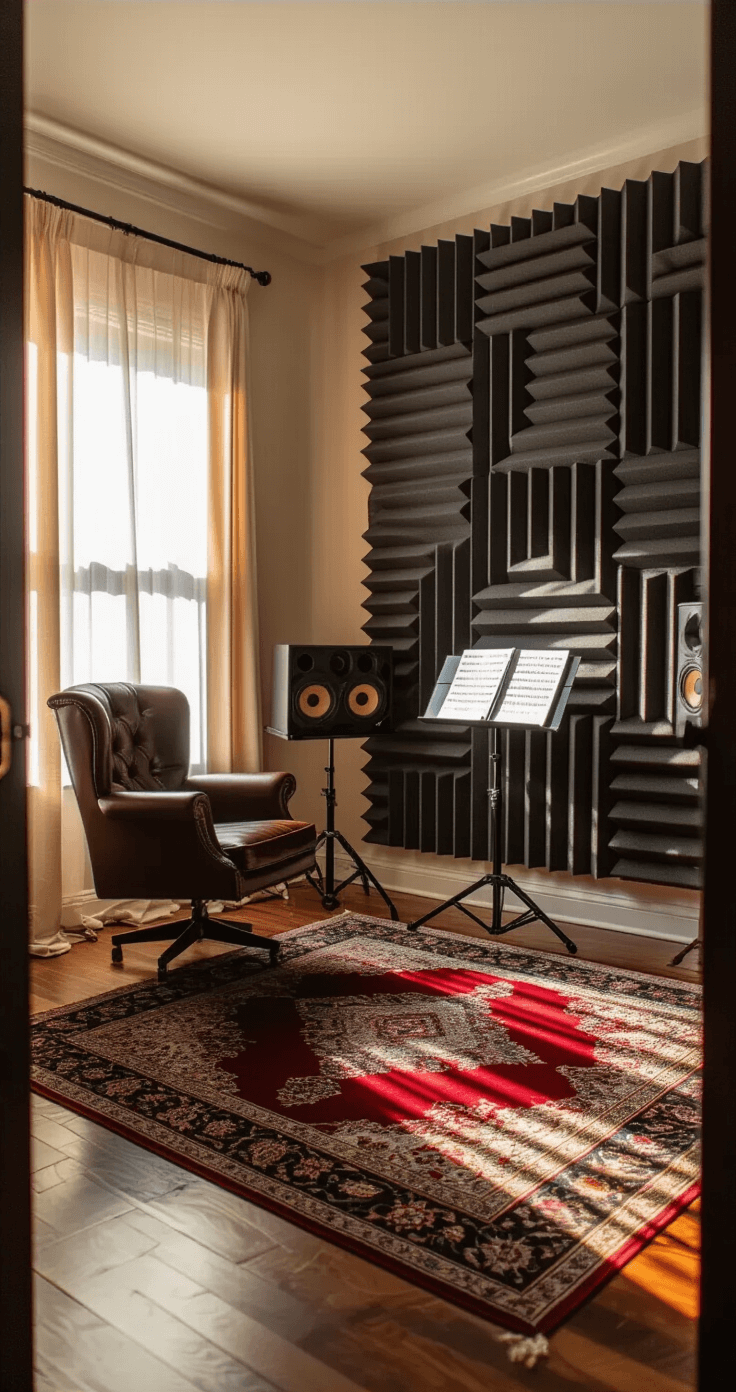
Why Small Spaces Can Be Musical Magic
Limited square footage doesn’t mean limited creativity. In fact, small spaces can become the most intimate and inspiring music sanctuaries. Let’s break down how to make every inch count.
🌟 Steal This Look
- Paint Color: Sherwin-Williams Tricorn Black SW 6258
- Furniture: wall-mounted fold-down desk with integrated cable management and headphone hook
- Lighting: adjustable architect-style LED swing arm wall sconce with dimmer
- Materials: acoustic felt wall panels in charcoal, reclaimed wood floating shelves, cork flooring tiles for sound absorption
I once squeezed an entire recording setup into a 6×8 foot closet, and that cramped cocoon produced some of my most focused work—small spaces force you to curate ruthlessly and actually finish songs instead of endlessly tweaking.
Soundproofing: Your First Defense
Noise control is crucial in small spaces. Here’s how to keep your music contained:
- Use acoustic foam panels to absorb sound
- Layer thick area rugs for sound dampening
- Hang heavy curtains around your music zone
- Choose upholstered furniture that absorbs sound
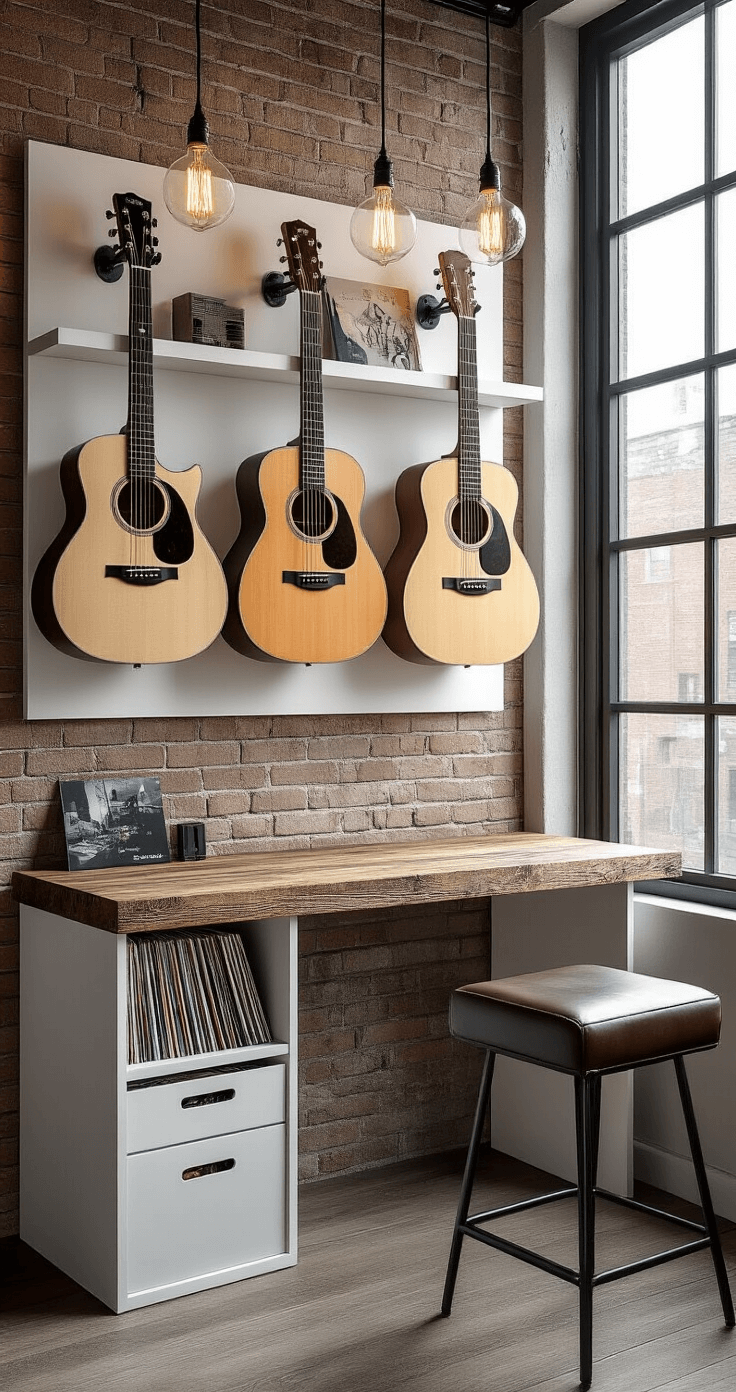
🎨 Steal This Look
- Paint Color: Benjamin Moore Kendall Charcoal HC-166
- Furniture: tufted velvet storage ottoman with hidden sheet music compartment
- Lighting: adjustable architect’s floor lamp with weighted base
- Materials: dense acoustic foam, wool-blend textiles, mass-loaded vinyl, cork underlayment
Most people treat soundproofing as an afterthought and end up with egg-crate foam that screams ‘college dorm’—the key is integrating absorption into your aesthetic from day one so your music room feels designed, not patched together.
Smart Storage Solutions
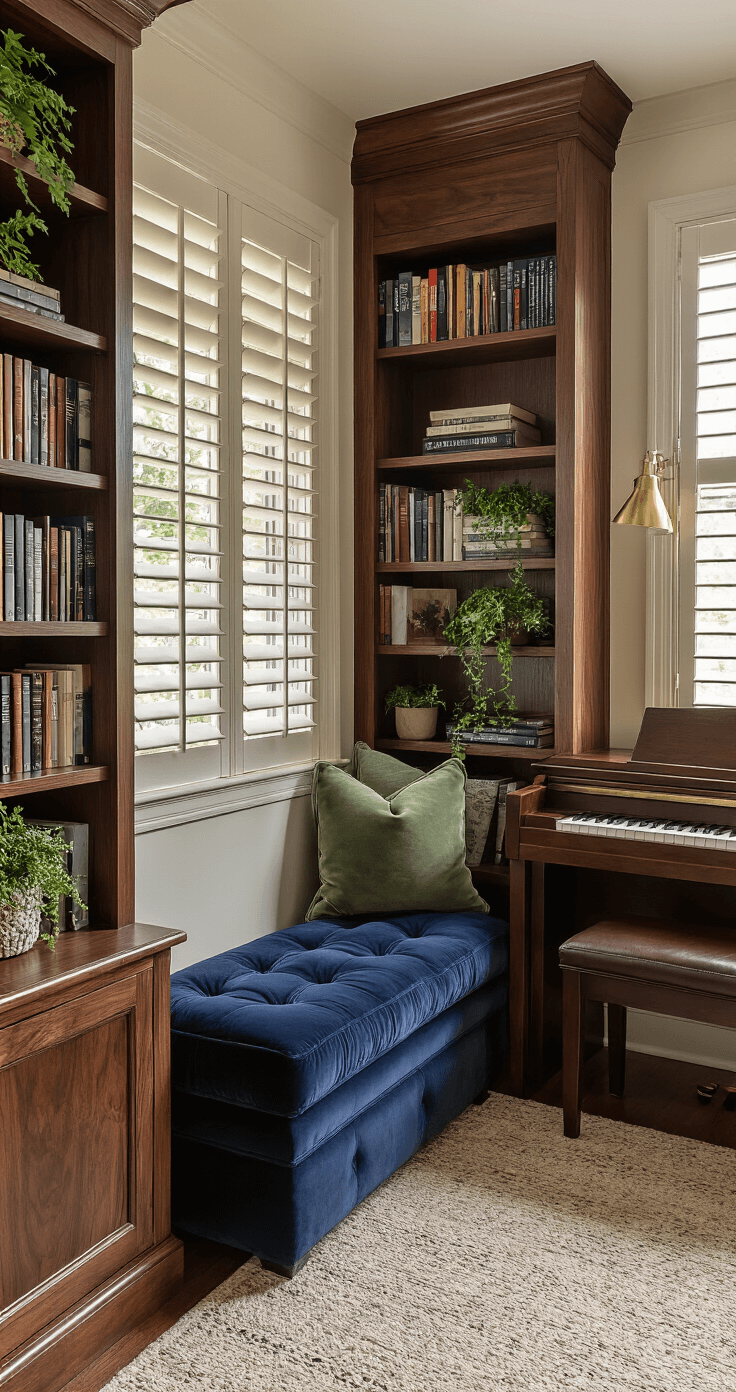
Wall-Mounted Instrument Display
Why hide your beautiful instruments? Turn them into art:
- Mount guitars on walls using decorative instrument holders
- Create a focal point with your musical collection
- Free up floor space instantly
Multifunctional Furniture Tricks
- Opt for lightweight, modular pieces
- Choose chairs with exposed legs to create visual space
- Invest in compact desks with built-in storage
✎ Steal This Look
- Paint Color: Farrow & Ball Hague Blue No. 30
- Furniture: String modular shelving system with narrow depth shelves for displaying vinyl and small instruments
- Lighting: HAY Nelson Cigar Wall Sconce with swing arm for targeted instrument display lighting
- Materials: Ash wood instrument hooks with leather wrapping, matte black powder-coated steel brackets, cork wall panels for acoustic dampening behind displays
There’s something deeply satisfying about walking into a room where your guitar greets you like an old friend rather than hiding in a case under the bed—this approach turns your practice space into a daily invitation to play.
Lighting and Atmosphere
Illuminate Your Musical World
- Use wall sconces for focused lighting
- Add mirrors to reflect and amplify natural light
- Create zones with strategic lighting
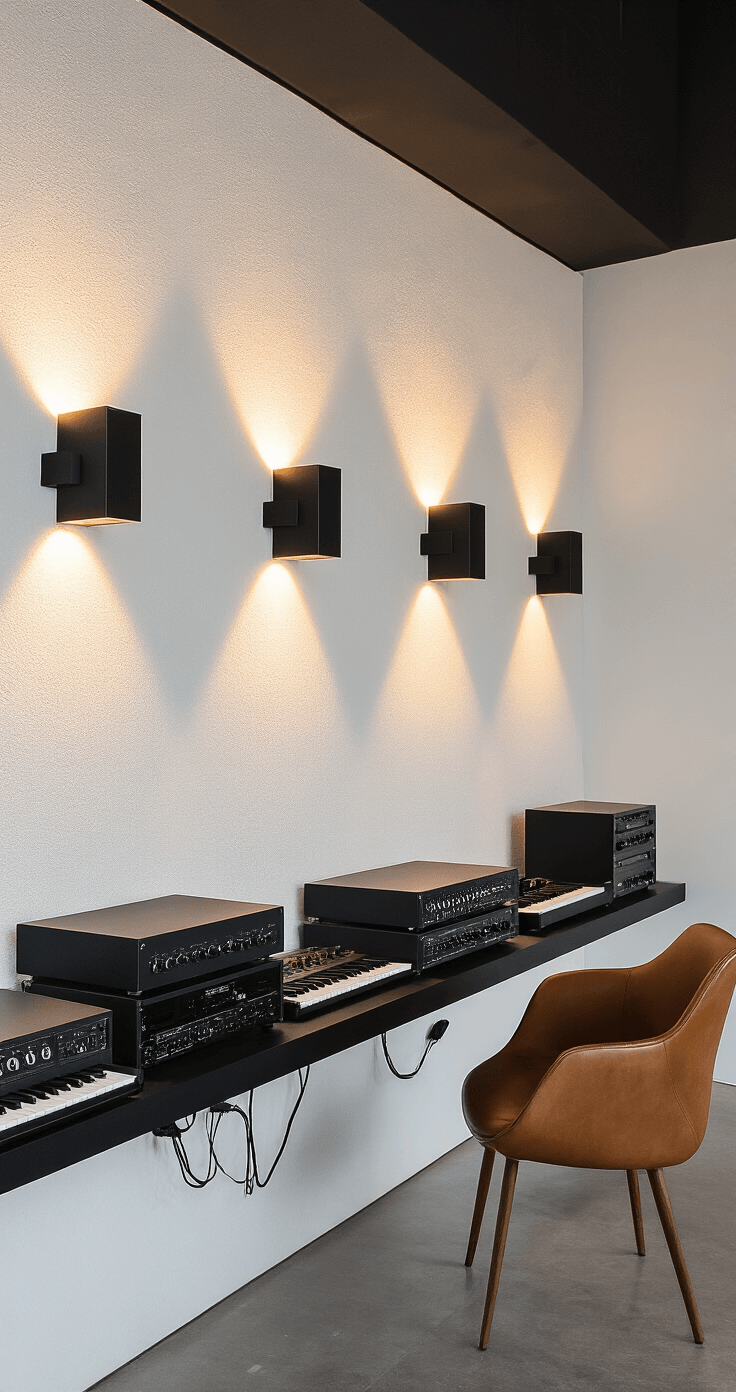
🖼 Steal This Look
- Paint Color: Behr Black Mocha N140-7
- Furniture: floating wall-mounted shelf with integrated LED strip underneath for music storage and ambient glow
- Lighting: adjustable brass swing-arm wall sconce with dimmable warm LED
- Materials: brushed brass, frosted glass, matte black metal, warm wood tones
There’s something almost sacred about dimming the lights for a late-night practice session—proper lighting transforms a cramped corner into your personal concert hall.
Save this article
Enter your email and we'll send it straight to your inbox.
Acoustic Enhancement Hacks
Sound quality matters, even in small spaces:
- Place bookshelves strategically to absorb and diffuse sound
- Add houseplants for natural sound absorption
- Use area rugs to reduce echo
Creating Your Mini Performance Zone
Even in a tiny space, you can define a “stage”:
- Center a small rug to mark your performance area
- Add a spotlight for drama
- Arrange seating to create an intimate concert feel
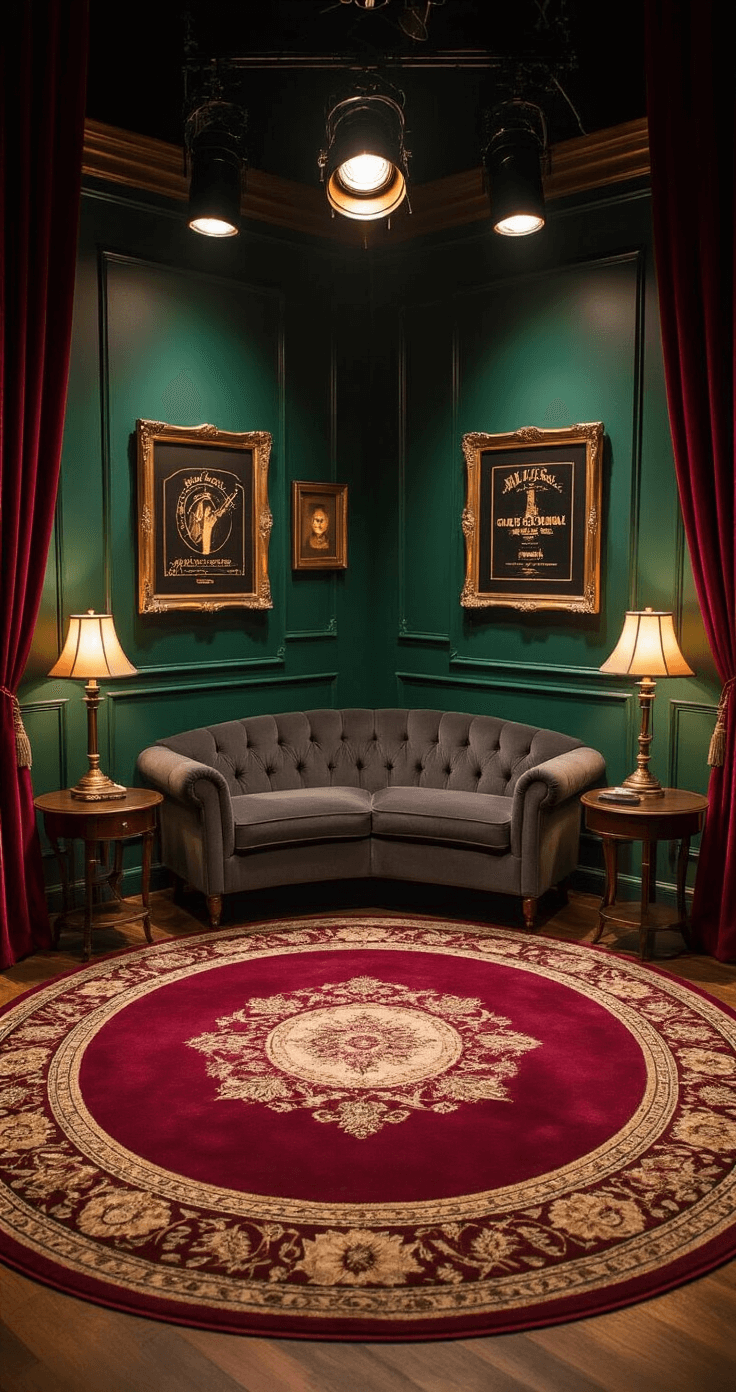
💡 Steal This Look
- Paint Color: Valspar Night View 5007-3C
- Furniture: wall-mounted folding music stand that doubles as display shelf
- Lighting: adjustable track lighting with warm dimmable LED spots
- Materials: cork wall panels, velvet upholstery, woven wool rugs, reclaimed wood shelving
There’s something deeply satisfying about closing your eyes in a 8×10 foot room and hearing your instrument sound like it’s filling a concert hall—small space acoustics done right create that intimate magic where every note feels personal.
✅ Get The Look
Pro Tips for Maximizing Tiny Spaces
- Measure your space meticulously
- Use vertical storage solutions
- Choose a color palette that inspires your musical style
- Keep cables organized with cable management systems
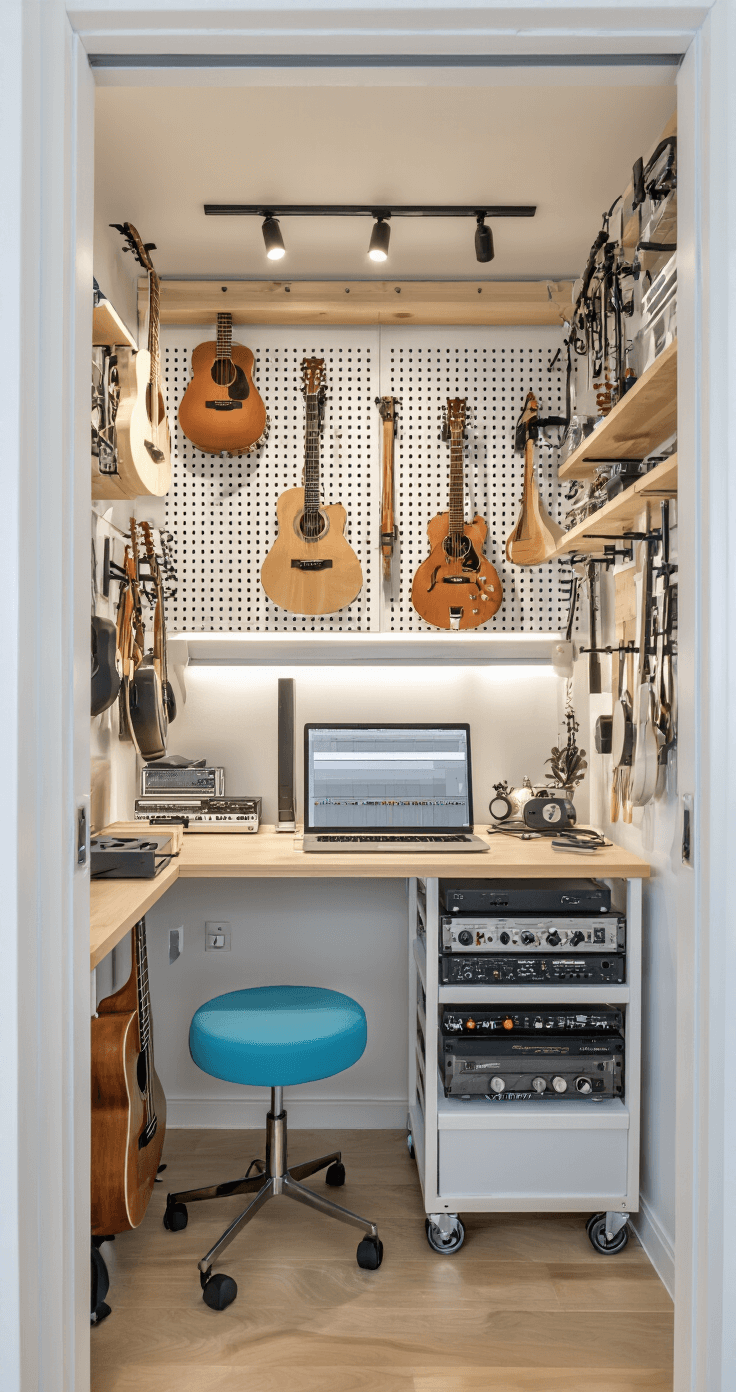
✎ Steal This Look
- Paint Color: use PPG brand. Match the ACTUAL wall color in the image. Format: PPG ColorName CODE
- Furniture: wall-mounted folding desk that doubles as a mixing station, narrow vertical instrument rack with padded dividers for guitars or violins, and a compact storage ottoman with hidden compartments for sheet music and accessories
- Lighting: articulating wall-mounted LED piano lamp with adjustable color temperature and USB charging port
- Materials: cork wall panels for natural acoustic dampening, matte black powder-coated steel for hardware, and warm walnut veneer for surfaces that won’t compete with instrument finishes
Every square inch matters when your passion outgrows your square footage, and the most satisfying small music rooms feel intentional rather than cramped—like a well-designed cockpit where everything has its purpose.
The Psychological Impact of Your Music Space
Your music room isn’t just a physical space – it’s an emotional sanctuary. By creating a thoughtful, intentional environment, you’re nurturing your creativity and passion.
Final Thoughts
Small doesn’t mean limiting. With smart design, your compact music room can become the most inspiring spot in your home. Embrace the intimacy, get creative, and let the music flow!
Pro Tip: Always prioritize your comfort and inspiration over strict design rules. Your space should feel like an extension of your musical soul.

💡 Steal This Look
- Paint Color: use Dunn-Edwards brand. Match the ACTUAL wall color in the image. Format: Dunn-Edwards ColorName CODE
- Furniture: specific furniture for this room
- Lighting: specific lighting fixture
- Materials: key textures and materials
There’s something almost sacred about closing the door to a space that exists purely for the music you make; I’ve seen clients weep the first time they realize they finally have a room that asks nothing of them but to create.
Want to keep this one?
We'll email you the link so you can find it again later.


