
This post may contain affiliate links. Please see my disclosure policy for details.
Why Most Boy Bedroom Designs Fail Fast
Your kid’s interests change faster than you can say “Fortnite.”
One day he’s obsessed with trains, the next it’s space, then sharks, then back to trains but only vintage ones because he’s suddenly a connoisseur at age seven.
Here’s what actually matters:
- Flexibility over theme
- Storage that actually gets used
- Furniture that doesn’t scream “toddler”
- Colors that won’t make you cringe in six months

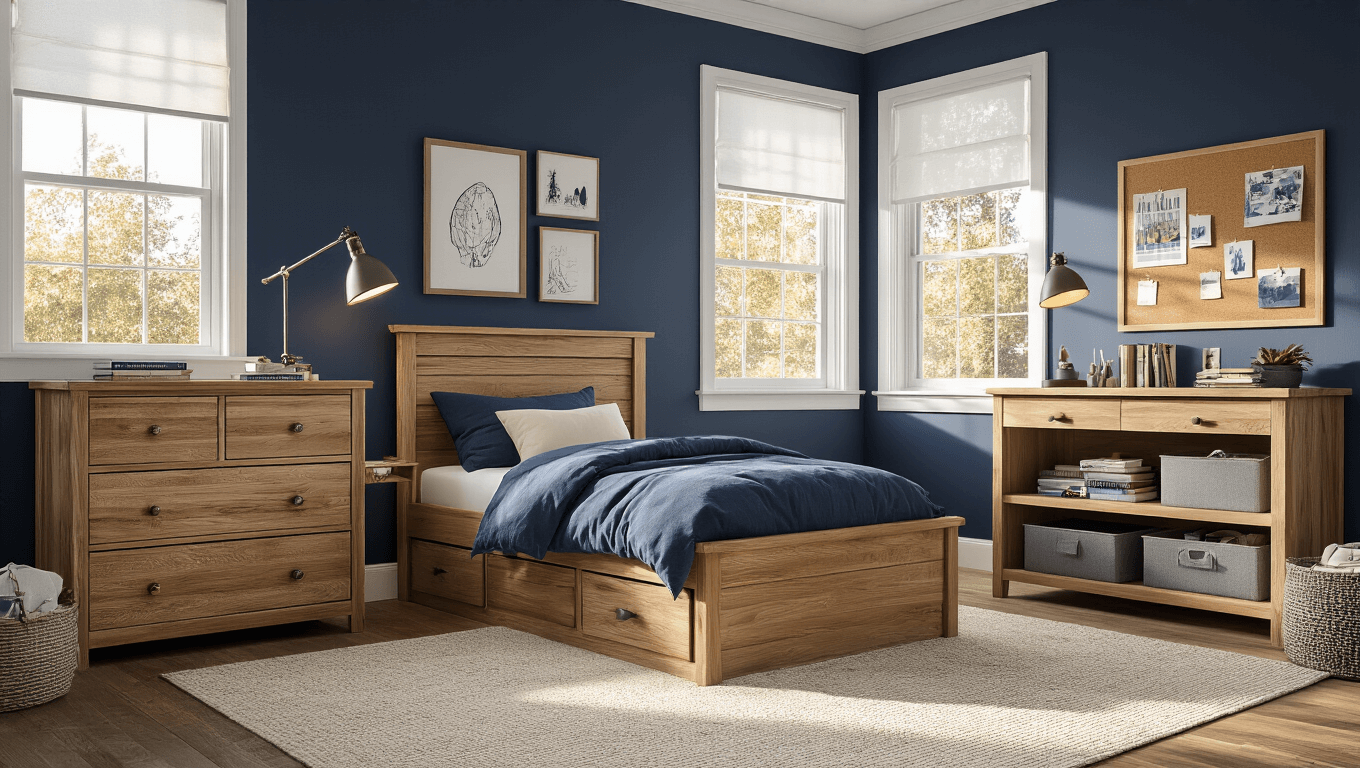
★ Steal This Look
- Paint Color: Sherwin-Williams Agreeable Gray SW 7029
- Furniture: platform bed with built-in storage drawers and a modular desk system that can reconfigure as needs change
- Lighting: adjustable track lighting with dimmable LED spots that can pivot to highlight changing wall art or collections
- Materials: washed oak veneer, matte black metal hardware, and performance-grade upholstery that resists stains and wear
This is the room he’ll remember as his first real space—make it feel like it belongs to him, not a catalog version of childhood that expires by third grade.
Colors That Won’t Make You Want to Repaint Next Year
Young boys bedroom ideas often default to primary colors that feel more Chuck E. Cheese than home.
Stop that.
Navy blue is your best friend.
It’s masculine without being aggressive, pairs with literally everything, and your son won’t outgrow it when he hits middle school.
I paired navy walls in my nephew’s room with white trim and natural wood furniture.
The kid went from age 5 to 11 without requesting a single change.
Here’s my color formula:
- Base: Navy, charcoal gray, or deep forest green
- Accent: One bold color in easily changeable items
- Balance: Plenty of white or cream to keep it bright
What you should avoid:
- Cartoon character paint colors
- Themes painted directly on walls
- Anything that requires repainting to change the look
Grab removable wall decals instead of paint for themed elements.
They peel off when interests change, and you keep your security deposit.
Furniture That Actually Lasts Beyond Age 8
I see you eyeing that race car bed.
Don’t do it.
Invest in real furniture.
A quality twin or full-size bed frame in natural wood or metal will take your son from kindergarten through college.
My brother bought a solid wood bed frame for his son’s room in 2015.
That same bed now holds a teenager who’s 5’10” and still growing.
Essential furniture pieces:
- Bed frame with neutral styling (no themes, no shapes)
- Dresser with deep drawers (boys stuff things, trust me)
- Desk that adjusts or has generous legroom
- Bookshelf that’s sturdy enough to climb (because they will)
Skip these:
- Themed furniture sets
- Particle board anything if you can afford better
- Furniture that “matches” too perfectly (looks catalog, not lived-in)
💡 Steal This Look
- Paint Color: use Farrow & Ball brand. Match the ACTUAL wall color in the image. Format: Farrow & Ball ColorName CODE
- Furniture: solid wood platform bed frame in natural oak with clean lines, no headboard cutouts or themed shapes
- Lighting: adjustable swing-arm wall sconce in matte black or brass for bedside reading
- Materials: white oak or ash wood, powder-coated steel hardware, linen-upholstered desk chair, woven jute or wool rug
I’ve watched too many parents buy the ‘perfect’ themed bedroom set only to field complaints from an embarrassed 9-year-old who suddenly wants his room to look ‘normal’—neutral, quality pieces let him layer in personality through easily changeable bedding and art instead.
Storage Solutions That Boys Will Actually Use
Here’s a secret: boys will use storage if it’s easier than not using it.
That means open bins beat closed drawers.
Save this article
Enter your email and we'll send it straight to your inbox.
Big baskets beat small compartments.
Storage that works:
- Large fabric storage bins for toys (just chuck it in, done)
- Open shelving for books and collections
- Under-bed drawers on wheels (out of sight, easy access)
- Wall hooks at kid height for bags and jackets
I installed three large hooks in my godson’s room at four feet high.
Suddenly his backpack and jacket stopped living on the floor.
Storage that sits empty:
- Complicated organizers with tiny sections
- Anything that requires folding
- Storage that’s hard to reach
- See-through bins (makes the room look cluttered even when organized)
Maximize Space Without Making It Feel Cramped
Small room? Join the club.
Vertical space is your secret weapon.
A loft bed instantly doubles usable space by putting sleep up high and creating a den, desk area, or hangout spot underneath.
My friend installed one in her son’s 10×10 room.
Suddenly he had space for a reading nook, desk, and still room to build Lego sets on the floor.
Space-saving moves:
- Wall-mounted shelves instead of bookcases
- Beds with built-in storage drawers
- Corner desks that use dead space
- Fold-down desks for homework zones
What eats space without adding value:
- Too much furniture
- Giant toy chests that become black holes
- Oversized “statement” pieces
- Furniture in the middle of the room

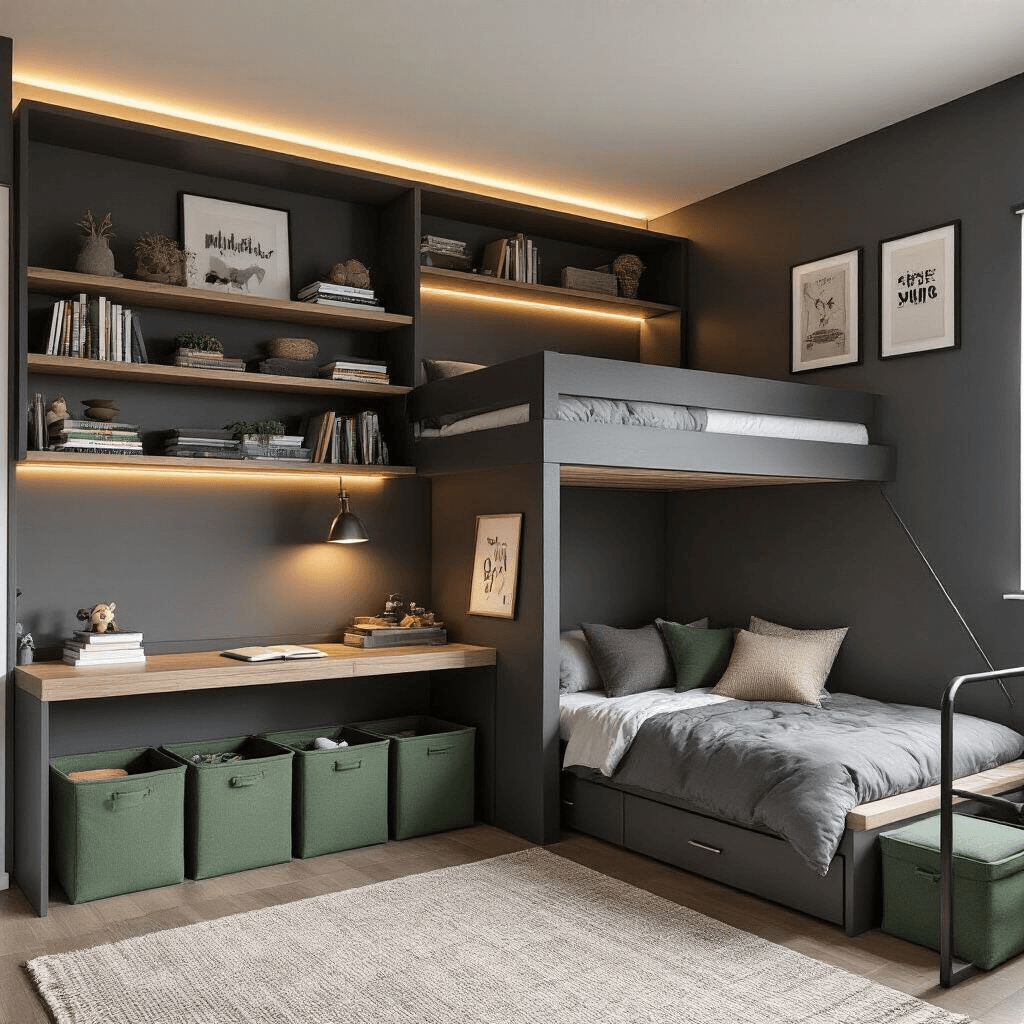
🎨 Steal This Look
- Paint Color: Valspar Polar Bear 7006-12
- Furniture: twin low loft bed with integrated ladder and under-bed clearance for desk or storage configuration
- Lighting: adjustable swing-arm wall sconce with USB charging port, mounted at desk height
- Materials: white painted MDF with natural pine accents, powder-coated metal hardware, woven rope storage baskets
This setup mirrors what actually works in real homes where square footage comes at a premium—the loft bed isn’t just furniture, it’s architecture that reclaims childhood territory from the ceiling down.
Lighting That Sets the Right Mood
Overhead lights make rooms feel like interrogation chambers.
Your son needs layers.
Three types of lighting:
- Ambient (ceiling fixture with dimmer)
- Task (desk lamp for homework)
- Accent (bedside lamp or LED strips for chill time)
I added LED strip lights along my cousin’s son’s bookshelf.
He actually started reading at bedtime because the space felt cozy instead of clinical.
Practical lighting tips:
- Install dimmers on overhead lights
- Choose warm bulbs (2700-3000K) over cool white
- Put lamps on timers for easy bedtime routines
- Use nightlights that aren’t babyish (star projectors work for all ages)
Create Zones Even in Small Rooms
Even tiny rooms need definition.
Sleep zone. Play zone. Study zone.
Use rugs to define areas.
A rug under the bed says “this is the sleep area.”
A different rug in the corner with the bookshelf says “this is the reading nook.”
Other zone creators:
- Different wall colors or accent walls
- Furniture arrangement
- Lighting differences
- Curtains or room dividers
Want to keep this one?
We'll email you the link so you can find it again later.


