This post may contain affiliate links. Please see my disclosure policy for details.
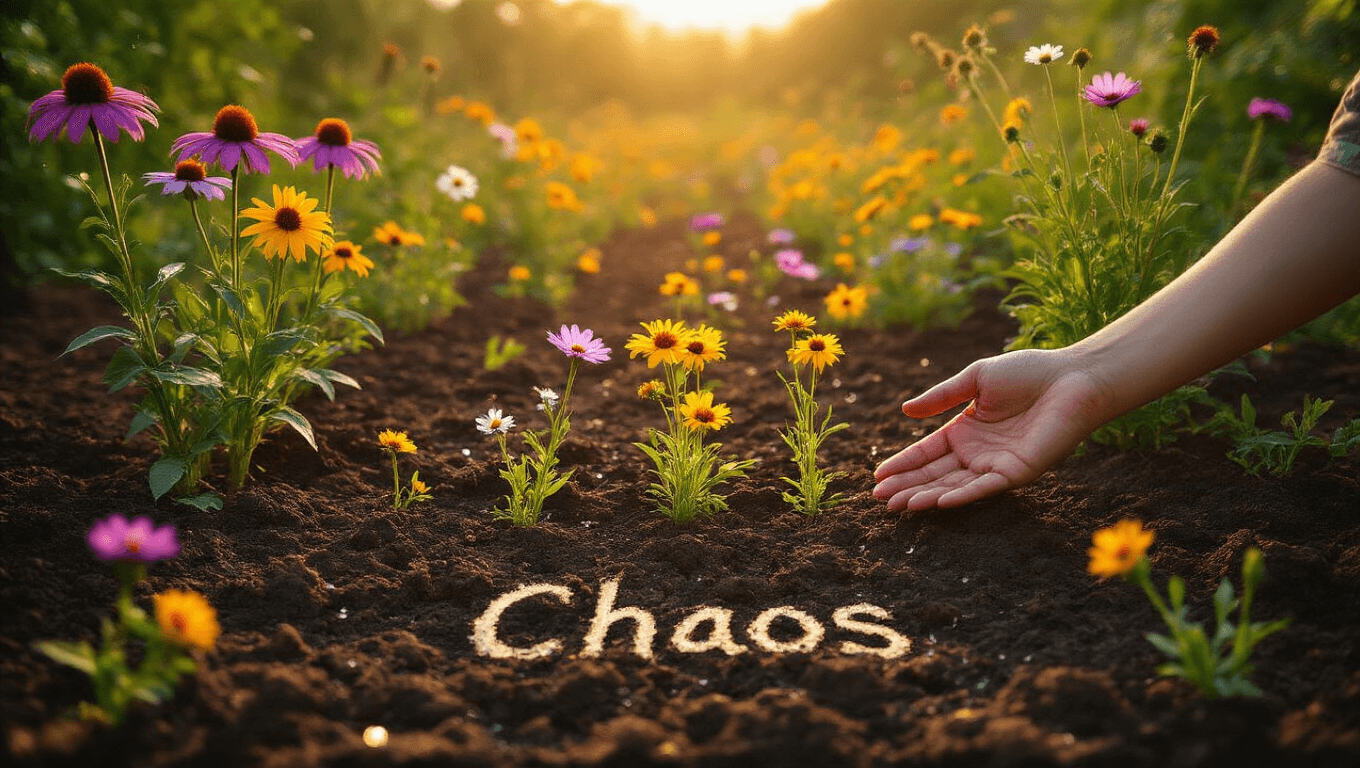
Chaos gardening is the wild, wonderfully messy approach to growing plants that throws traditional gardening rules straight out the window. I’ll be honest with you. For years, I obsessed over perfect garden rows, stressed about spacing requirements, and nearly had a breakdown when my tomatoes weren’t lined up like soldiers. Then I discovered chaos gardening, and everything changed.
This low-maintenance style lets plants self-seed, mingle freely, and fill every nook however they please—think companion planting on steroids, where nature sorts out the companions, weeds get crowded out, and pollinators flock to the biodiversity explosion. No more deadheading or staking; just scatter seeds, mulch heavily, and watch your plot turn into a thriving jungle that produces abundantly with zero fuss.
Ready to embrace the beautiful mess? Grab chaos gardening seeds and supplies to kick off your wild garden revolution.

What the Hell Is Chaos Gardening Anyway?
Contents
Picture this: you grab a handful of mixed seeds, toss them across your yard like you’re feeding chickens, and walk away.
That’s chaos gardening.
No measuring tape required. No garden plan sketches. No midnight panic about whether you planted your carrots too close to your beets.
Also called scatter gardening or guerrilla gardening, this method lets nature do what it does best—figure things out on its own.
I started with a bare patch behind my garage that mocked me every time I looked out the window. Instead of spending a weekend creating the “perfect” garden bed, I roughed up the soil, scattered wildflower seed mix, and gave it a good watering.
Three weeks later? An explosion of colors that looked better than anything I’d meticulously planned.
The Two Ways to Start (Pick Your Energy Level)
Option 1: The “I Have Ten Minutes” Method
Look, I get it. You’re busy.
Here’s what I did for my first chaos garden:
- Mowed the area as short as possible
- Raked away the cut grass and debris
- Took a metal rake and scratched up the soil surface
- Watered everything thoroughly
- Threw seeds everywhere (yes, literally threw them)
- Patted them down gently with my hands
- Watered again with a gentle spray
Done. Total time: 15 minutes.
Option 2: The “I Actually Have a Saturday” Method
When I tackled my front yard chaos garden, I had more time and wanted better results:
- Cleared out all the existing weeds and grass
- Used a garden tiller to work the top few inches
- Mixed in compost (my soil was basically concrete)
- Added sand because my clay soil could’ve been used for pottery
- Smoothed everything with a rake
- Scattered my seed mix
- Pressed seeds down gently
- Watered with a fine mist
The extra effort gave me thicker, faster growth. But honestly? Both methods worked.

What I Actually Grew (And What Surprised Me)
The Flower Explosion
My first chaos garden was pure flowers.
I bought three packets of discount wildflower seeds from the clearance rack—the ones nobody wanted because they were from last season.
Within weeks, I had:
- Purple coneflowers popping up next to yellow coreopsis
- Cosmos dancing in the breeze
- Black-eyed Susans competing for space with bachelor buttons
The randomness created visual interest I could never have designed intentionally.
The Edible Experiment
The following spring, I got brave.
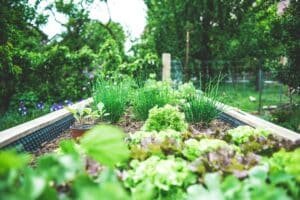
I mixed lettuce, spinach, radish seeds, cilantro, and nasturtiums in a seed storage container, shook it like a cocktail shaker, and broadcast it across my raised bed.
What happened shocked me:
The radishes came up first, breaking up the soil for everything else.
The lettuce filled in the gaps, creating a living mulch that kept the soil moist.
The nasturtiums sprawled everywhere, their peppery leaves adding flavor to salads while their flowers attracted pollinators.
The cilantro self-seeded, giving me three harvests from one planting.
I harvested what I wanted and let everything else do its thing.
A volunteer pumpkin plant from last year’s compost showed up uninvited and gave me four perfect pumpkins.

Why This Method Actually Works (The Science-ish Part)
It Confuses the Hell Out of Pests
Aphids attacked my neat rows of kale last year like it was an all-you-can-eat buffet.
In my chaos garden? They couldn’t figure out where to start.
When you mix dozens of plant varieties, pests that specialize in one crop get confused by the competing scents and colors.
Meanwhile, beneficial insects move in:
- Ladybugs hunting aphids
- Lacewings devouring whiteflies
- Parasitic wasps taking care of caterpillars
I didn’t spray anything. The garden policed itself.
Dense Planting Chokes Out Weeds
Here’s what nobody tells you about traditional garden spacing—all that empty soil between plants is an open invitation for weeds.
In chaos gardens, plants grow so densely that they shade the soil.
No light = no weed germination.
I used to spend Saturday mornings on my hands and knees pulling weeds. Now I spend them drinking coffee and admiring my garden.
Your Soil Stays Healthier
Bare soil bakes in the sun, losing moisture and beneficial microorganisms.
The dense plant cover in chaos gardens:
- Keeps soil temperatures moderate
- Retains moisture longer
- Protects beneficial fungi and bacteria
- Adds organic matter as lower leaves drop
My soil improved more in one chaos garden season than in three years of traditional gardening.

What I Learned the Hard Way (So You Don’t Have To)
Don’t Plant Chaos Gardens Right Next to Your House
My first attempt went right up against my back deck. Bad idea.
Here’s why: Chaos gardens explode with vigorous growth—self-seeding flowers, sprawling vines, and aggressive perennials that quickly turn into a tangled jungle. What starts as “charming wildness” becomes a nightmare of stems clawing at siding, roots cracking foundations, and pests setting up permanent camp right at your doorstep.
Keep it 3-5 feet away minimum. This buffer zone prevents moisture buildup against walls (hello, rot and mold), gives you access for maintenance, and stops invasive spread from overwhelming your home’s exterior. Create a mulched path or gravel strip as a natural boundary.
Ready to start your chaos garden the smart way? Check out chaos gardening seeds and boundary materials to set up a thriving, contained wild space.