This post may contain affiliate links. Please see my disclosure policy for details.
Garden Bridges: Transforming Outdoor Spaces with Functional Art
Are you tired of looking at a bland, uninspired garden? Want to add a touch of magic that instantly elevates your outdoor space? Garden bridges might just be the secret weapon you’ve been searching for.

★ Steal This Look
- Paint Color: Sherwin-Williams Rookwood Dark Green SW 2808
- Furniture: weathered teak Adirondack chairs with wide armrests positioned at bridge approach
- Lighting: low-voltage brass path lights with frosted seeded glass shades flanking bridge entry
- Materials: rough-hewn cedar planks, hand-forged iron railings with scrollwork, moss-covered fieldstone abutments, river rock bedding
There’s something deeply satisfying about crossing your own bridge—it’s a small daily ritual that transforms a simple garden walk into a moment of intention, and guests always remember homes that invite this kind of slow, deliberate movement through the landscape.
Why Garden Bridges Are More Than Just Crossings
Let’s cut to the chase. Garden bridges aren’t just about getting from point A to point B. They’re about creating moments of wonder in your outdoor sanctuary.
Types of Garden Bridges That Will Make Your Neighbors Jealous
1. Wooden Wonders
- Rustic charm that screams “Instagram-worthy”
- Budget-friendly options for DIY enthusiasts
- Perfect for cottage and naturalistic garden styles
2. Stone Bridges: The Timeless Classic
- Heavyweight champions of garden design
- Permanent installations that scream sophistication
- Ideal for traditional and formal garden layouts
3. Japanese-Inspired Bridges
- Minimalist elegance
- Symbolism meets functionality
- Creates a zen-like atmosphere in any garden
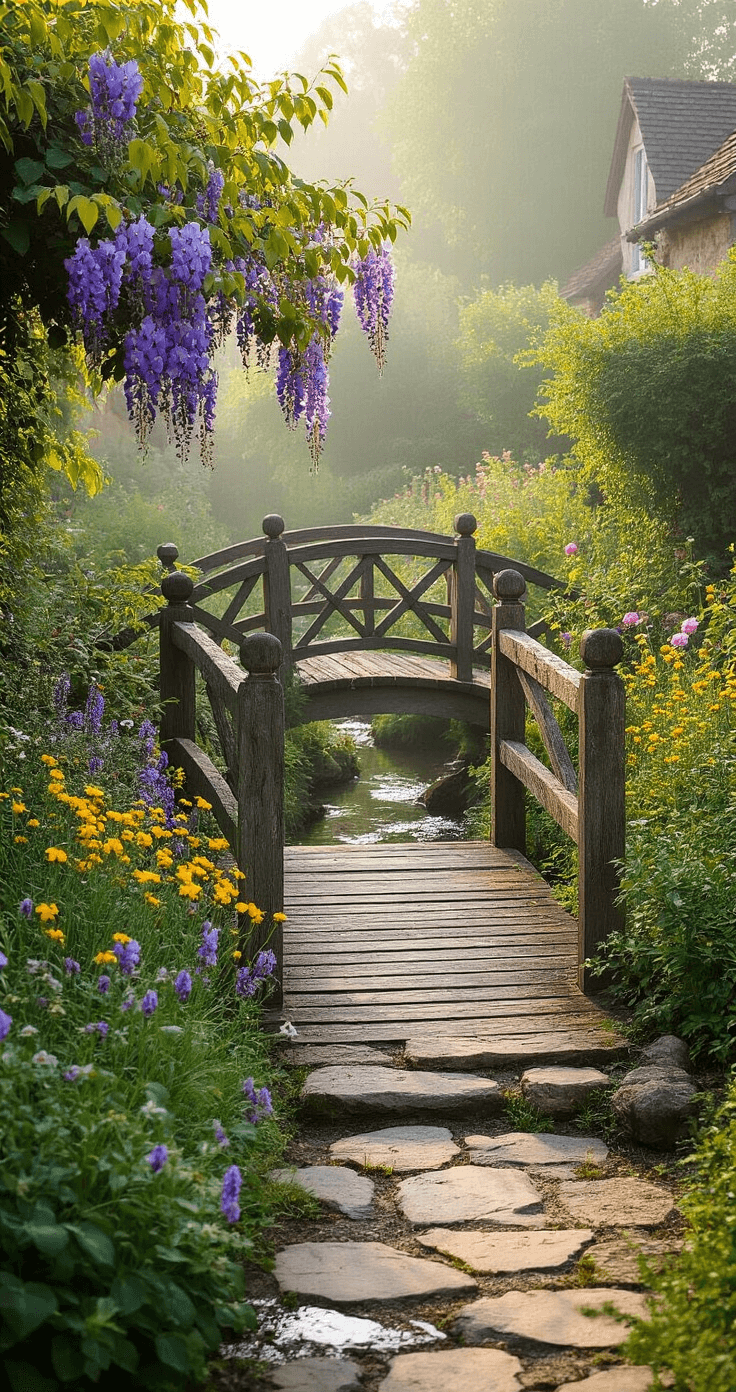
🎨 Steal This Look
- Paint Color: Benjamin Moore Kendall Charcoal HC-166
- Furniture: weathered teak Adirondack chairs with olive green Sunbrella cushions positioned as a viewing vignette facing the bridge
- Lighting: low-voltage brass path lights with warm 2700K LEDs lining the approach to the bridge
- Materials: reclaimed cedar planks, moss-covered fieldstone, river rock bedding, untreated hemp rope railings, aged copper post caps
There’s something almost meditative about pausing mid-span, and the best garden bridges invite exactly that hesitation—transforming a 10-foot walk into a moment you actually remember.
Practical Considerations: It’s Not Just About Looks
Materials Matter
Wood Selection:
- Pressure-treated lumber
- Rot-resistant options
- Consider your local climate
Placement Strategies:
- Create visual focal points
- Define garden “rooms”
- Generate intrigue and exploration
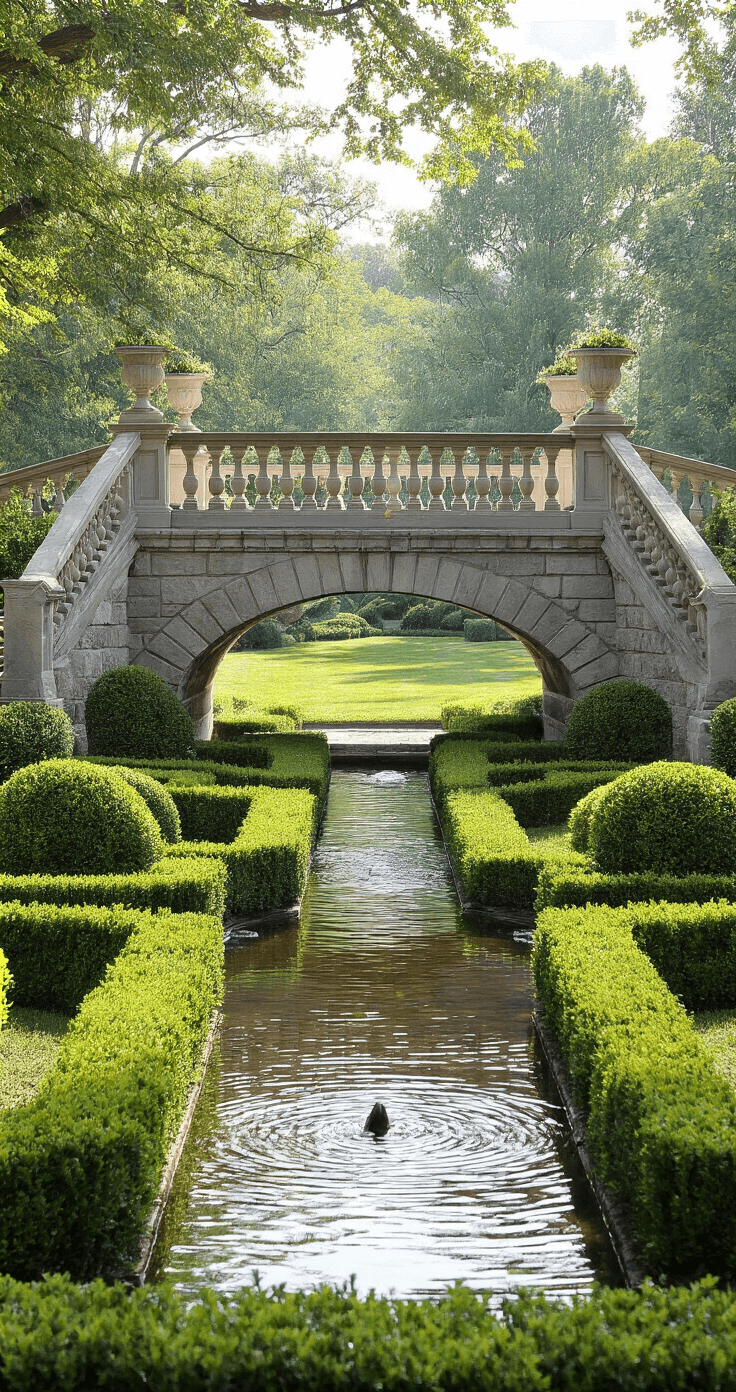
🎨 Steal This Look
- Paint Color: Farrow & Ball Green Smoke 47
- Furniture: Weathered teak Adirondack chair with wide arms for setting down garden tools or tea
- Lighting: Low-voltage brass path lights with frosted glass domes positioned at bridge approach
- Materials: Western red cedar for decking, black locust posts, galvanized steel hardware, crushed granite fines for drainage base
Every bridge I’ve installed that failed did so at the hardware, never the wood; spend the extra $40 on marine-grade fasteners and you’ll save yourself a complete rebuild in year five.
Pro Tips for Bridge Installation
DIY Dreamers, Listen Up!
Quick Wins:
Save this article
Enter your email and we'll send it straight to your inbox.
- Use a jigsaw for custom curved designs
- Add lighting for evening drama
- Consider scale and proportion
What to Avoid
- ❌ Don’t ignore water resistance
- Mismatch bridge style with garden theme
- Overlook structural integrity
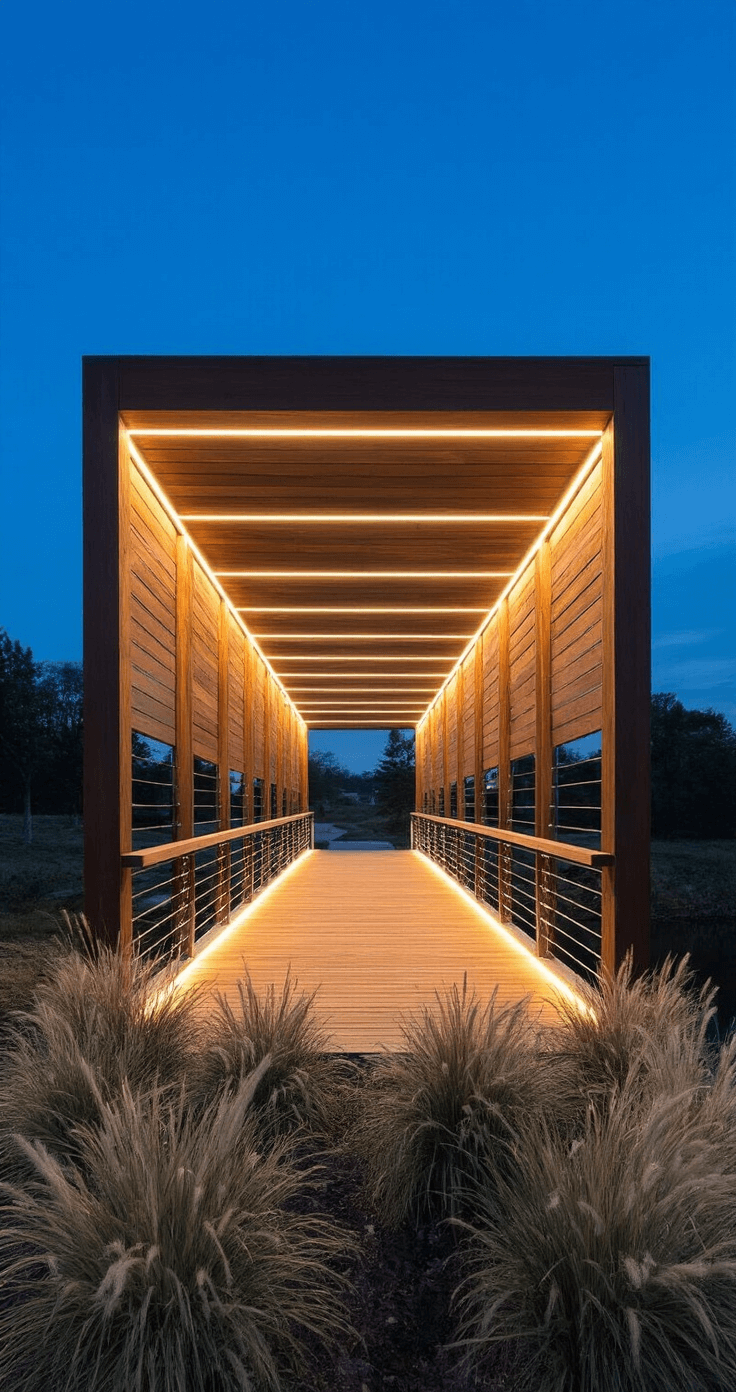
🖼 Steal This Look
- Paint Color: Behr Garden Bridge Green S-H-460
- Furniture: cedar garden bridge with handrails and built-in solar post caps
- Lighting: low-voltage LED path lights with warm 2700K temperature for bridge approach
- Materials: pressure-treated cedar or redwood for natural rot resistance, marine-grade stainless steel hardware, Thompson’s WaterSeal for protection
There’s something deeply satisfying about crossing a bridge you built yourself, even if it’s just spanning a modest dry creek bed—it’s the moment your garden stops being a yard and becomes a destination.
Design Inspiration: Making Your Bridge Pop
Accessorize Your Bridge:
- Fairy lights
- Potted plants
- Decorative railings
- Landscape lighting

✎ Steal This Look
- Paint Color: use Valspar brand. Match the ACTUAL wall color in the image. Format: Valspar ColorName CODE
- Furniture: weathered cedar garden bridge with curved arch railings, positioned over a dry creek bed or koi pond
- Lighting: solar-powered LED fairy string lights with warm white 2700K bulbs, wrapped along railings and under-deck
- Materials: natural cedar wood with silver-gray patina, powder-coated iron railing inserts, river rock edging, moss-covered boulders
There’s something deeply satisfying about a bridge that feels discovered rather than installed—like it grew from the landscape itself—and these layered details help craft that storybook authenticity your guests will remember.
Budget Breakdown
| Bridge Type | Cost Range | Difficulty | Wow Factor |
|---|---|---|---|
| Wooden DIY | $100-$500 | Medium | ⭐⭐⭐ |
| Stone | $500-$3000 | High | ⭐⭐⭐⭐⭐ |
| Pre-made | $300-$1500 | Low | ⭐⭐⭐⭐ |

🖼 Steal This Look
- Paint Color: PPG Olive Grove PPG1121-5
- Furniture: weathered teak Adirondack chair with built-in cup holder for bridge viewing
- Lighting: solar-powered copper-finish pathway lights with warm 2700K output
- Materials: pressure-treated pine decking boards, galvanized steel hardware, marine-grade spar varnish, crushed limestone base
There’s something deeply satisfying about crossing a bridge you built with your own hands, even if it’s just spanning a modest dry creek bed—start modest and let your garden evolve around it.
Final Thoughts: Your Garden, Your Canvas
A garden bridge isn’t just a structure. It’s a storytelling element that transforms your outdoor space from mundane to magnificent.
Quick Takeaway
Remember: The perfect garden bridge should:
- Reflect your personal style
- Complement your landscape
- Create a sense of journey and discovery
Ready to bridge the gap between ordinary and extraordinary? Your garden is waiting!
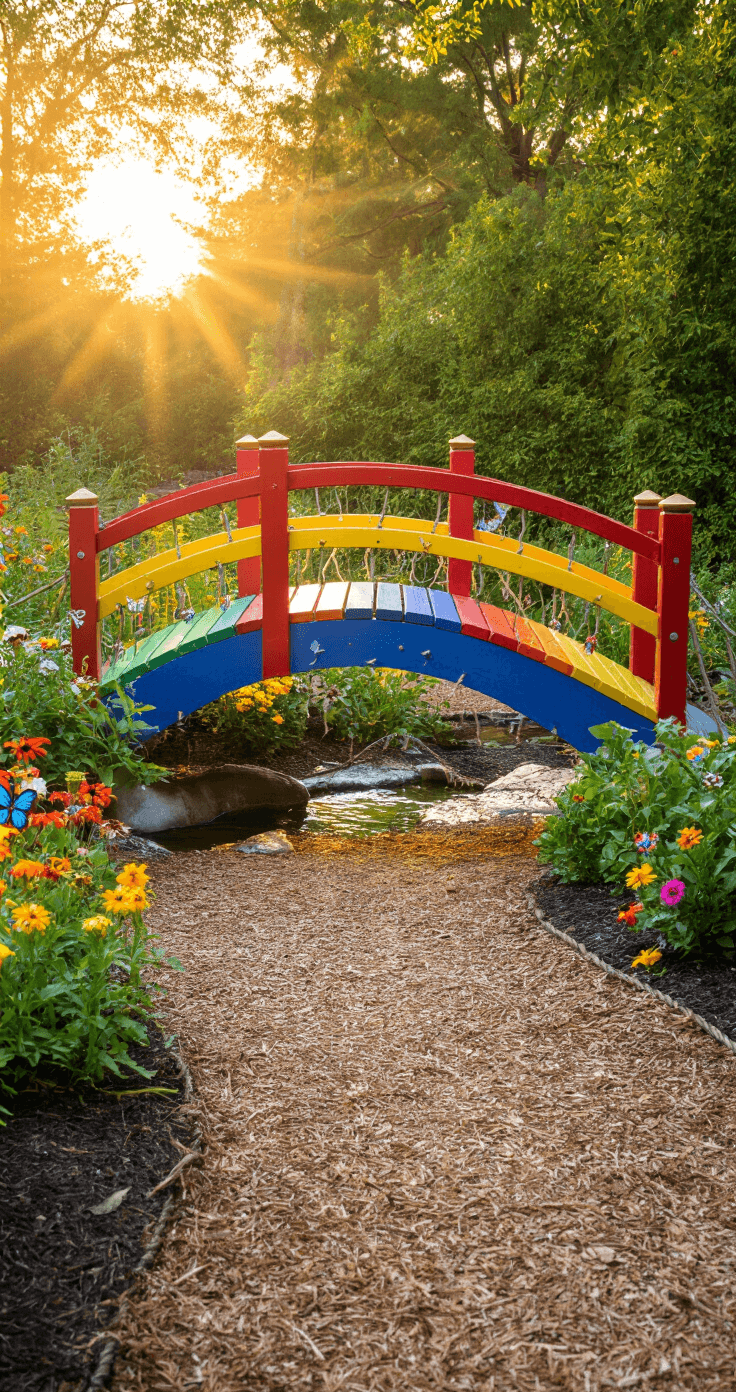
★ Steal This Look
- Paint Color: Dunn-Edwards Sage Wisdom DET620
- Furniture: weathered teak Adirondack chairs with olive-green Sunbrella cushions positioned at bridge approaches
- Lighting: solar-powered copper-finish path lights with amber LED filaments lining bridge walkways
- Materials: reclaimed cedar planks, hand-forged iron railings, moss-covered fieldstone, untreated ipe hardwood
There’s something deeply satisfying about choosing a bridge that feels like it was always meant to be there—trust your instincts over trends, because you’ll be the one walking it at dawn with coffee in hand.
Want to keep this one?
We'll email you the link so you can find it again later.