

This post may contain affiliate links. Please see my disclosure policy for details.
The Ultimate Challenge: Conquering Narrow Room Design
Imagine walking into a room that feels more like a bowling alley than a welcoming living space. That’s the reality for many homeowners with long, narrow living and dining areas. But here’s the good news: with the right design strategies, you can turn this challenging layout into your home’s most impressive room.
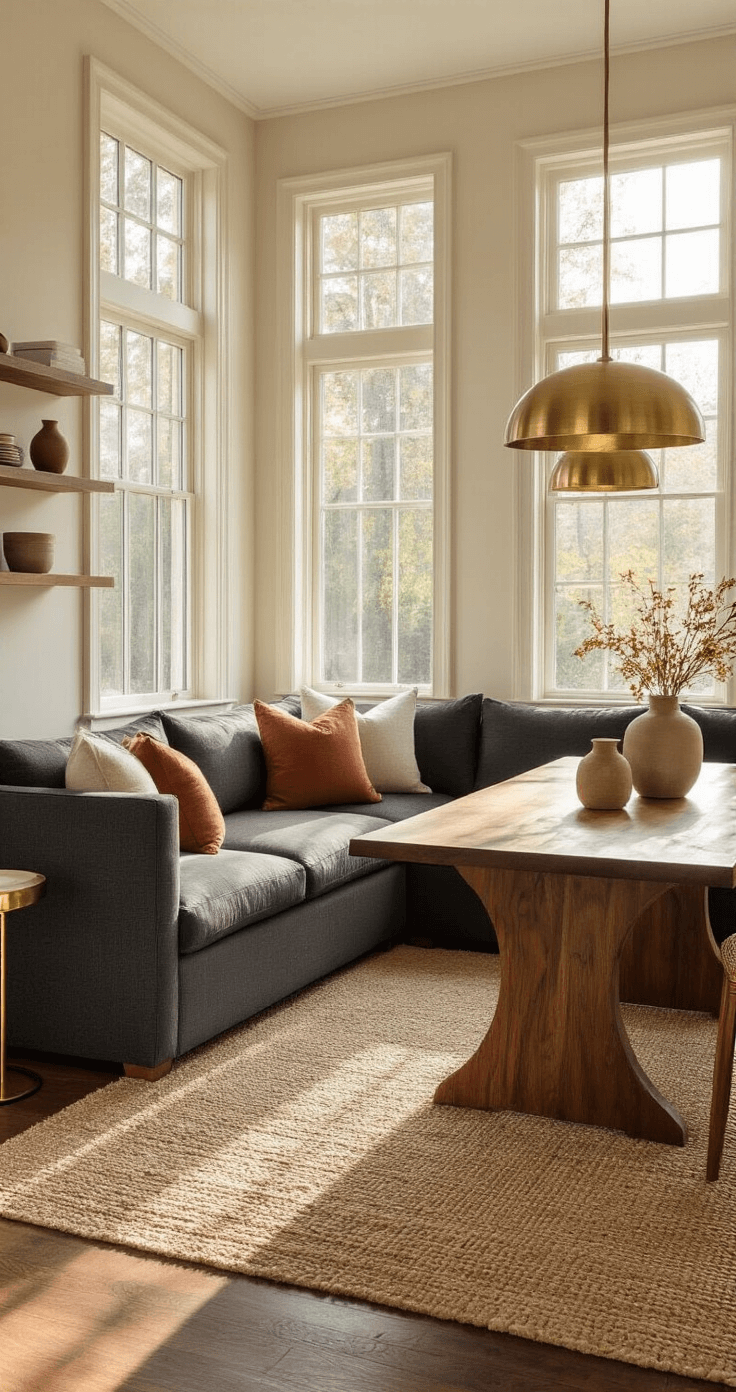
💡 Steal This Look
- Paint Color: Sherwin-Williams Agreeable Gray SW 7029
- Furniture: low-profile 72-inch sofa with clean arms placed against the long wall, paired with a round 48-inch pedestal dining table to break up linear sightlines
- Lighting: linear LED pendant with adjustable drop lengths suspended over the dining zone, plus narrow-arm swing sconces flanking the sofa
- Materials: light oak hardwood or wide-plank vinyl flooring running perpendicular to the room’s length, matte linen upholstery, and brushed brass accents
I always tell clients that narrow rooms actually reward bold decisions—because the sightline is so direct, every choice gets seen and appreciated, making this layout surprisingly satisfying to design once you embrace its linear nature.
Zone Creation: Your Secret Weapon
Define Spaces Without Walls
Pro Tip: Use these clever zoning techniques:
- Area rugs that visually separate living and dining areas
- Consistent color palette across the entire space
- Strategic furniture placement that creates natural boundaries

Lighting: The Magic Transformation Tool
Lighting isn’t just functional – it’s your design superhero. Layer your lighting like a pro:
- Pendant lights over the dining table
- Floor lamps in living areas
- Wall sconces for ambient glow
🏠 Steal This Look
- Paint Color: Benjamin Moore Classic Gray OC-23
- Furniture: low-profile sectional sofa with chaise on the living end paired with a rectangular extendable dining table positioned perpendicular to the long wall
- Lighting: linear LED pendant over dining zone plus arc floor lamp with dimmer in living zone
- Materials: jute area rug under dining table, wool-blend rug in living zone, matte black metal accents, light oak wood tones
This is the layout challenge that keeps me up at night—I’ve seen too many homeowners surrender to the tunnel effect when a simple 90-degree furniture shift completely transforms how the space lives and breathes.
Furniture Placement: Breaking the Traditional Rules
Forget pushing everything against the walls. That’s a rookie mistake.
Furniture Positioning Hacks:
- Pull sofas slightly away from walls
- Use slim, multipurpose furniture
- Choose pieces that serve multiple functions
- Consider round dining tables to soften angular lines
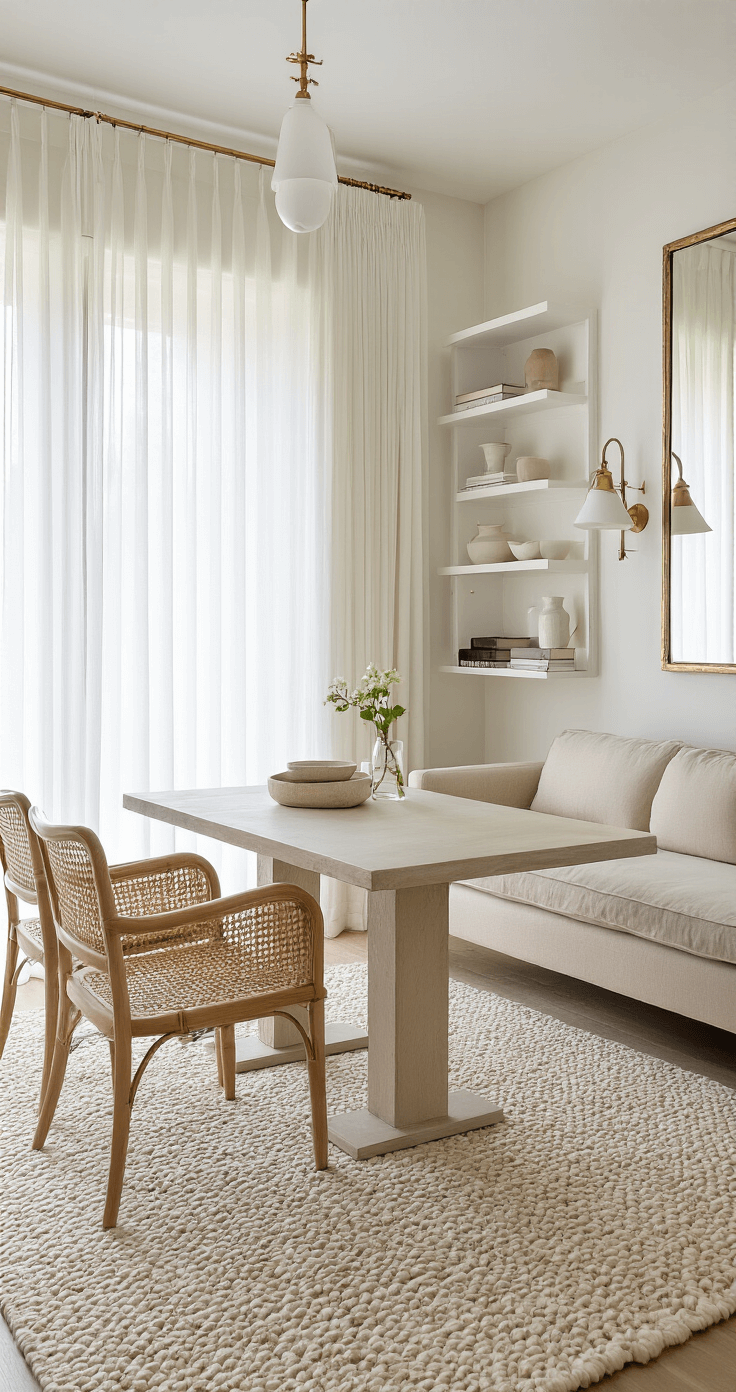
🌟 Steal This Look
- Paint Color: Farrow & Ball Skylight 205
- Furniture: low-profile modular sofa with chaise extension positioned perpendicular to the long wall, paired with a round pedestal dining table that doubles as a workspace
- Lighting: linear LED pendant suspended over the dining zone, complemented by adjustable wall sconces flanking the seating area
- Materials: walnut veneer, boucle upholstery, brushed brass accents, and ribbed glass
This is the section where homeowners finally stop apologizing for their awkward layout and start working with it—once you break the perimeter habit, the room suddenly breathes.
Save this article
Enter your email and we'll send it straight to your inbox.
Color and Texture: Your Visual Expansion Strategy
Color Tricks That Make Rooms Feel Bigger:
- Light, neutral wall colors
- Dark accent pieces for depth
- Mirrors to create instant space illusion
- Textured throw pillows for visual interest
Storage Solutions: Maximize Every Inch
Smart Storage Strategies:
- Wall-mounted shelves
- Ottomans with hidden storage
- Vertical storage solutions
- Multifunctional furniture pieces
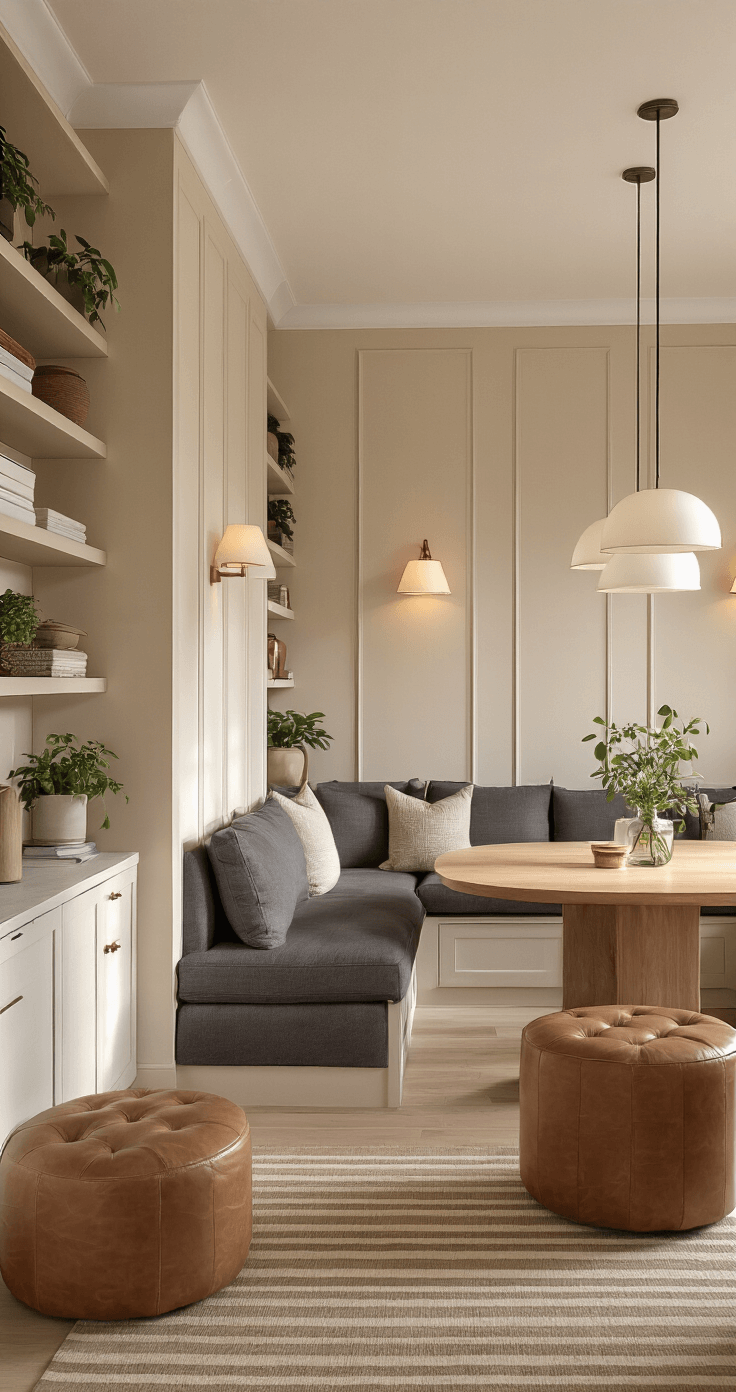
★ Steal This Look
- Paint Color: Valspar Garden Party 6005-4B
- Furniture: floating console table with built-in drawers spanning the long wall, paired with a storage ottoman that doubles as extra seating for dining overflow
- Lighting: adjustable track lighting system to highlight display shelves without consuming floor space
- Materials: light oak veneer, woven seagrass baskets, matte black powder-coated metal brackets
I once squeezed a 12-foot long narrow combo space into a functional home for a young family by treating every vertical surface as potential real estate—their wall-mounted drop-leaf desk became the unsung hero that transformed how they actually lived in the room.
Pro Design Tips That Make a Massive Difference
- Create symmetry in furniture arrangement
- Use continuous flooring or strategic rugs
- Keep accessories minimal and intentional
- Reflect natural light with strategic mirror placement
What to Avoid:
- Overcrowding the space
- Mismatched color schemes
- Blocking natural light
- Ignoring vertical space potential
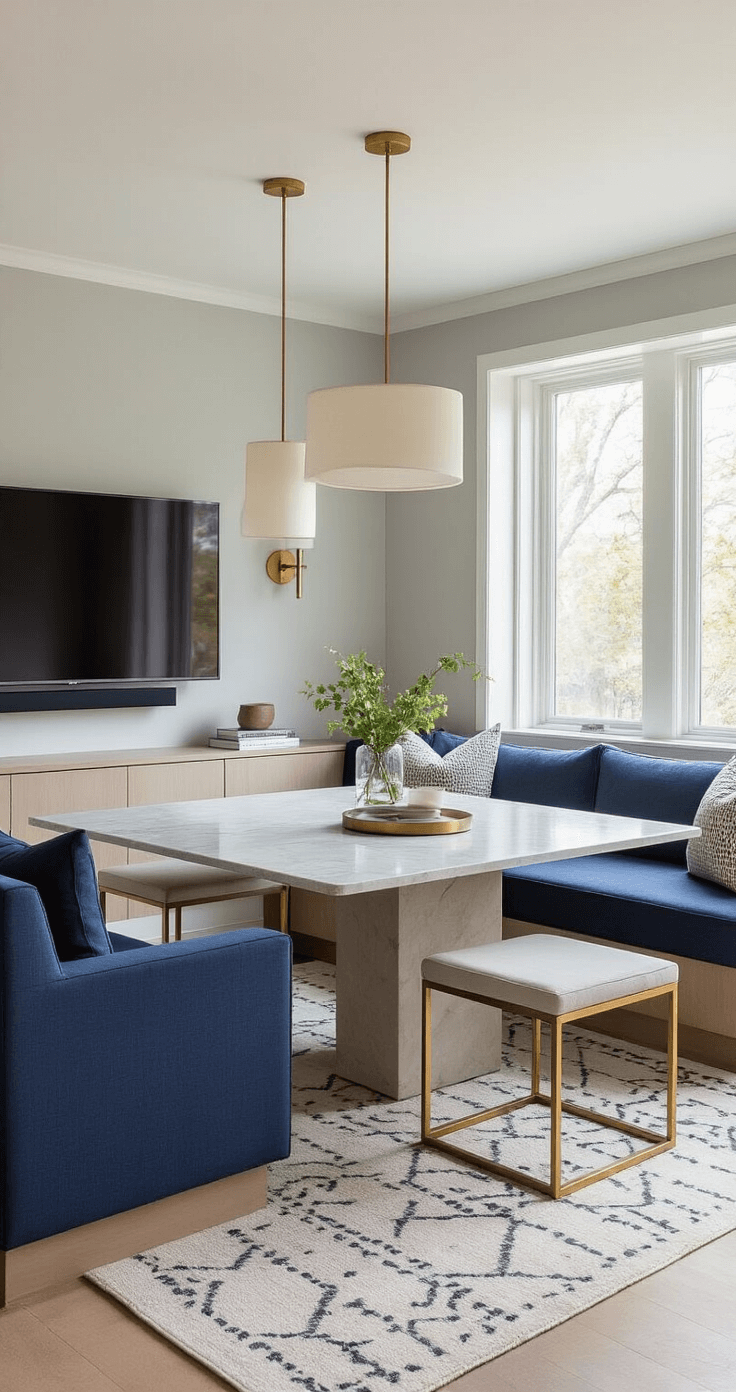
🎨 Steal This Look
- Paint Color: PPG Delicate White PPG1001-1
- Furniture: low-profile sectional sofa with chaise on one end paired with a slim, rectangular dining table with bench seating on the opposite wall
- Lighting: linear LED pendant light running the length of the combined space with adjustable spotlights
- Materials: light oak hardwood or luxury vinyl plank flooring, brushed brass accents, linen upholstery, and clear acrylic or glass table elements
This layout frustrates so many homeowners because it feels like a bowling alley, but that length is actually your secret weapon—once you stop fighting it and start treating the room as one continuous gallery, the narrowness becomes elegant and intentional.
Your Narrow Room Transformation Checklist
- Define distinct zones
- Layer lighting strategically
- Choose slim, multipurpose furniture
- Use light colors and mirrors
- Maximize vertical storage
- Maintain a consistent design theme
Remember, a narrow room isn’t a design problem – it’s a design opportunity. With these strategies, you’ll transform your space from cramped to captivating.
Want to see these principles in action? Start experimenting, and watch your room come to life!

🏠 Steal This Look
- Paint Color: use Dunn-Edwards brand. Match the ACTUAL wall color in the image. Format: Dunn-Edwards ColorName CODE
- Furniture: slim-profile console table with built-in storage for the living zone, paired with a narrow extendable dining table (30-36 inches wide max) that seats 6 when expanded
- Lighting: linear LED pendant light (48-60 inches) suspended over the dining zone, paired with adjustable-arm wall sconces for the living area to free up floor space
- Materials: light oak wood tones, brushed brass accents, natural linen upholstery, and antiqued mirror panels to visually expand the narrow footprint
I’ve walked through too many narrow combos where owners gave up and just lined furniture against the walls like a waiting room. The moment you break that habit and start thinking in layers and zones, the entire energy of the space shifts—you actually start enjoying the coziness instead of fighting it.
Want to keep this one?
We'll email you the link so you can find it again later.


