This post may contain affiliate links. Please see my disclosure policy for details.
Moroccan Courtyard Gardens: Creating Your Own Exotic Oasis
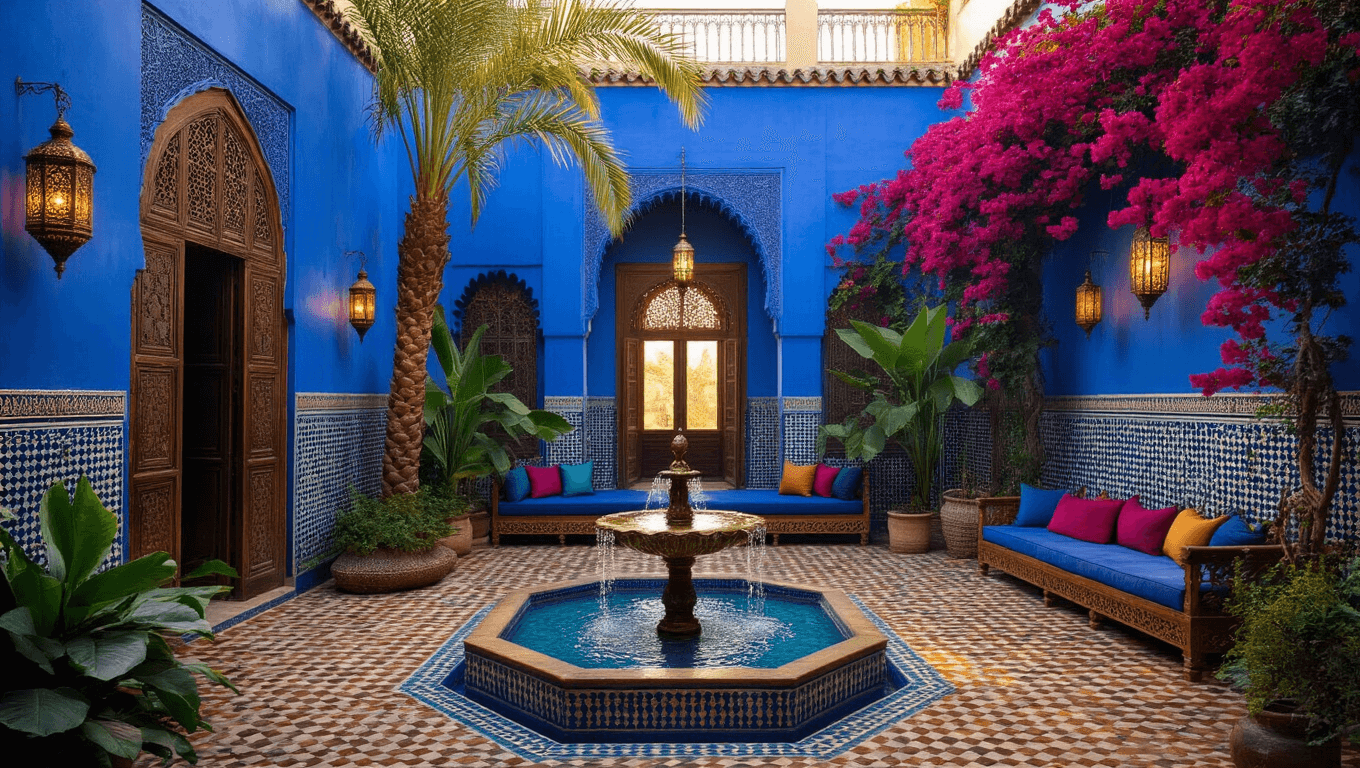
Imagine stepping into a secret world of vibrant colors, soothing water sounds, and lush greenery – welcome to the mesmerizing realm of Moroccan courtyard gardens.
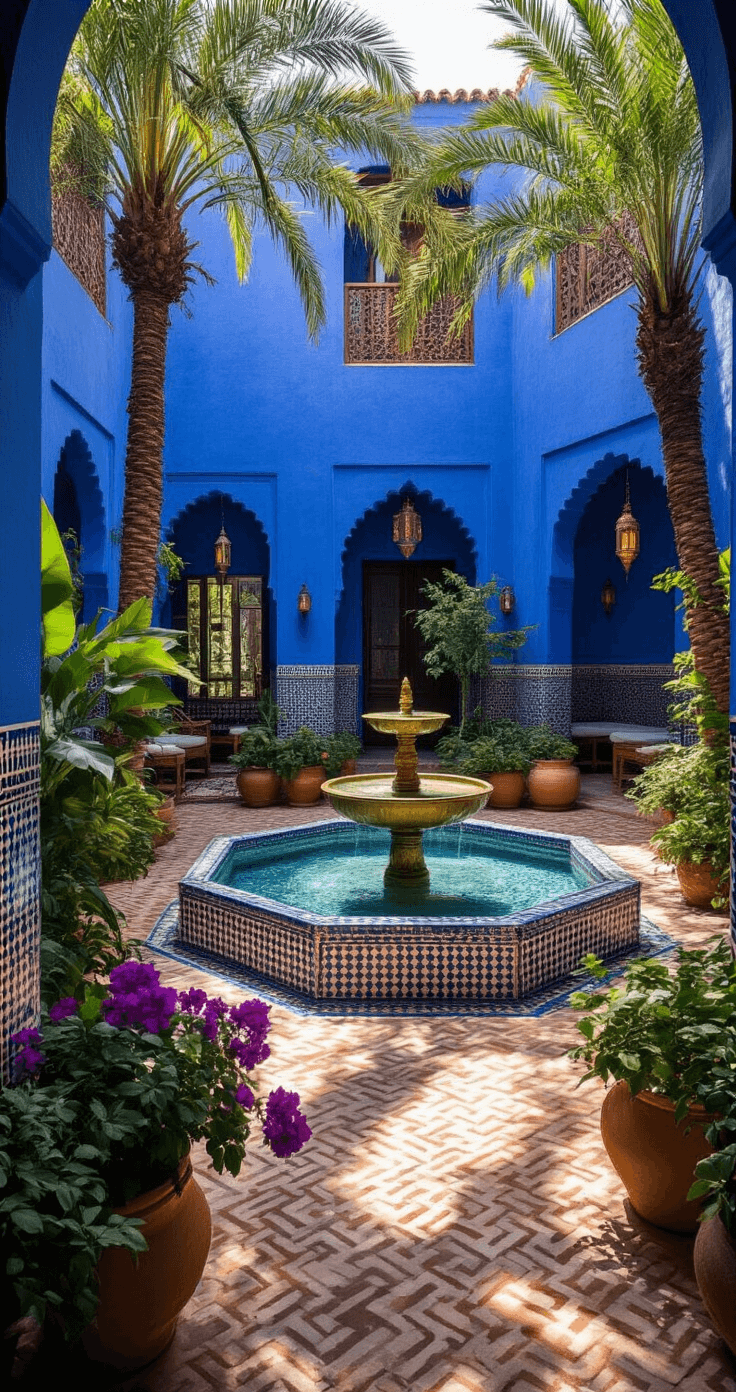
🎨 Steal This Look
- Paint Color: Sherwin-Williams Moroccan Spice SW 6654
- Furniture: low-slung teak daybed with hand-carved bone inlay, paired with hammered brass accent tables
- Lighting: pierced brass pendant lanterns with intricate geometric cutouts casting patterned shadows
- Materials: zellige tile in deep turquoise and terracotta, tadelakt plaster walls, handwoven Berber wool rugs, aged cedar wood ceilings
There’s something deeply restorative about these walled gardens—they’re designed as private sanctuaries from the world, and even a modest patio can channel that same sense of retreat and wonder.
Why Moroccan Courtyard Gardens Are Magic
I’ve always been captivated by spaces that transport you to another world. Moroccan courtyard gardens do exactly that – they’re not just gardens, they’re living, breathing sanctuaries of tranquility.
Design Secrets That Make These Gardens Extraordinary
The Perfect Layout: More Than Just Plants
Moroccan courtyard gardens aren’t random – they’re meticulously designed havens with:
- Precise geometric layouts
- Symmetrical arrangements
- Strategic focal points
- Purposeful plant selections
Essential Design Elements
1. Water: The Heartbeat of the Garden
Every Moroccan courtyard needs a water feature. Why? Because:
- Water represents life and tranquility
- Fountains create cooling micro-climates
- The sound soothes and relaxes
Pro Tip: Even a small wall-mounted fountain can transform your space.
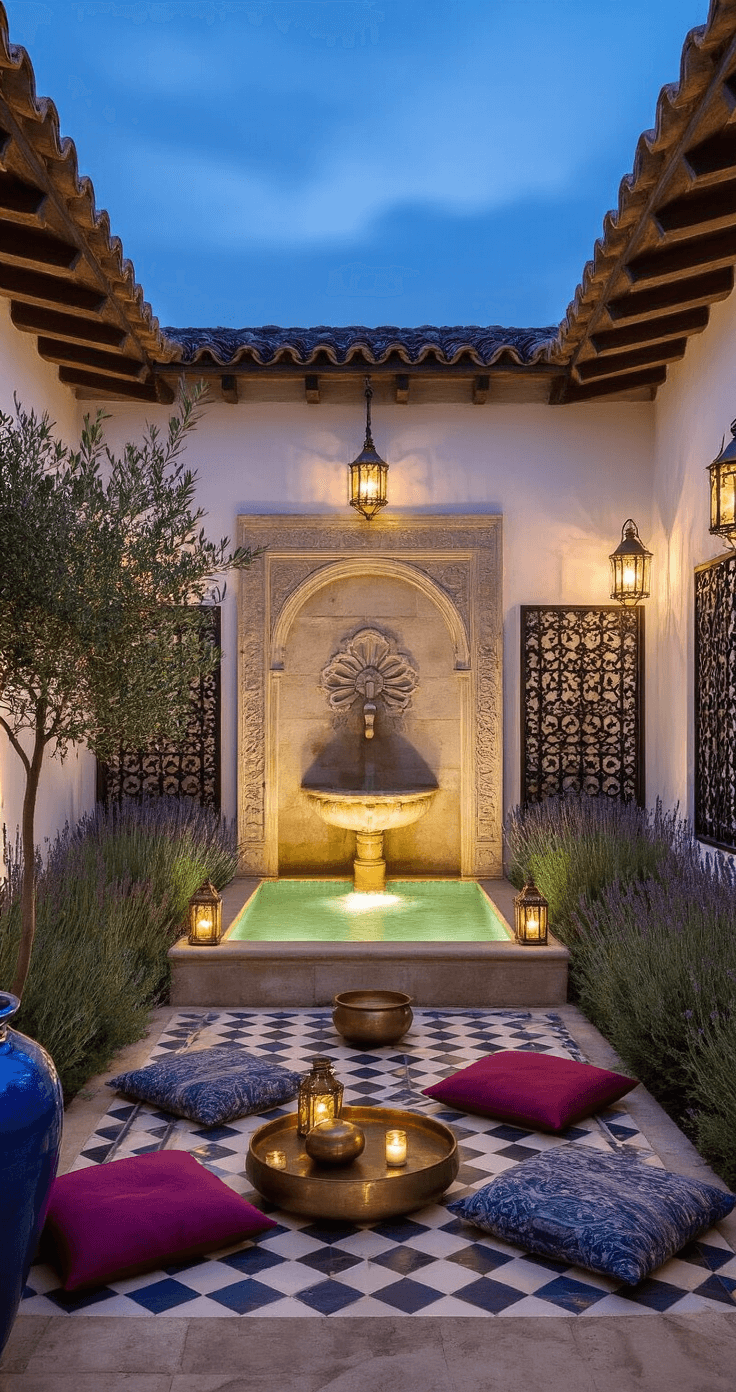
2. Walls: Your Privacy Paradise
High walls aren’t just barriers – they’re design statements:
- Create intimate, sheltered spaces
- Block external noise
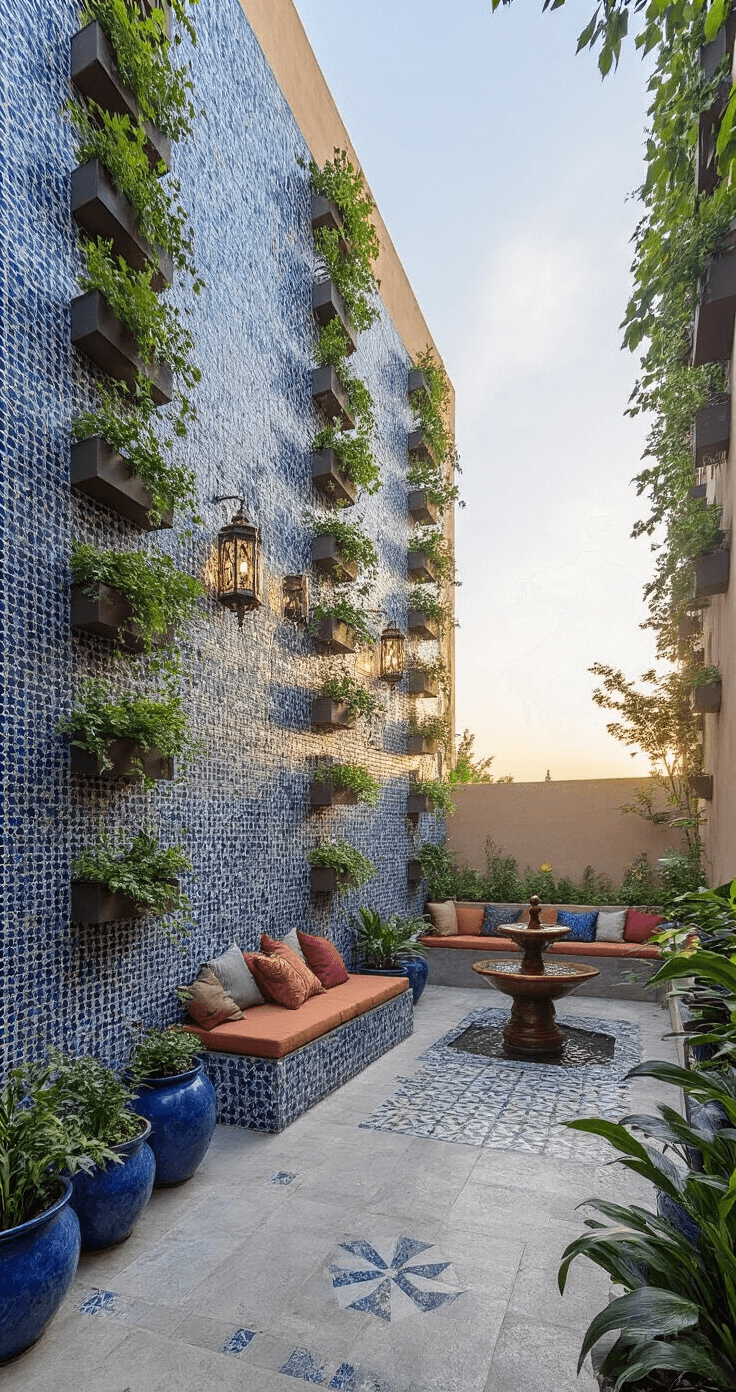
- Provide perfect canvas for decorative tiles
- Offer temperature regulation
3. Color Explosion
Think beyond green! Moroccan gardens celebrate color:
- Majorelle blue
- Vibrant reds
- Sunny yellows
- Rich terracotta tones
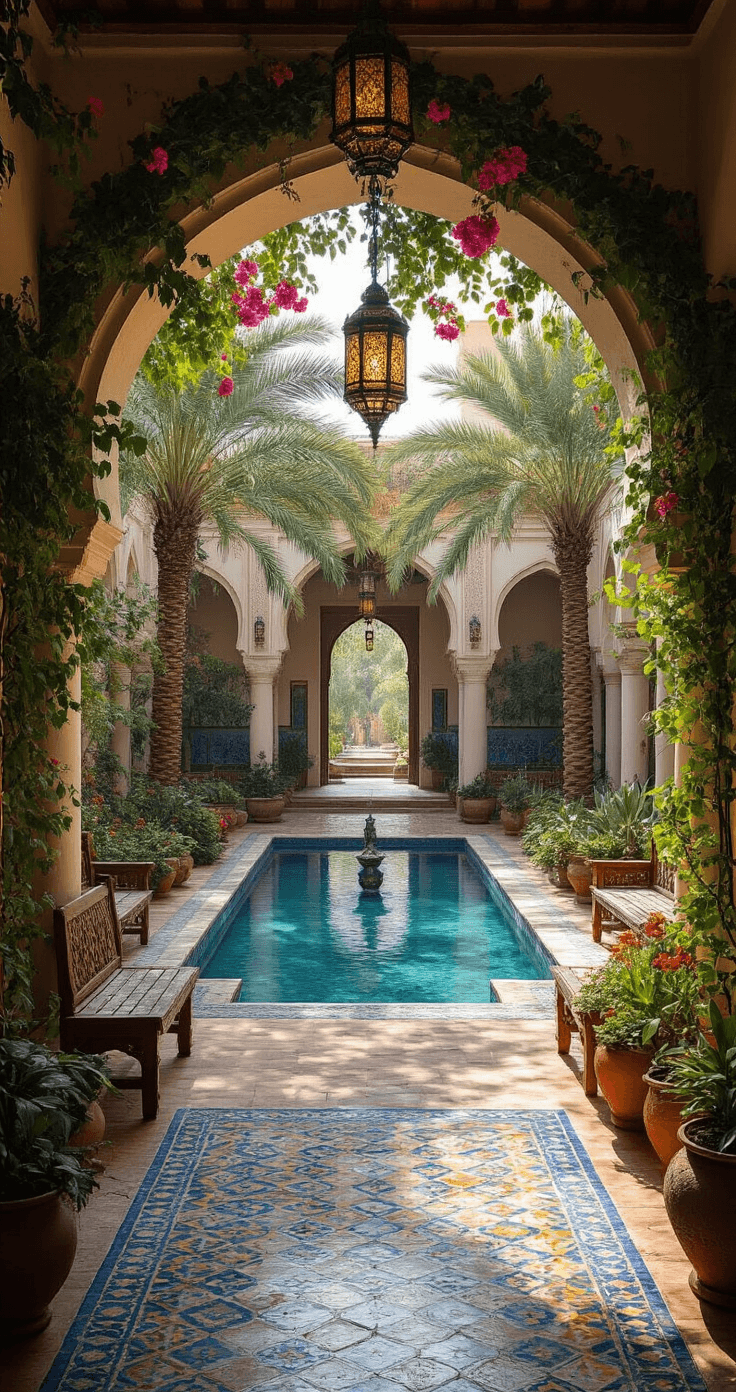
🖼 Steal This Look
- Paint Color: Benjamin Moore Aegean Teal 2136-40
- Furniture: low-slung daybed with weathered teak frame and cream linen cushions
- Lighting: hammered brass pendant lantern with intricate pierced patterns
- Materials: zellige tile, tadelakt plaster, weathered cedar, terracotta, handwoven wool
There’s something deeply restorative about stepping into a space that feels centuries old yet utterly personal—these courtyards remind us that true luxury is found in slowness and sensory pleasure, not excess.
Plant Selection: Your Green Symphony
Must-Have Plants:
- Palm trees
- Exotic ferns
- Climbing vines
- Succulents and cacti
- Mediterranean herbs
Styling Touches That Elevate Your Space
Accessories That Matter:
Save this article
Enter your email and we'll send it straight to your inbox.
- Mosaic tiles
- Wrought iron screens
- Large terracotta pots
- Colorful cushions
- Traditional lanterns
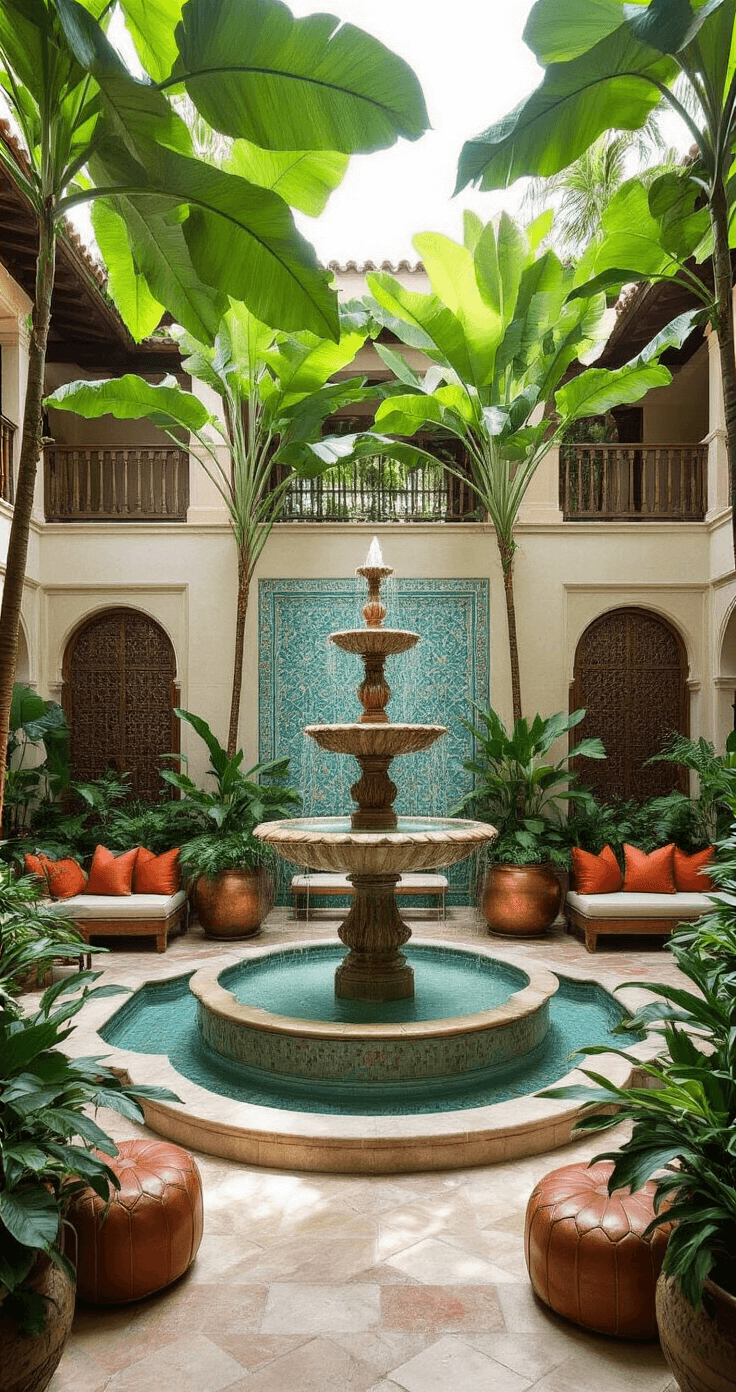
Lighting: The Evening Magic Maker
Proper lighting transforms your courtyard from daytime retreat to nighttime wonderland:
- Soft lantern glows
- Strategically placed uplights
- Candles for ambient warmth
- Fire pit centerpieces
🏠 Steal This Look
- Paint Color: Farrow & Ball Card Room Green Farrow & Ball 79
- Furniture: low-slung teak daybed with weathered finish, Moroccan brass tray table with collapsible legs
- Lighting: antique brass pierced Moroccan pendant lantern with colored glass panels
- Materials: glazed zellige tile, raw terracotta, aged cedar, hammered copper, hand-woven jute
There’s something deeply restorative about stepping into a courtyard where plants have been allowed to grow slightly untamed—the way morning light filters through palm fronds onto cool tile floors reminds us that gardens are meant to be lived in, not merely displayed.
Creating Your Moroccan Garden: Quick Tips
- Start with a clear geometric plan
- Invest in a central water feature
- Choose a bold color palette
- Layer plants for depth
- Add textural elements
- Create multiple functional zones
What to Avoid
- Overcrowding
- Ignoring symmetry
- Skipping water elements
- Using only one type of plant
- Forgetting lighting design
🖼 Steal This Look
- Paint Color: Behr Moroccan Spice PPU2-17
- Furniture: low-slung cedar daybed with hand-tooled leather cushions, octagonal mosaic tile table with hammered brass base, floor poufs in vintage kilim fabric
- Lighting: pierced brass pendant lanterns (fanous style) with colored glass inserts, solar-powered LED string lights woven through pergola beams
- Materials: tadelakt plaster walls, zellige tile borders, terracotta pavers with crushed gravel joints, aged copper planters, woven date palm shade screens
There’s something almost meditative about stepping into a Moroccan courtyard after a chaotic day—the geometry quiets the mind while the water and jasmine engage the senses. This isn’t just landscaping; it’s designing a daily ritual of arrival and reset.
Budget-Friendly Transformation Ideas
Low-Cost Hacks:
- DIY mosaic tile projects
- Thrifted lanterns
- Spray-painted terracotta pots
- Strategic plant propagation
- Handmade cushion covers
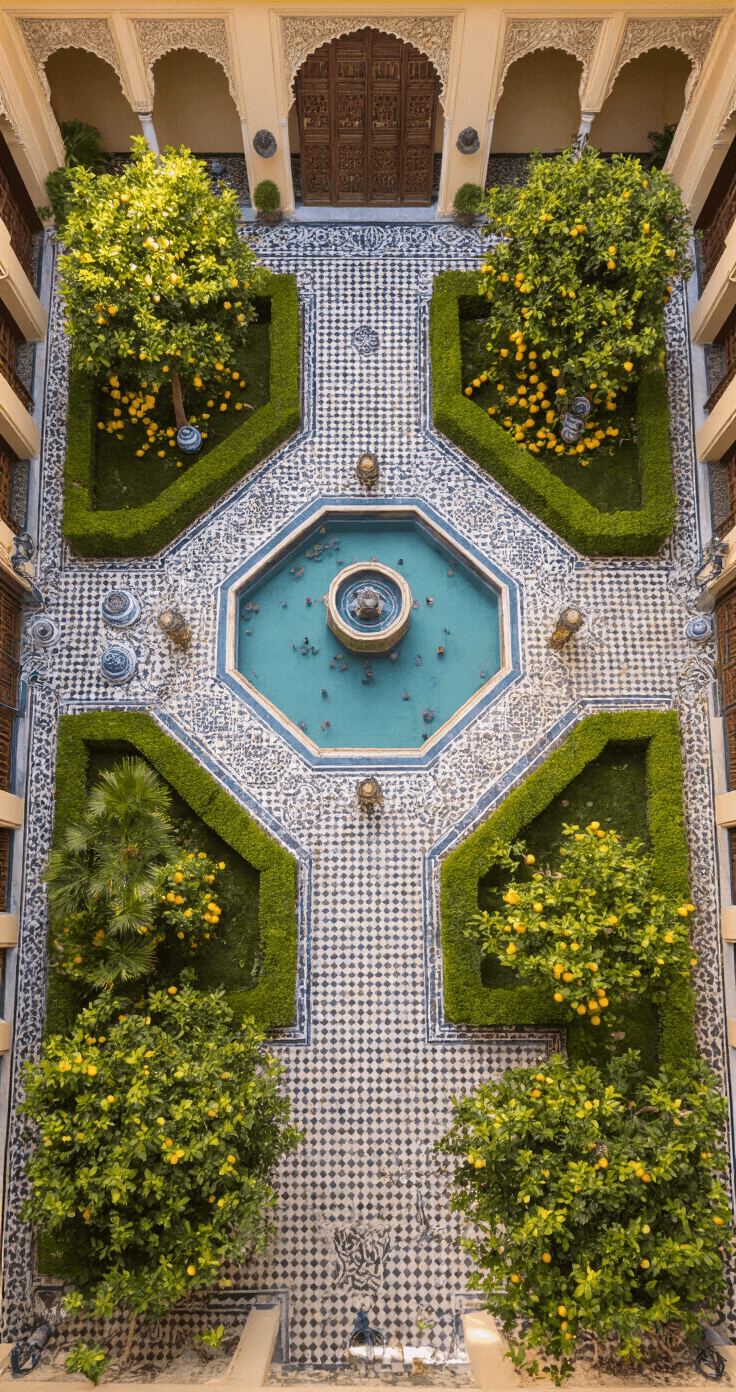
💡 Steal This Look
- Paint Color: Valspar Moroccan Spice 2006-10B
- Furniture: low wooden daybed with weathered finish, floor cushions with kilim patterns, carved wooden side table
- Lighting: cluster of mismatched brass and copper pendant lanterns at varying heights
- Materials: zellige-inspired peel-and-stick tile, distressed plaster, wrought iron, handwoven jute, glazed terracotta
There’s something deeply satisfying about building this space slowly, letting each thrifting trip or weekend project add another layer of story to your courtyard.
Maintenance: Keeping the Magic Alive
Moroccan gardens require:
- Regular pruning
- Careful water feature maintenance
- Seasonal plant rotation
- Color and tile touch-ups
Pro Maintenance Tip: Think of your garden as a living artwork that evolves with seasons.
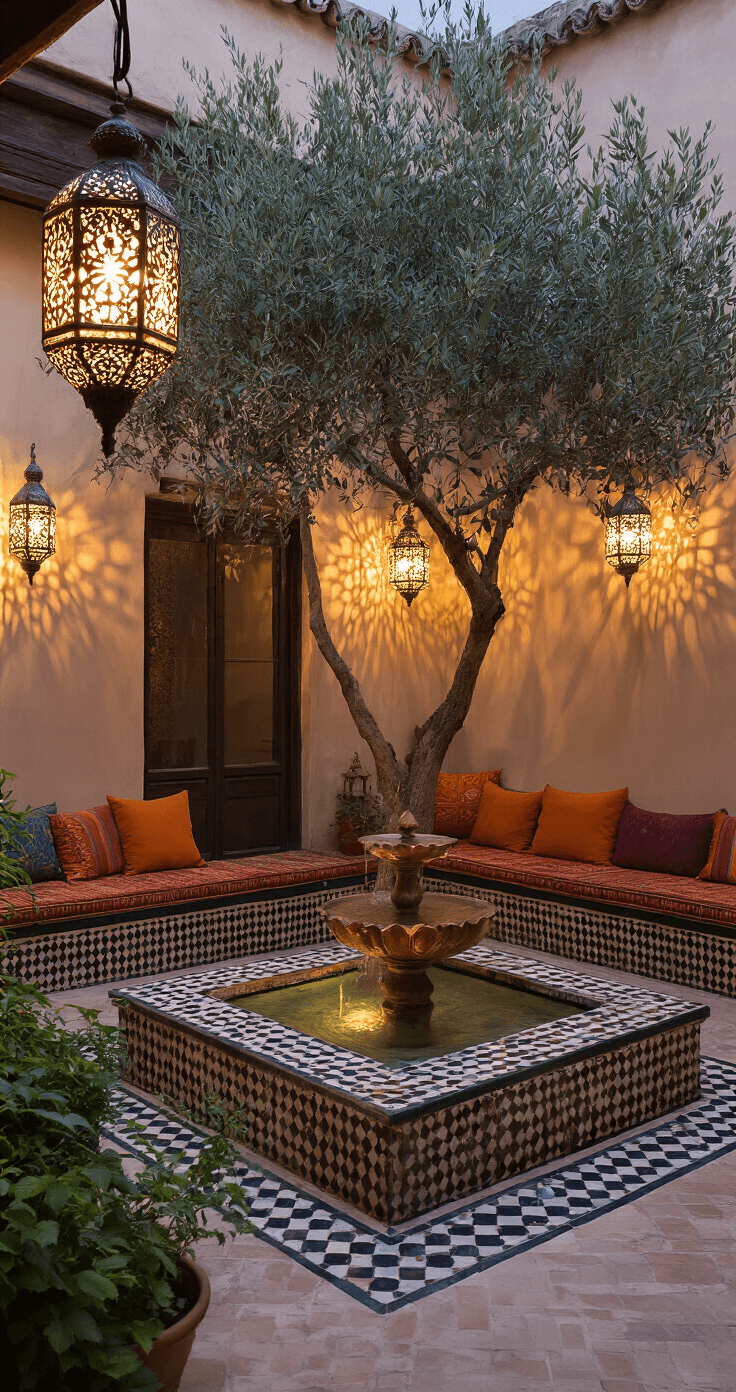
★ Steal This Look
- Paint Color: use PPG brand. Match the ACTUAL wall color in the image. Format: PPG ColorName CODE
- Furniture: specific furniture for this room
- Lighting: specific lighting fixture
- Materials: key textures and materials
There’s something deeply meditative about tending to a Moroccan courtyard at dawn—the scent of jasmine, the quiet trickle of water, the satisfaction of coaxing bougainvillea back into bloom; this maintenance rhythm becomes less chore and more connection to a centuries-old tradition of sanctuary-keeping.
Final Thoughts
Moroccan courtyard gardens aren’t just outdoor spaces – they’re experiences. They blend architecture, nature, and cultural artistry into one breathtaking sanctuary.
Your garden can be more than grass and plants. It can be a personal retreat, a story, a piece of living art.
Ready to transform your outdoor space? Start small, dream big, and let the Moroccan magic begin.
Want to keep this one?
We'll email you the link so you can find it again later.