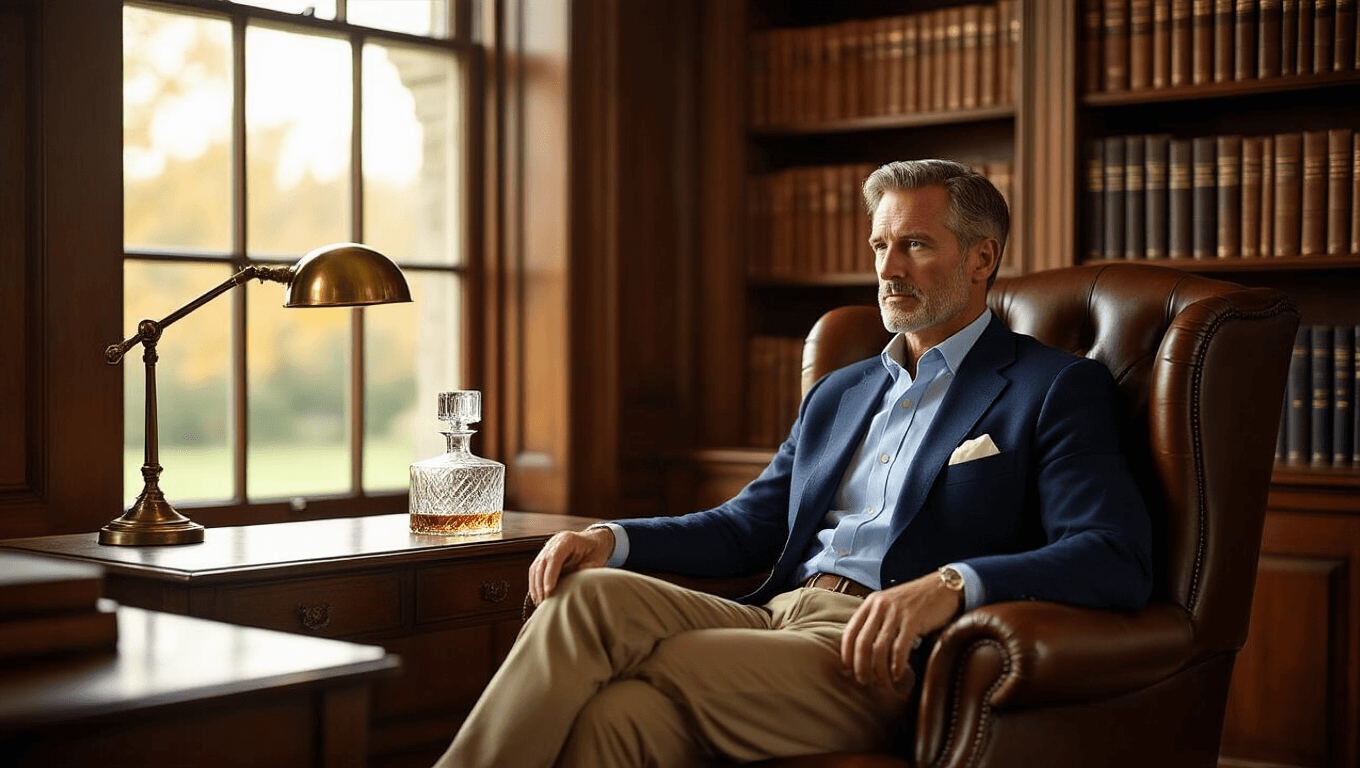
A sophisticated man in a navy blazer sits in a leather armchair in a wood-paneled study, illuminated by warm afternoon light.

THE ULTIMATE GUIDE TO OLD MONEY STYLE FOR MEN: MASTERING TIMELESS ELEGANCE

This post may contain affiliate links. Please see my disclosure policy for details.

The Ultimate Guide to Old Money Style for Men: Mastering Timeless Elegance

Hey there! I’m Sarah, and today we’re diving deep into the world of old money style for men. Trust me, this isn’t about flashing designer logos or following every trend that hits TikTok – it’s about something way more sophisticated.
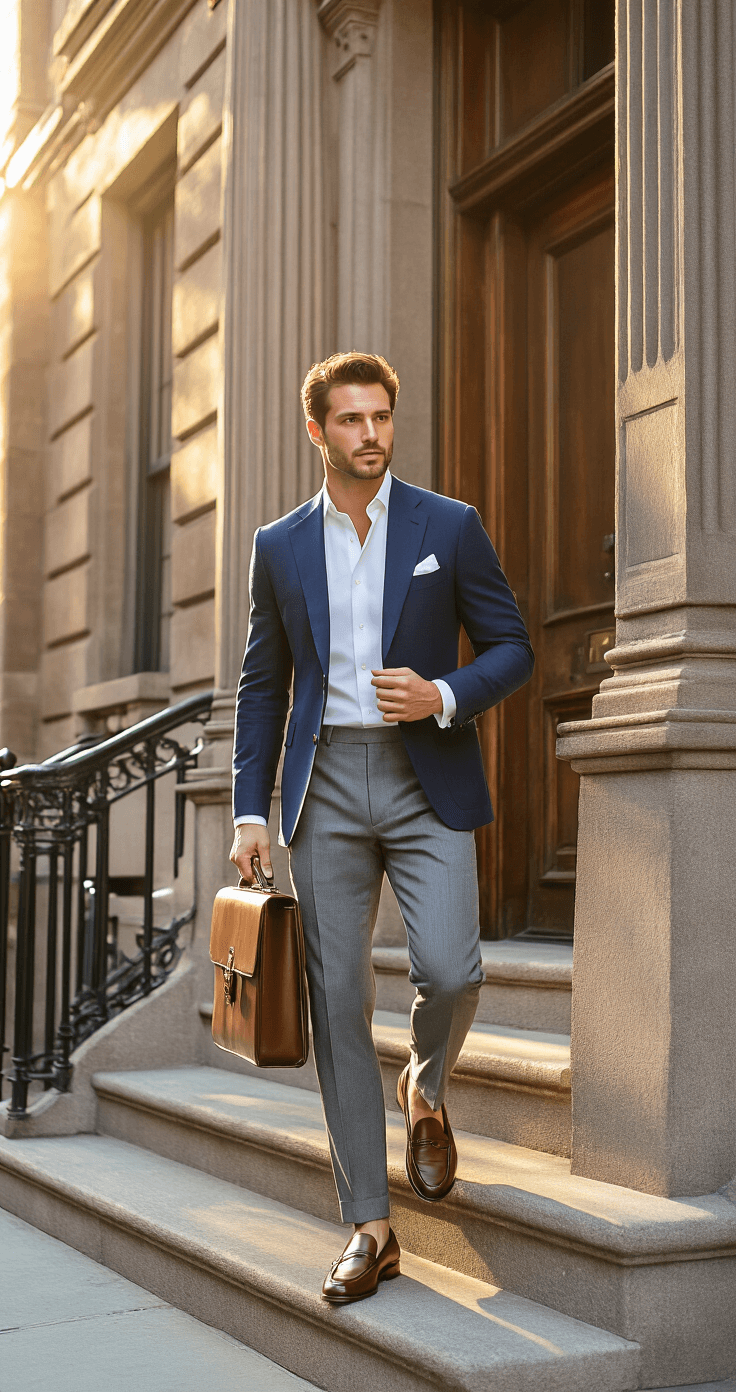
A sophisticated male model in a navy blazer and grey trousers descends limestone steps of a sunlit Manhattan brownstone, adjusting his collar, with a vintage leather briefcase beside him.

🔎 Pro Tip: Tuck your sweater loosely into your trousers with a half-tuck at the front to create intentional structure without looking sloppy—this subtle detail signals confident, studied nonchalance.
✋ Avoid This: Avoid visible branding, overly slim silhouettes, or synthetic fabrics that catch light unnaturally; true old money dressing whispers rather than shouts.

I’ve dressed men for decades, and the ones who nail this aesthetic understand that the fit must be impeccable but never tight—think of your clothes as architecture for the body, not a second skin.

The Essence of Old Money Style

Listen, I’ve spent years studying fashion, and here’s the truth: old money style isn’t just about wearing expensive clothes. It’s about looking effortlessly polished without trying too hard. Kinda like that guy who walks into a room and everyone just knows he’s got his life together.

Building Your Old Money Wardrobe

The Core Pieces:
  • A navy blazer (seriously, this is your new best friend)
  • Crisp white and light blue dress shirts
  • Well-fitted chinos in neutral colors
  • Quality leather shoes (loafers and oxfords are your go-to)
  • Cashmere sweaters (trust me, they’re worth the investment)
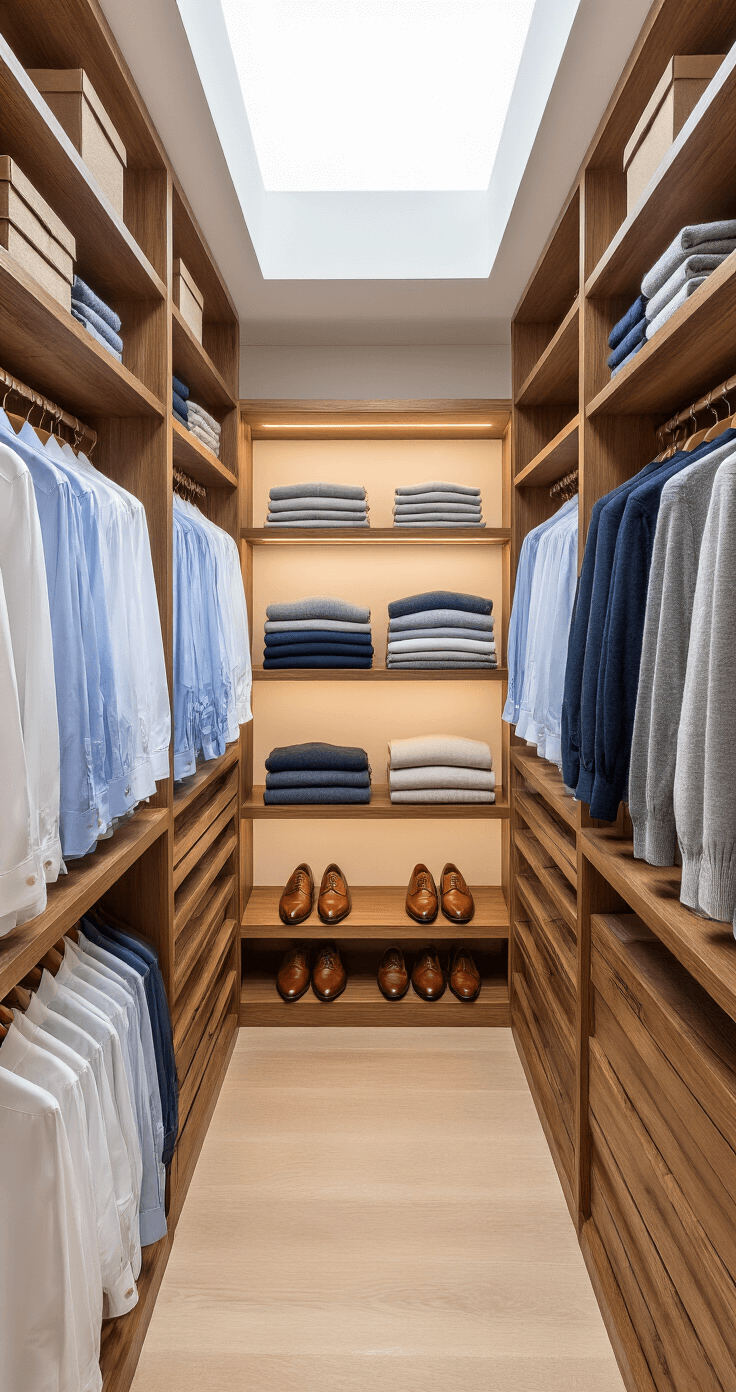
Bright and organized walk-in closet featuring floor-to-ceiling walnut wardrobes, neatly hung Oxford shirts in white and pale blue, rolled cashmere sweaters in neutral tones on illuminated shelves, and a lineup of leather dress shoes, all bathed in soft natural light from a skylight.

✨ Pro Tip: Tuck your shirt using the military tuck to eliminate billowing at the waist, and always show 1/4 to 1/2 inch of shirt cuff beyond your blazer sleeve for that tailored, intentional look.
⛔ Avoid This: Avoid synthetic fabrics that don’t breathe or drape properly—polyester blends will instantly cheapen even the most classic silhouette and betray the quiet luxury aesthetic.

From my years dressing clients for boardrooms and weekend estates alike, I’ve learned that old money style lives in the details: a perfectly rolled sleeve, the subtle sheen of quality cotton, and shoes that have been polished but not overly so.

Mastering the Fit

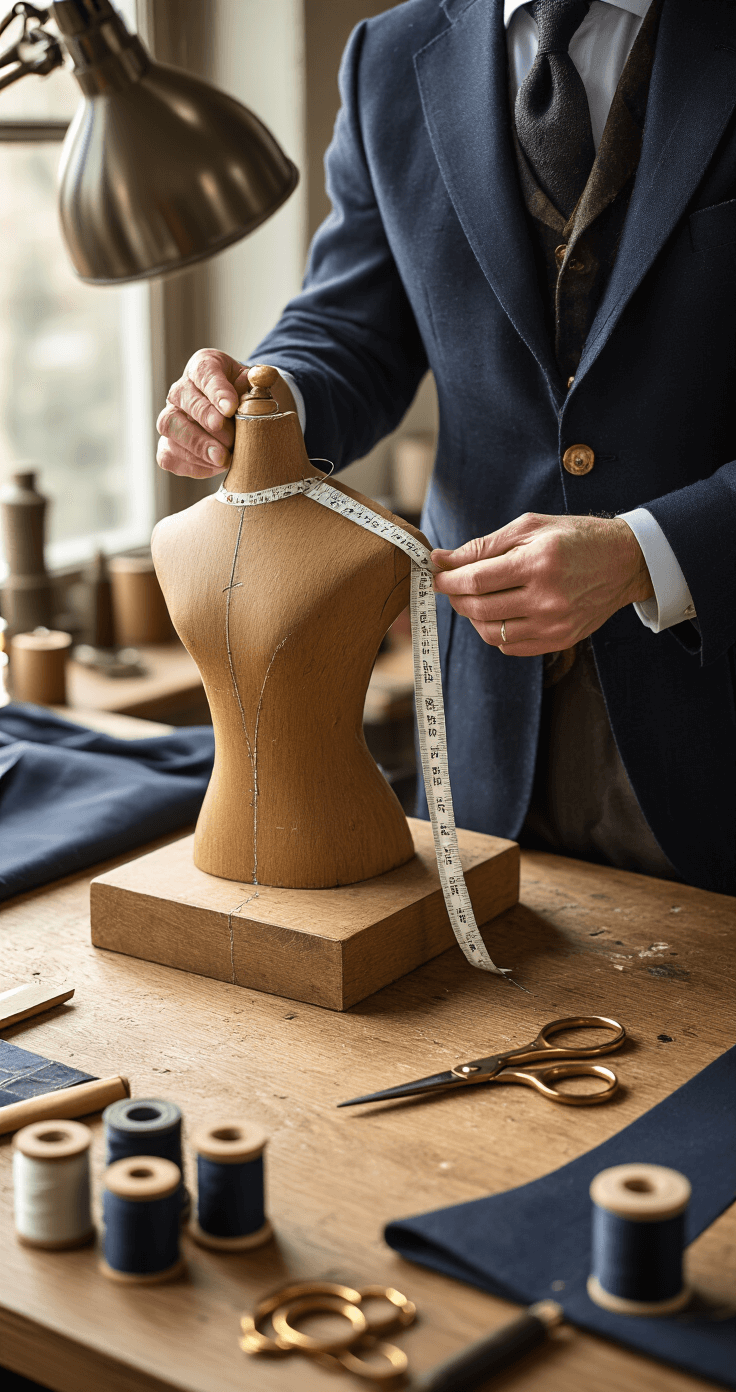
Here’s something I learned the hard way – you can wear the most expensive clothes in the world, but if they don’t fit right, you might as well be wearing sweats. Get yourself a good tailor. They’re literally miracle workers.
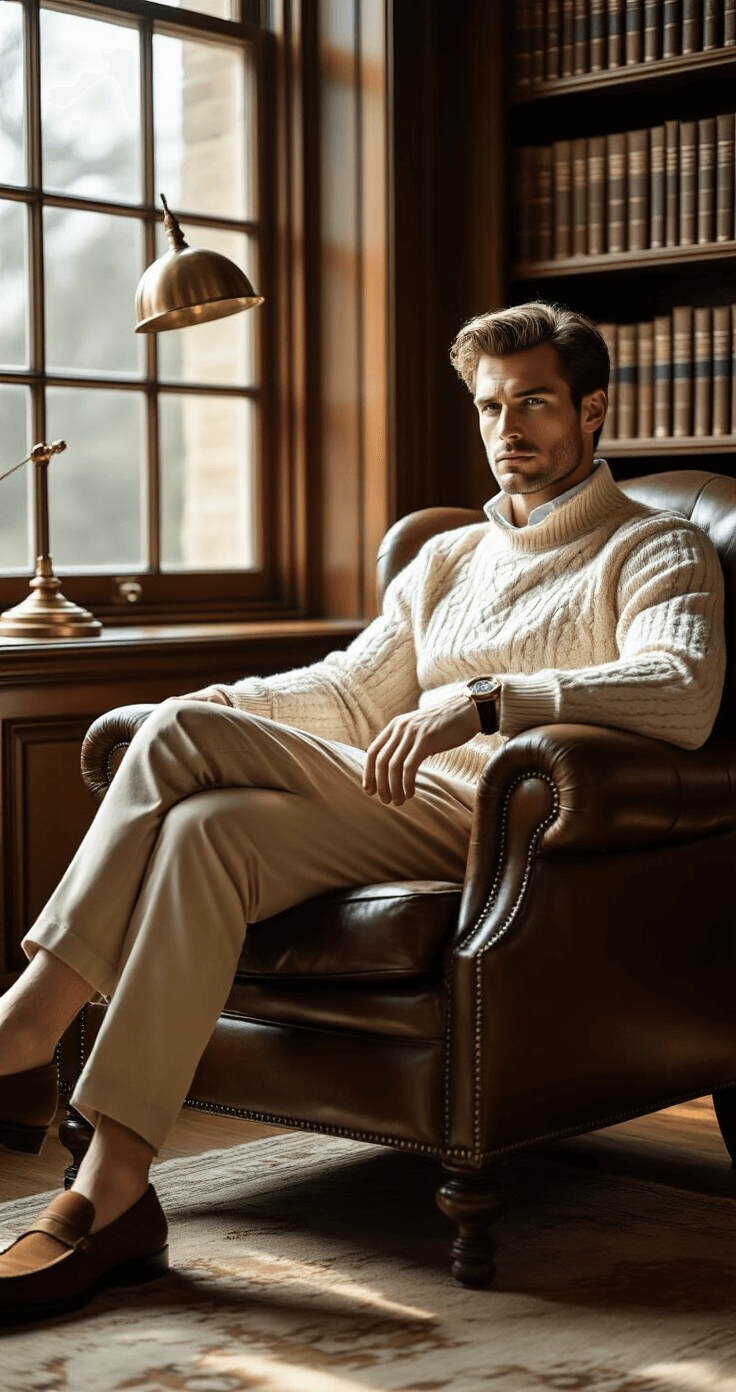
A male model sits in a leather armchair in a classic gentleman's study, wearing a cream cashmere sweater, khaki chinos, and suede loafers. Soft afternoon light filters through floor-to-ceiling windows, illuminating rich wooden bookshelves and a brass reading lamp in the background. A vintage Omega watch is visible on his wrist, with a shallow depth of field emphasizing textural details.

⚡ Pro Tip: The shoulder seam should sit exactly at your natural shoulder bone—if it extends past, the jacket or shirt is too large and cannot be fixed by tailoring.
✋ Avoid This: Avoid wearing shirts with collar gaps or sleeve fabric pooling at your wrists; these details signal poor fit instantly and undermine an otherwise polished ensemble.

A tailor once told me that fit is the only thing people notice from across the room—fabric quality and construction only register up close, so prioritize the silhouette above all else.

Color Palette Secrets

Keep it classic:

  • Navy
  • Beige
  • White
  • Grey
  • Olive
  • Brown

The Do’s and Don’ts

Do’s:
  • Invest in quality natural fabrics
  • Focus on impeccable tailoring
  • Keep accessories minimal and classic
  • Layer thoughtfully
Don’ts:
  • Skip the flashy logos
  • Avoid trendy cuts
  • Say no to distressed anything
  • Pass on bright sneakers

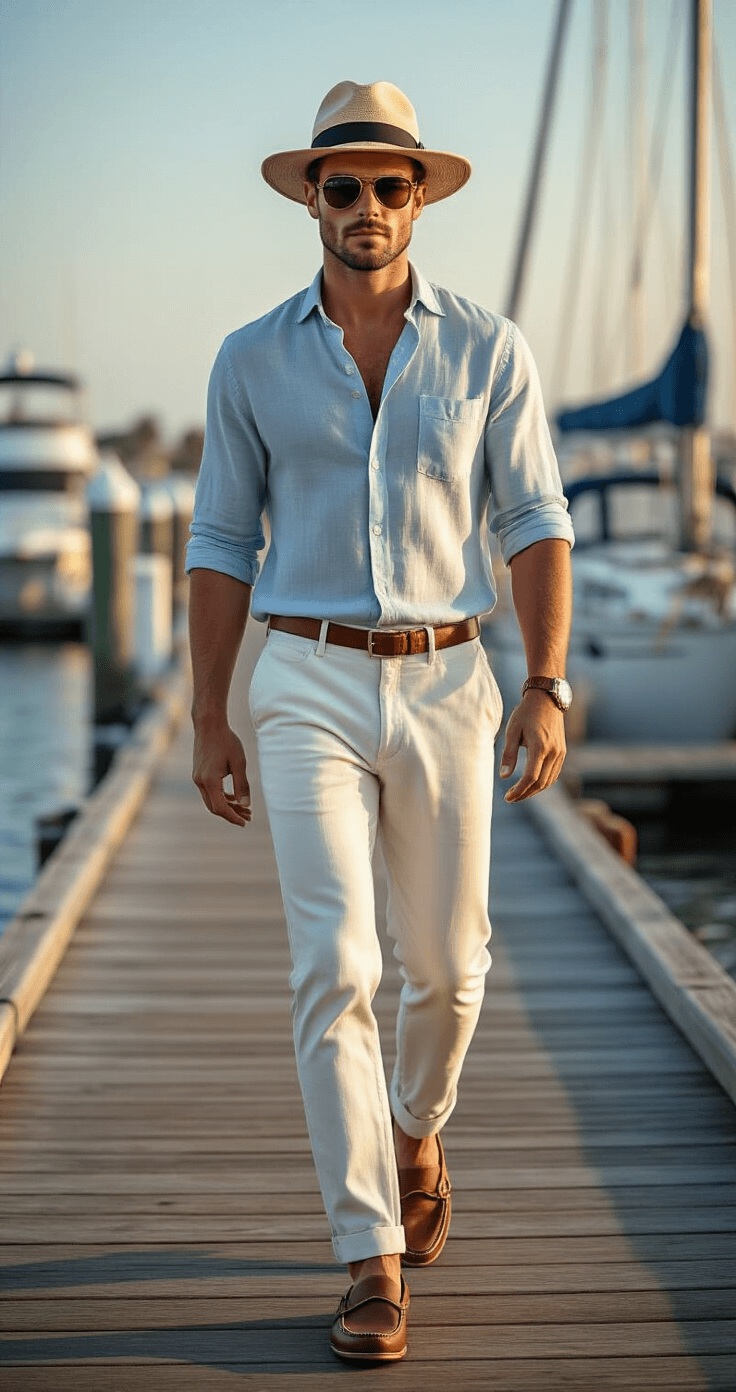
Male model strolling on a wooden dock at Newport Beach Club during sunset, dressed in a light blue linen shirt, white chinos, leather boat shoes, and a Panama hat, with vintage Ray-Ban wayfarers and a subtle leather belt, surrounded by luxury sailboats in warm golden hour lighting.

🔎 Pro Tip: Tuck your sweater loosely into your trousers to create intentional structure without appearing fussy, letting a half-inch of shirt collar peek above the neckline.
⛔ Avoid This: Avoid wearing more than one visible branded item; old money style whispers wealth through construction and fabric, not logos.

From my experience dressing clients for generational wealth events, the men who nail this aesthetic understand that restraint is the ultimate flex—every piece should look like it could have belonged to your father, and his father before him.

Putting It All Together

I’m gonna share my favorite foolproof outfit combinations:

The Business Meeting Hero
  • Navy blazer
  • White oxford shirt
  • Grey wool trousers
  • Brown leather loafers
The Weekend Warrior
  • Cream cable knit sweater
  • Khaki chinos
  • Suede loafers
  • Classic leather watch
The Summer Sophisticate
  • Light blue linen shirt
  • White chinos
  • Leather sandals
  • Panama hat

Close-up view of a master tailor measuring a navy blazer on a wooden dress form in a modern workshop, highlighting hand-stitching, horn buttons, and Loro Piana fabric texture, with artfully arranged spools of thread, measuring tape, and brass scissors on a wooden worktable, illuminated by directional natural light.

🔎 Pro Tip: Ensure your blazer sleeve reveals exactly 1/4 to 1/2 inch of shirt cuff—this precise proportion signals true attention to tailoring. For the trousers, request a medium rise that sits at your natural waist rather than hips; this elongates the leg and references mid-century elegance.
⚠ Avoid This: Avoid pairing this combination with black shoes, which creates too harsh a contrast against the navy and brown palette. Skip any visible logos or branding on your shirt, blazer buttons, or accessories—true old money style whispers rather than shouts.

This combination has carried my clients through boardrooms in Mayfair to gallery openings in the Marais without ever feeling overdressed or underdressed. The magic lies in the fabric weights—hopsack breathes, wool drapes, calfskin molds—each element improving with age rather than deteriorating.

Final Thoughts

Remember, old money style isn’t about showing off – it’s about showing up looking polished and put-together. Start with these basics, focus on fit, and keep it simple. You’ve got this!

Pro Tip: Take photos of your successful outfits. It’ll save you time in the morning, and you’ll start seeing patterns in what works best for you.

Now go forth and dress like old money – even if your bank account is still working on it! (And hey, we’ve all been there!)

P.S. – Feel free to break these rules sometimes. The best style is confident style, and that comes from making these guidelines your own.
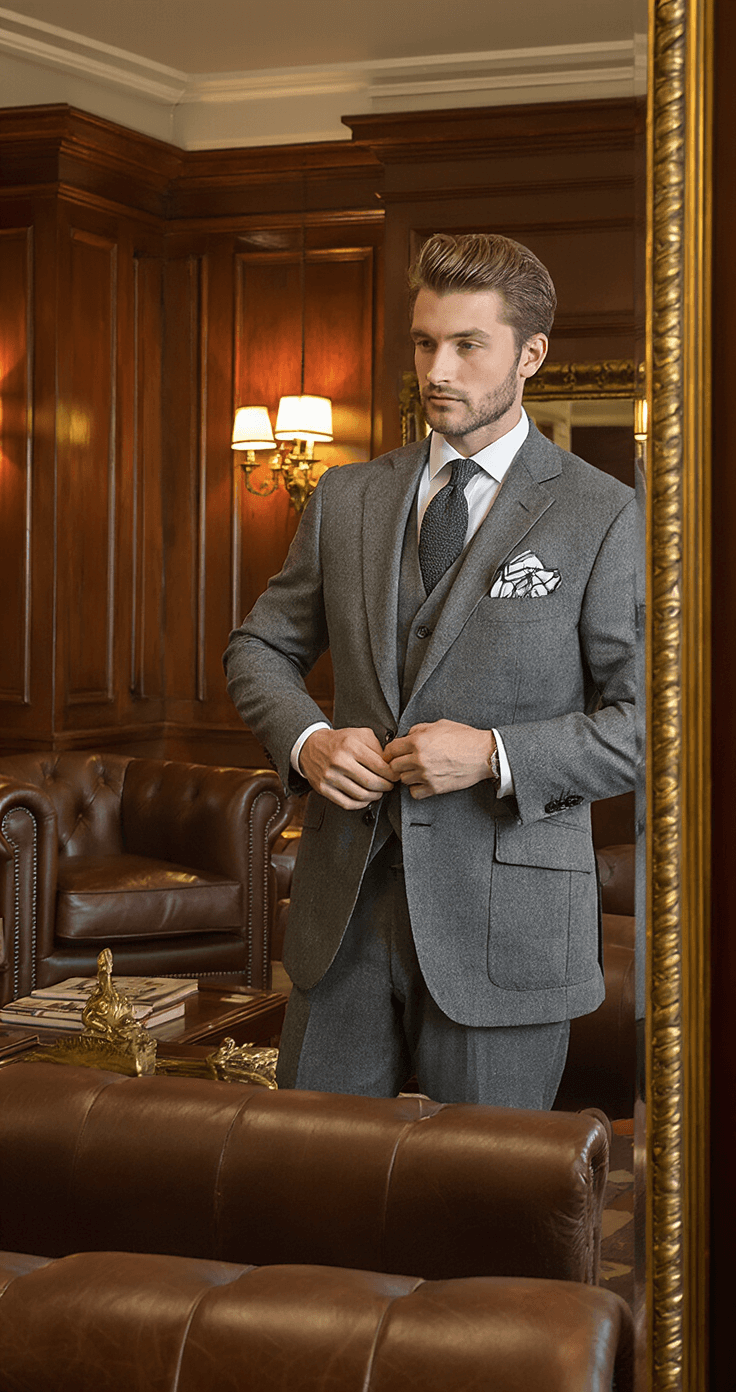
Male model in a grey flannel suit jacket adjusts his pocket square, reflected in an antique mirror within a private men's club lounge. The setting features mahogany paneled walls, leather club chairs, and brass fixtures, all illuminated by warm ambient lighting from vintage sconces, enhancing the traditional atmosphere.

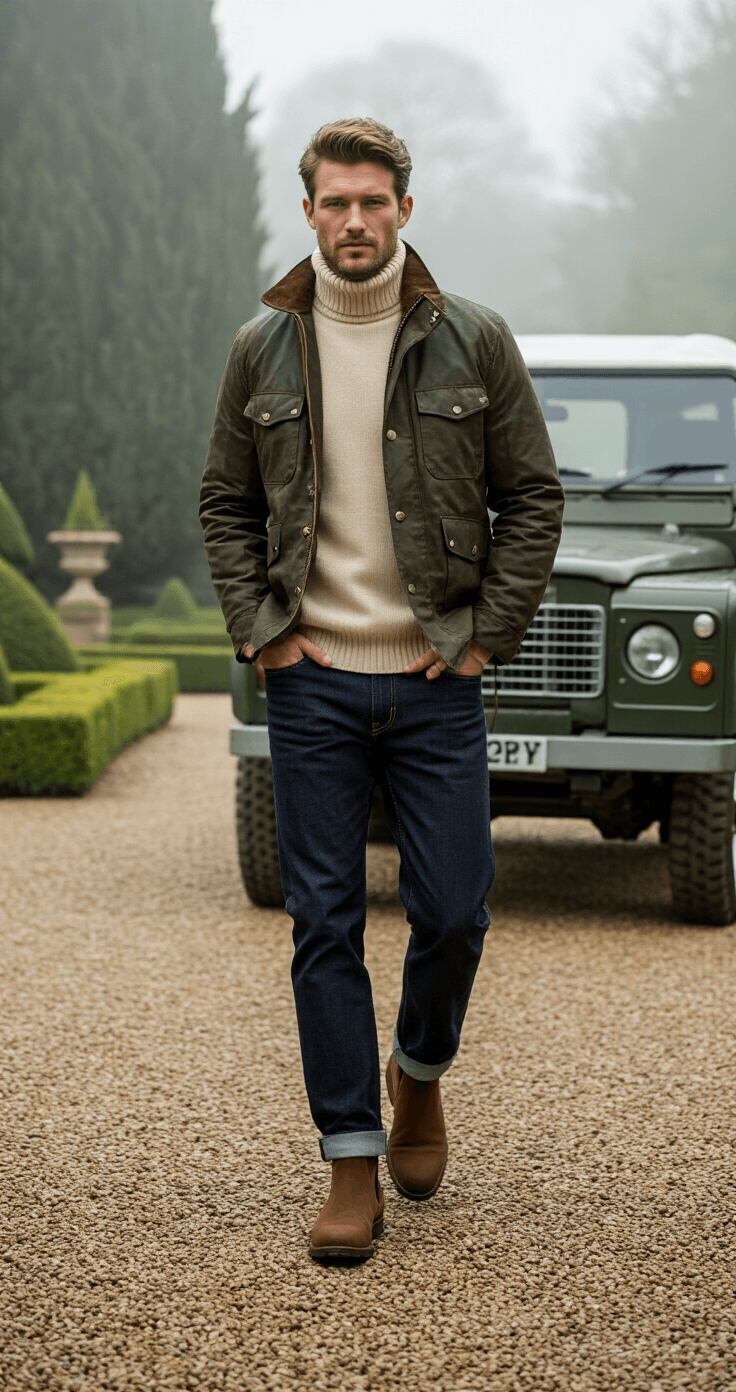
A male model walks through manicured gardens at a historic country estate, dressed in an olive waxed cotton jacket, cream rollneck sweater, dark denim, and brown suede chelsea boots. A vintage Land Rover Defender is parked in the gravel driveway in the background, all captured in the soft, misty morning light.

🌟 Pro Tip: Tuck your sweater loosely into the trouser waistband with a half-tuck technique—this creates intentional structure without looking fussy, and immediately elevates the silhouette from casual to considered.
✋ Avoid This: Avoid visible logos, synthetic fabrics that don’t breathe, and overly slim or skinny trouser cuts that read trendy rather than timeless.

From years in the fitting room, I’ve noticed men who nail this aesthetic prioritize garment weight and hand-feel over brand names—a heavy-gauge cashmere or substantial wool trouser hangs differently and photographs with that quiet luxury the old money aesthetic demands.

Leave a Reply

Your email address will not be published. Required fields are marked *