
This post may contain affiliate links. Please see my disclosure policy for details.
Ever dreamed of a garden that feels like a living, breathing work of art?
Let me introduce you to the white garden—a design concept that transforms ordinary outdoor spaces into ethereal, moonlit retreats.
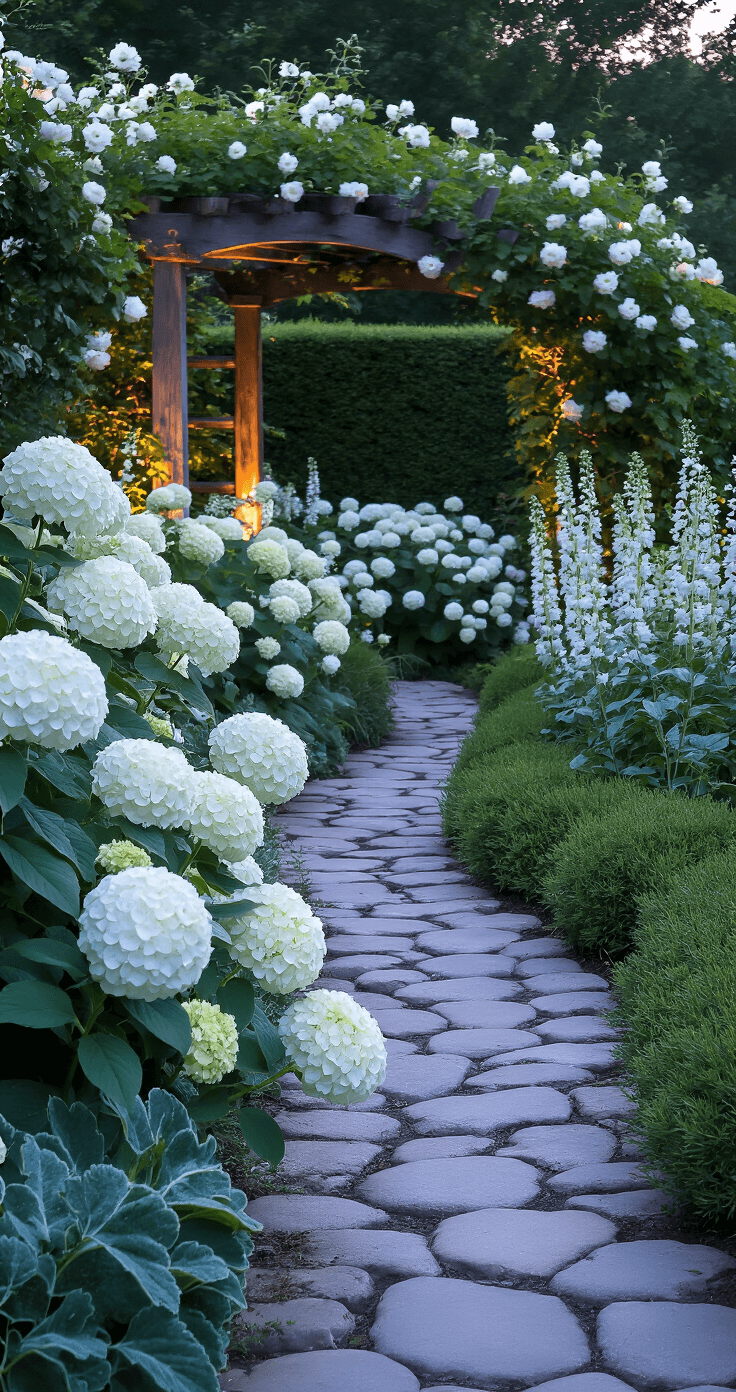
✎ Steal This Look
- Paint Color: Sherwin-Williams Pure White SW 7005
- Furniture: weathered teak Adirondack chairs with slatted backs, painted in distressed white finish
- Lighting: solar-powered glass globe path lights with warm 2700K LED filaments
- Materials: crushed white marble gravel pathways, painted white brick garden walls, galvanized zinc planters with aged patina
There’s something almost meditative about tending a white garden at dusk, when the flowers seem to glow from within and the day’s stress dissolves into that hushed, silvery atmosphere.
What Makes a White Garden Special?
White gardens aren’t just about white flowers. They’re a carefully curated symphony of:
- Soft ivory blooms
- Silvery foliage
- Subtle texture variations
- Strategic plant placement
Origin Story: The Sissinghurst Legacy
Vita Sackville-West pioneered this concept at her legendary Sissinghurst Castle, creating a garden style that whispers elegance rather than shouting for attention.
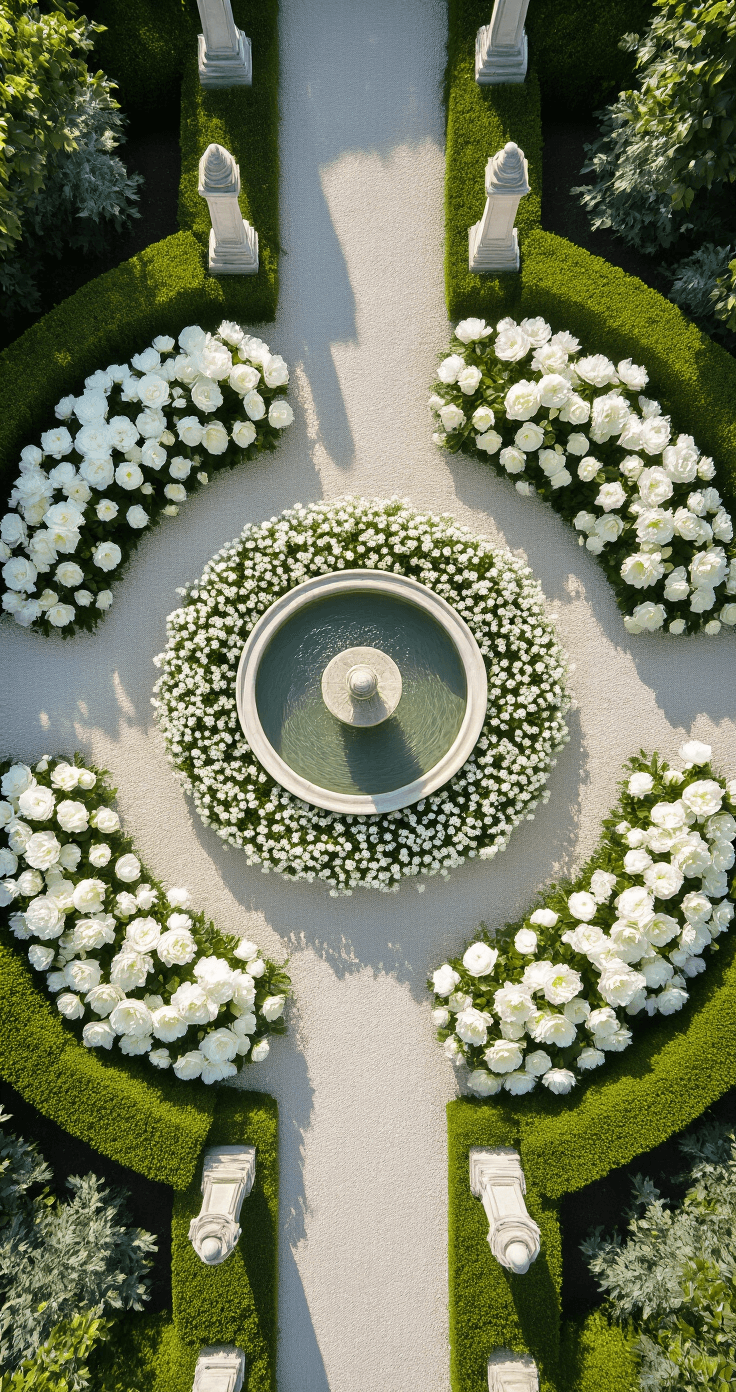
🏠 Steal This Look
- Paint Color: Benjamin Moore White Dove OC-17
- Furniture: weathered teak garden bench with curved slat back
- Lighting: solar-powered globe pathway lights in frosted glass
- Materials: crushed limestone gravel paths, pale limestone coping stones, galvanized zinc planters, bleached oak trellis panels
There’s something almost meditative about tending a white garden at dusk, when the blooms seem to glow from within and the day’s stresses dissolve into that soft, luminous quiet.
Choosing Your White Garden Plants
Must-Have White Flowering Stars:
- White roses
- Hydrangeas
- Peonies
- Alliums
- Snowdrops
- Delphiniums
Pro Tip: Mix shades from pure white to cream, ivory, and pale yellow for depth.
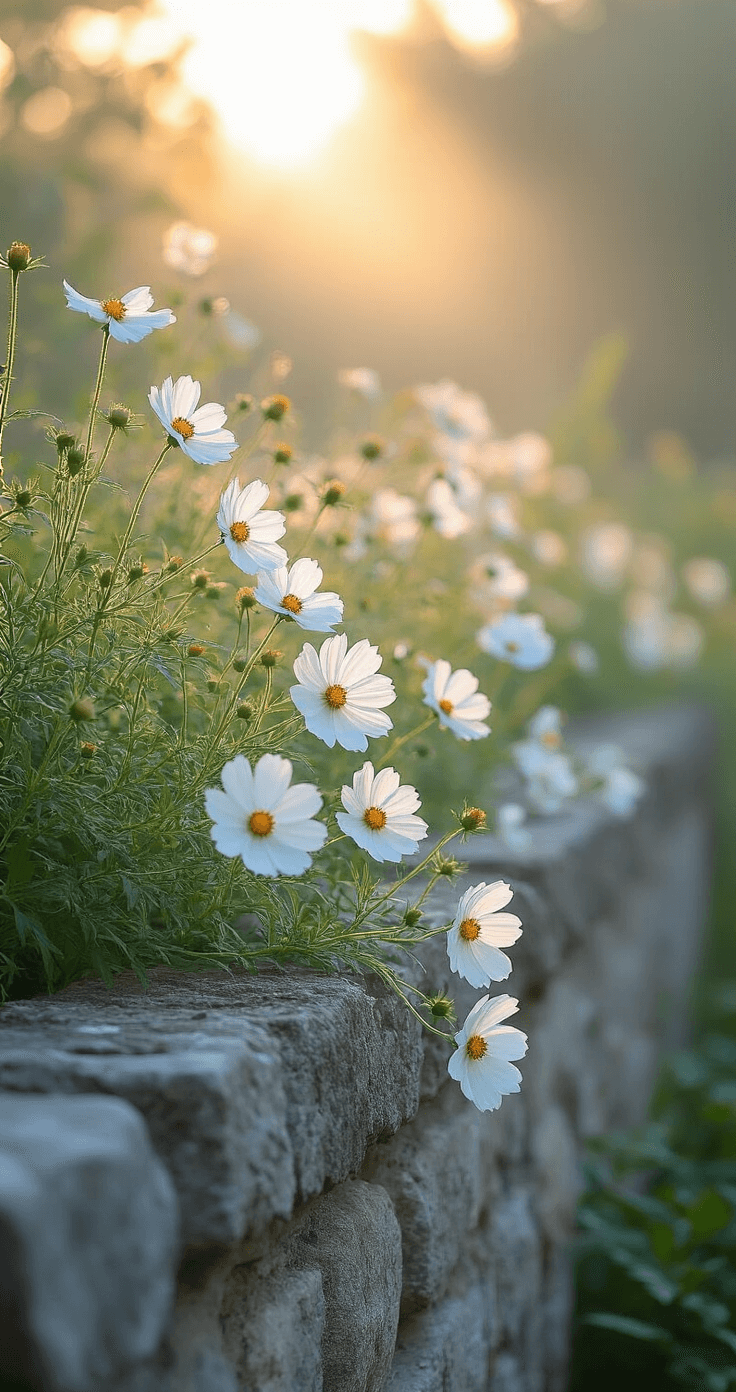
🏠 Steal This Look
- Paint Color: Farrow & Ball Pointing 2003
- Furniture: weathered zinc-top potting bench with open shelving for displaying terracotta pots and garden tools
- Lighting: vintage-style gooseneck barn sconce in aged brass for greenhouse or potting shed wall
- Materials: unglazed terracotta, aged limestone, galvanized metal, raw teak, and linen garden aprons
There’s something quietly radical about a white garden—it refuses the obvious seduction of color and instead rewards the patient observer with texture, shadow, and the subtle drama of moonlight on petals.
Design Secrets for Maximum Impact
1. Layer Textures
- Spiky plants
- Rounded shrubs
- Delicate sprays
- Architectural elements
2. Consider Seasonal Variations
- Spring: Snowdrops, white tulips
- Summer: Phlox, roses
- Autumn: Late-blooming crocus
- Winter: Structural evergreens
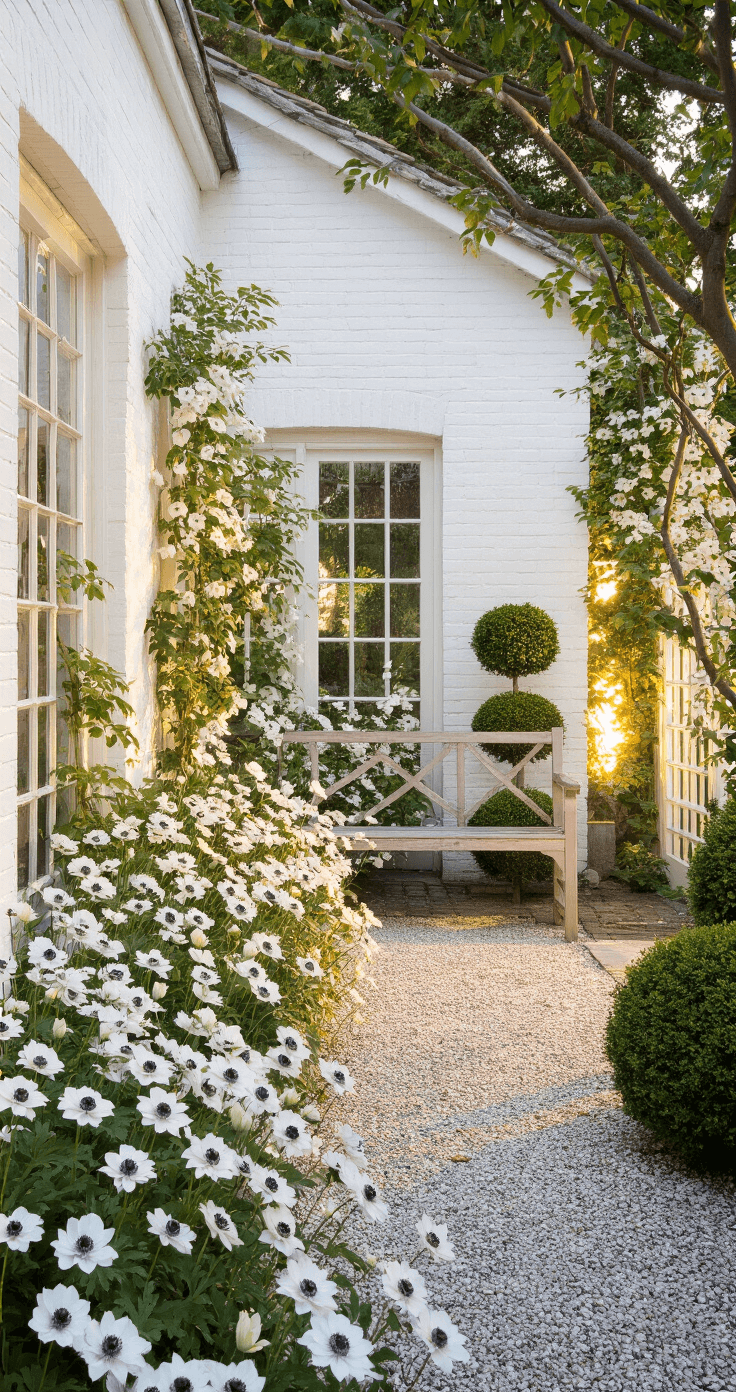
🌟 Steal This Look
- Paint Color: Behr Swiss Coffee 12
- Furniture: weathered teak garden bench with slatted back, positioned as a focal point against a white-painted garden wall
- Lighting: solar-powered globe stake lights in varying heights (12-inch, 18-inch, 24-inch) for layered evening illumination
- Materials: limestone gravel pathways, white painted brick or stucco walls, galvanized zinc planters, and raw oak garden structures for textural contrast
There’s something almost meditative about a white garden at dusk, when the colors soften and the textures take over—it’s the room you didn’t know your outdoor space needed.
Save this article
Enter your email and we'll send it straight to your inbox.
Lighting Matters: The Magical Dusk Effect
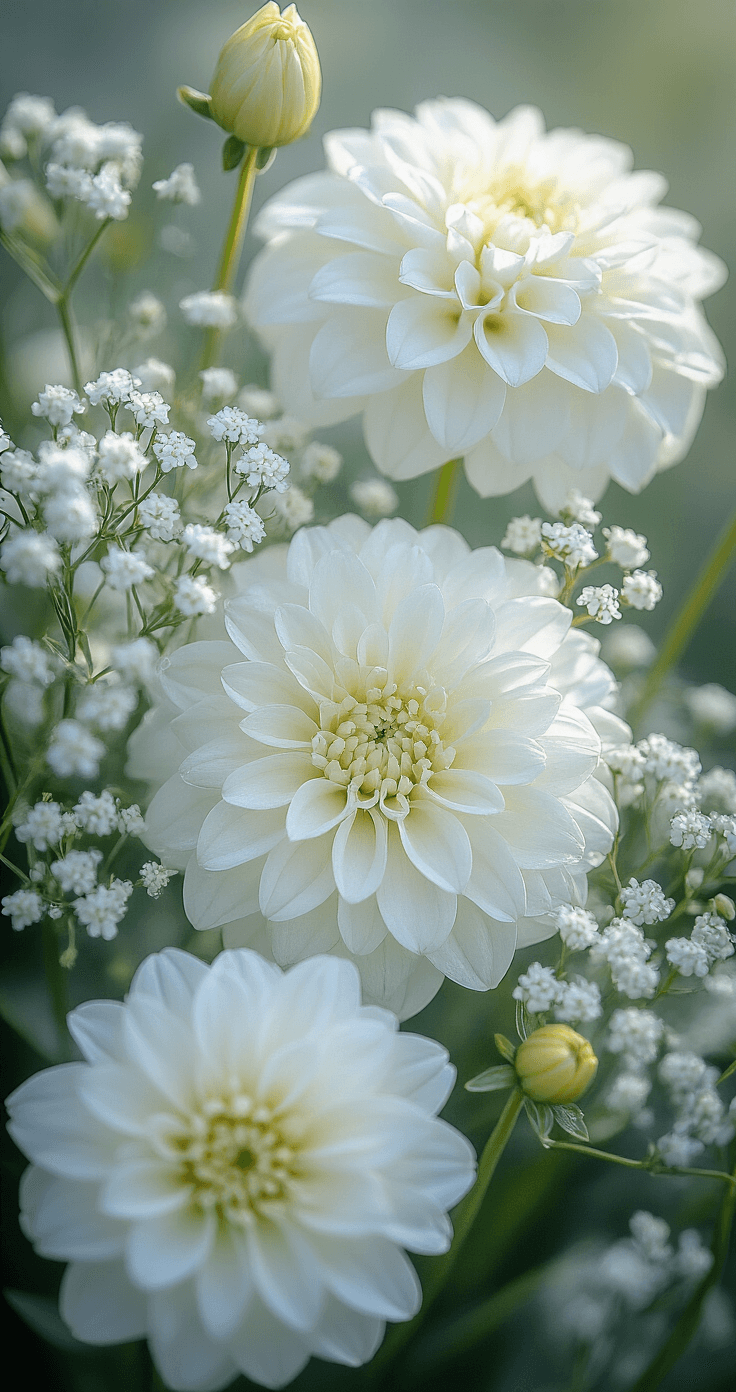
White gardens transform at twilight. White flowers literally glow, creating a mesmerizing luminescent landscape.
✎ Steal This Look
- Paint Color: Valspar Gardenia 7002-8
- Furniture: weathered teak Adirondack chair with slatted back for garden seating
- Lighting: solar-powered globe pathway lights with warm 2700K LED bulbs
- Materials: frosted glass, aged brass, white marble chips, weathered limestone
There’s something quietly breathtaking about watching your white garden shift from crisp daylight to this otherworldly silver glow—it’s the reward for every hour spent planting, and the reason you’ll find yourself wandering outside after dinner with a glass of wine, just to witness it again.
Maintenance Realities
Honest Moment: White gardens require commitment.
- Regular deadheading
- Careful plant selection
- Strategic pruning
Practical Implementation Tips
- Start small
- Choose plants suited to your climate
- Create focal points
- Balance white blooms with green structure
✎ Steal This Look
- Paint Color: Dunn-Edwards Whisper DEW 340
- Furniture: weathered teak potting bench with zinc top for workspace and display
- Lighting: solar-powered LED globe string lights with warm white 2700K temperature
- Materials: limestone gravel paths, whitewashed terracotta, galvanized steel planters, and aged zinc accents
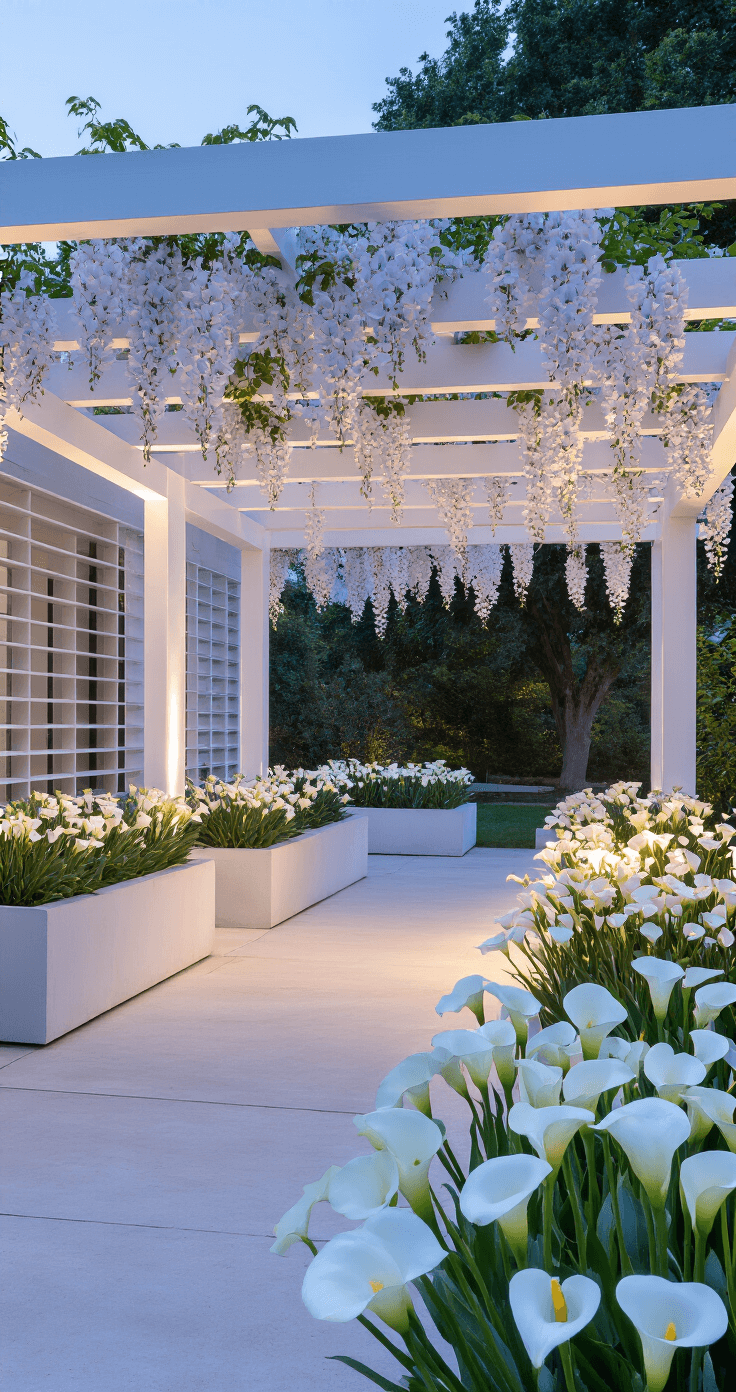
Your white garden should feel like a breath of fresh air at dusk when the blooms seem to glow—this is the magic hour that justifies every careful plant choice.
Budget-Friendly Approach
- Begin with affordable perennials
- Use seed propagation
- Divide existing plants
- Shop end-of-season sales
Common Mistakes to Avoid
- Overcrowding
- Ignoring plant height variations
- Forgetting winter interest
- Neglecting soil preparation
💡 Steal This Look
- Paint Color: Fine Paints of Europe Hollandlac Brilliant White W1001
- Furniture: weathered zinc-top potting bench with slatted lower shelf for tool storage
- Lighting: galvanized steel gooseneck barn sconce with frosted glass diffuser
- Materials: crushed oyster shell pathways, aged limestone edging, unglazed terracotta pots with mineral deposits
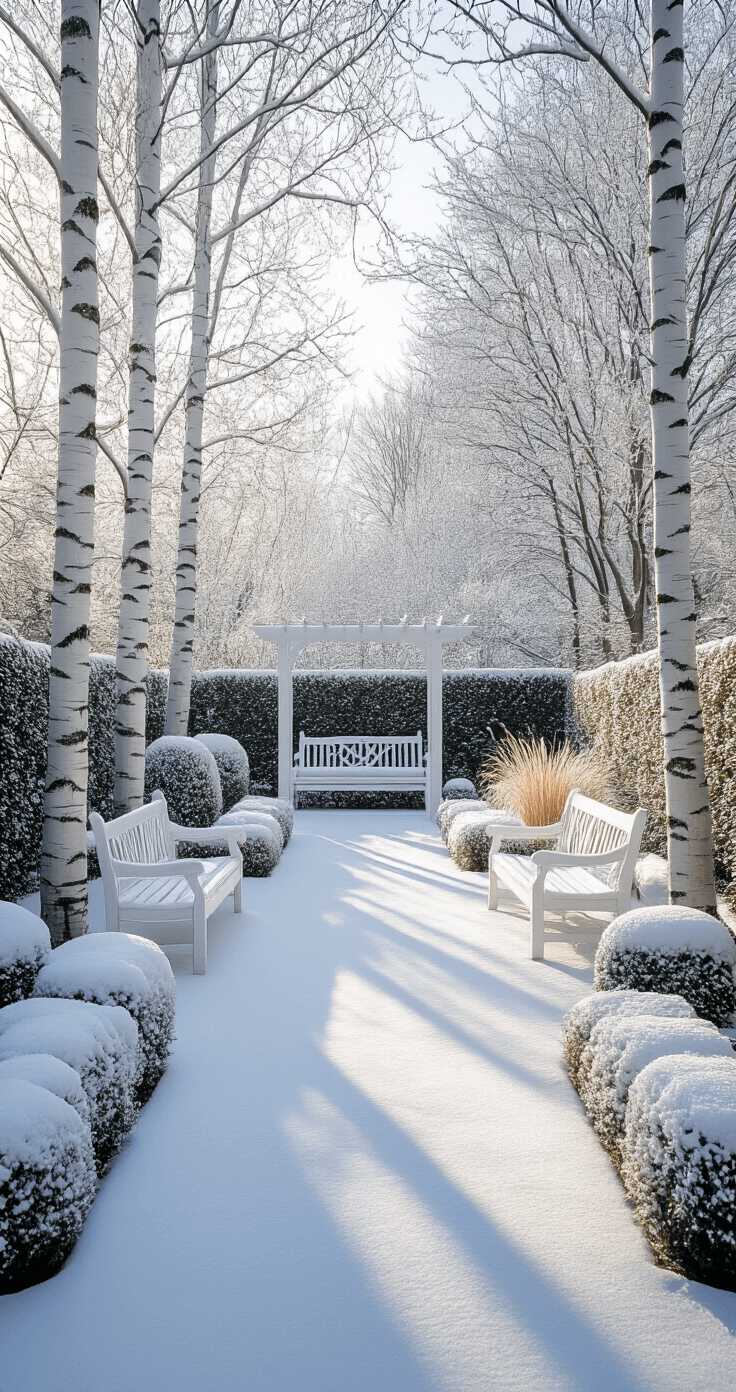
This is the garden that teaches you restraint—the one where you’ll stand with coffee in hand, realizing that the spaces between plants matter as much as the plants themselves, and that a single moonflower opening at dusk outshines a dozen crowded blooms.
Professional Designer’s Secret
The most stunning white gardens aren’t just about flowers—they’re about creating a mood, an atmosphere of tranquil sophistication.
Your White Garden Toolkit
- Pruning shears
- Gardening gloves
- Mulch
- Patience
- Artistic vision
Final Inspiration
A white garden isn’t just a landscape. It’s a living canvas that changes with seasons, light, and your personal touch.
Ready to transform your outdoor space into a luminous sanctuary? Your white garden adventure starts now.
Want to keep this one?
We'll email you the link so you can find it again later.