

This post may contain affiliate links. Please see my disclosure policy for details.
What to Wear to a Dinner in Winter: My Go-To Guide for Looking Chic Without Freezing
Figuring out what to wear to a dinner in winter can feel like solving a puzzle where half the pieces are missing.
You want to look put-together and elegant, but you also don’t want to spend the entire evening shivering or hiding under a giant coat.
I’ve been there way too many times—standing in front of my closet, trying on outfit after outfit, wondering how to balance warmth with style.
The good news? You don’t have to sacrifice one for the other.
Winter dinners call for a different approach than summer cocktail parties or spring brunches.
The air is cold, the lighting is moody, and the vibe is a little more sophisticated.
You need fabrics that feel luxurious, colors that pop against the dark season, and layers that actually make sense.
Let me walk you through exactly how I approach winter dinner dressing, from the fabrics I reach for to the accessories that pull everything together.
This isn’t about following strict fashion rules—it’s about finding what works for you and feeling confident when you walk into that restaurant or dinner party.
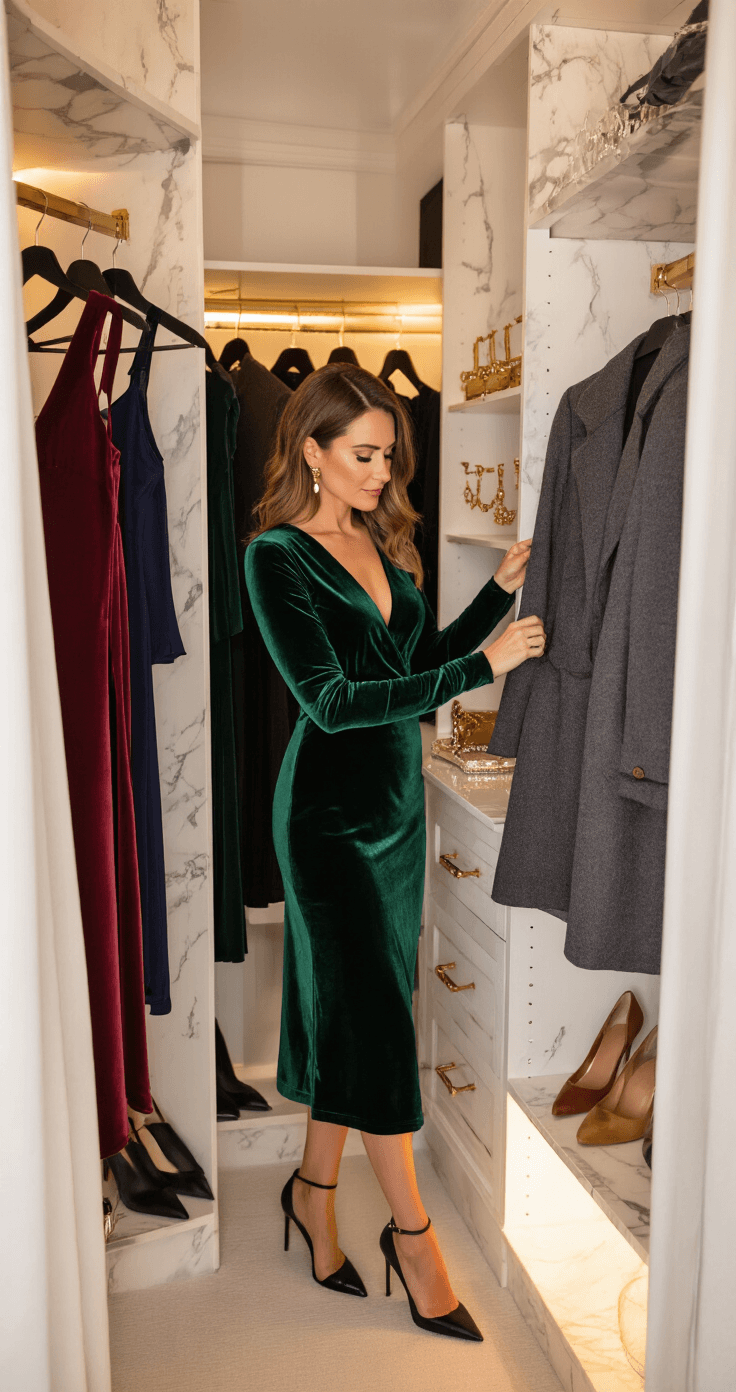
I always tell clients that winter elegance lives in texture contrast—matte wool against luminous velvet creates visual depth that photographs beautifully in dim restaurant lighting.
Why Winter Dinners Need a Different Styling Strategy
Winter isn’t just cold—it’s unpredictable.
You’re bundling up in a coat to get there, then peeling off layers once you’re inside a heated venue.
Your outfit needs to work in both settings.
Plus, winter dinners usually have a slightly more formal tone than casual summer gatherings.
There’s something about the season that just calls for a little extra polish.
I’ve learned that the key is choosing pieces that feel elevated but also keep you comfortable.
Nobody wants to spend the night tugging at an itchy sweater or rubbing their freezing arms under the table.
When I’m getting dressed for a winter dinner, I think about three main things: warmth, elegance, and versatility.
The outfit has to look good on its own, but it also has to layer well with a coat or wrap.
And it should make you feel like the best version of yourself, not like you’re fighting against the weather.
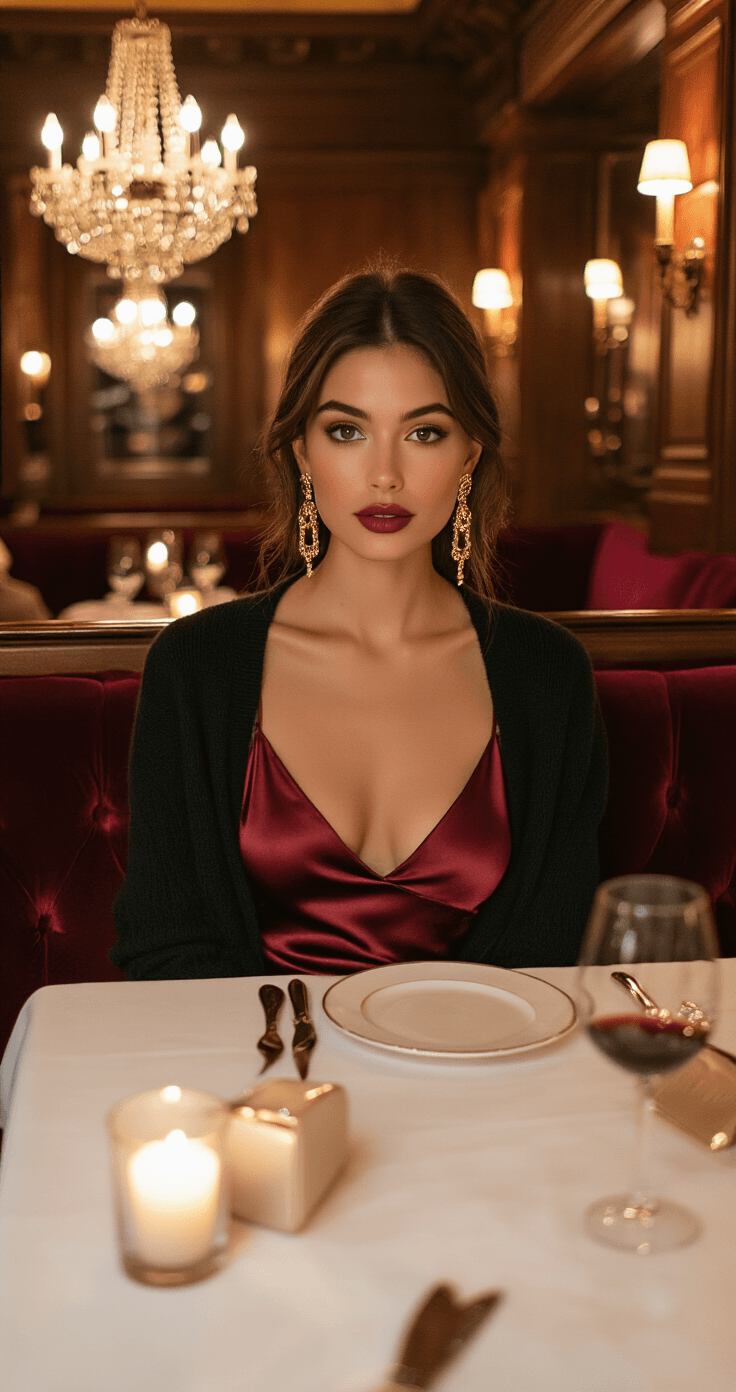
I always tell clients that winter dressing is about strategic exposure—this neckline frames the face beautifully while the wide leg keeps you warm, and that touch of gold at the waist catches candlelight in the most flattering way.
Luxe Fabrics That Do the Heavy Lifting
Let’s talk fabrics first, because honestly, this is where winter dressing gets really fun.
The materials you choose can instantly elevate your look and keep you warm without adding bulk.
Velvet: The Winter MVP
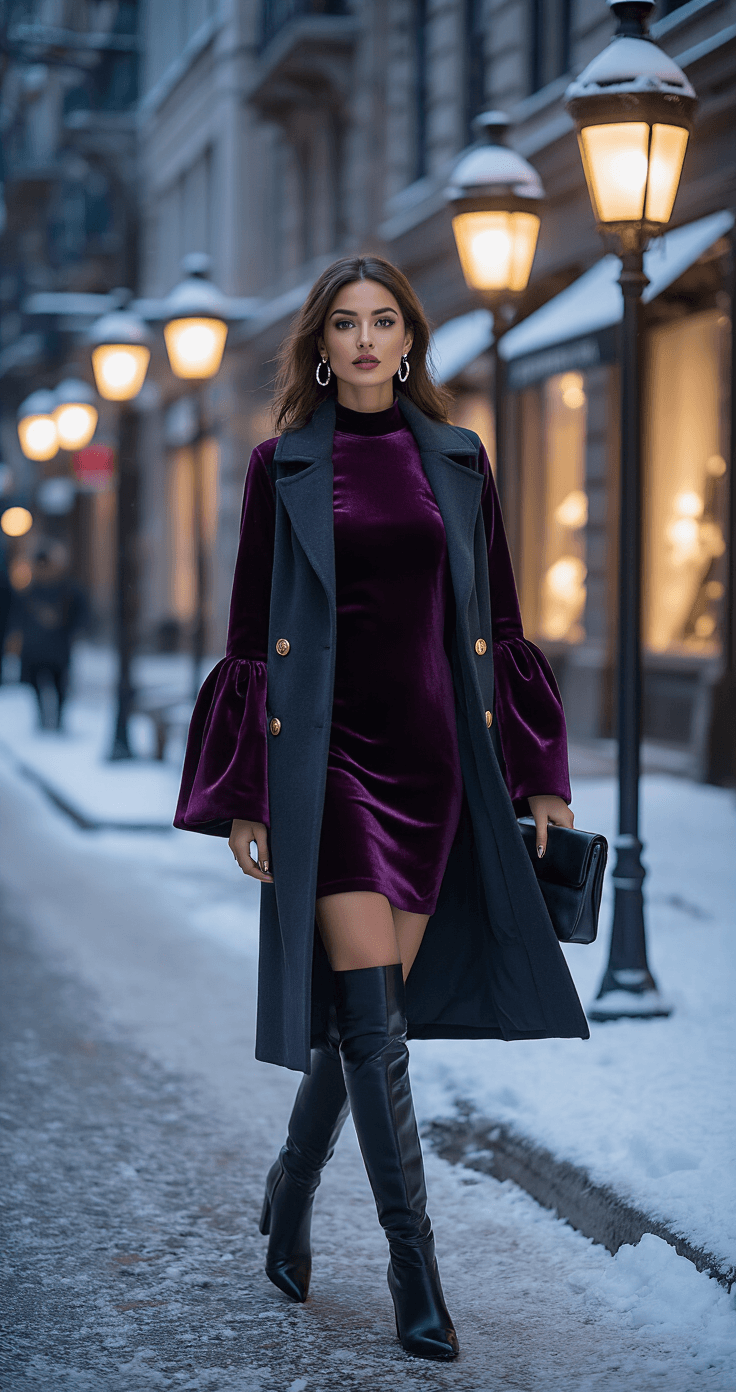
If I had to pick one fabric for winter dinners, it would be velvet.
There’s something about velvet that just screams winter elegance.
It’s soft, it’s warm, and it photographs beautifully in low lighting.
I love how velvet catches the light—it has this depth and richness that other fabrics just don’t have.
A velvet midi dress in a jewel tone is basically my winter uniform.
It works for formal dinners, semi-formal events, and even casual upscale restaurants.
Plus, velvet has enough weight to it that it drapes nicely without clinging in weird places.
Satin: Sleek and Sophisticated
Satin is another go-to when I want to look polished.
It has this beautiful sheen that feels fancy without being over-the-top.
Save this article
Enter your email and we'll send it straight to your inbox.
The thing with satin is that it’s not as warm as velvet, so I usually save it for indoor dinners or pair it with really good layers.
A satin slip dress layered under a tailored blazer or cardigan? Chef’s kiss.
It’s feminine, elegant, and works for a range of formality levels.
Heavy Crepe: The Underrated Champion
Crepe doesn’t get enough credit, in my opinion.
It’s structured, it holds its shape, and it has a matte finish that feels really sophisticated.
Heavy crepe is particularly good for winter because it has more weight than regular crepe, which means it keeps you warmer.
I reach for crepe when I want something that feels a little more tailored or professional.
It’s perfect for work dinners or events where you want to look put-together but not overly dressy.
Other Fabrics Worth Considering
If velvet, satin, and crepe aren’t your thing, here are some other winter-friendly options:
- Wool blends: Great for structured dresses or separates
- Knit dresses: Cozy and chic when styled right
- Brocade: Adds texture and visual interest
- Taffeta: Formal and dramatic if that’s your vibe
The key is choosing fabrics that feel substantial.
You want materials that have some weight to them, not flimsy summer fabrics that will leave you freezing.
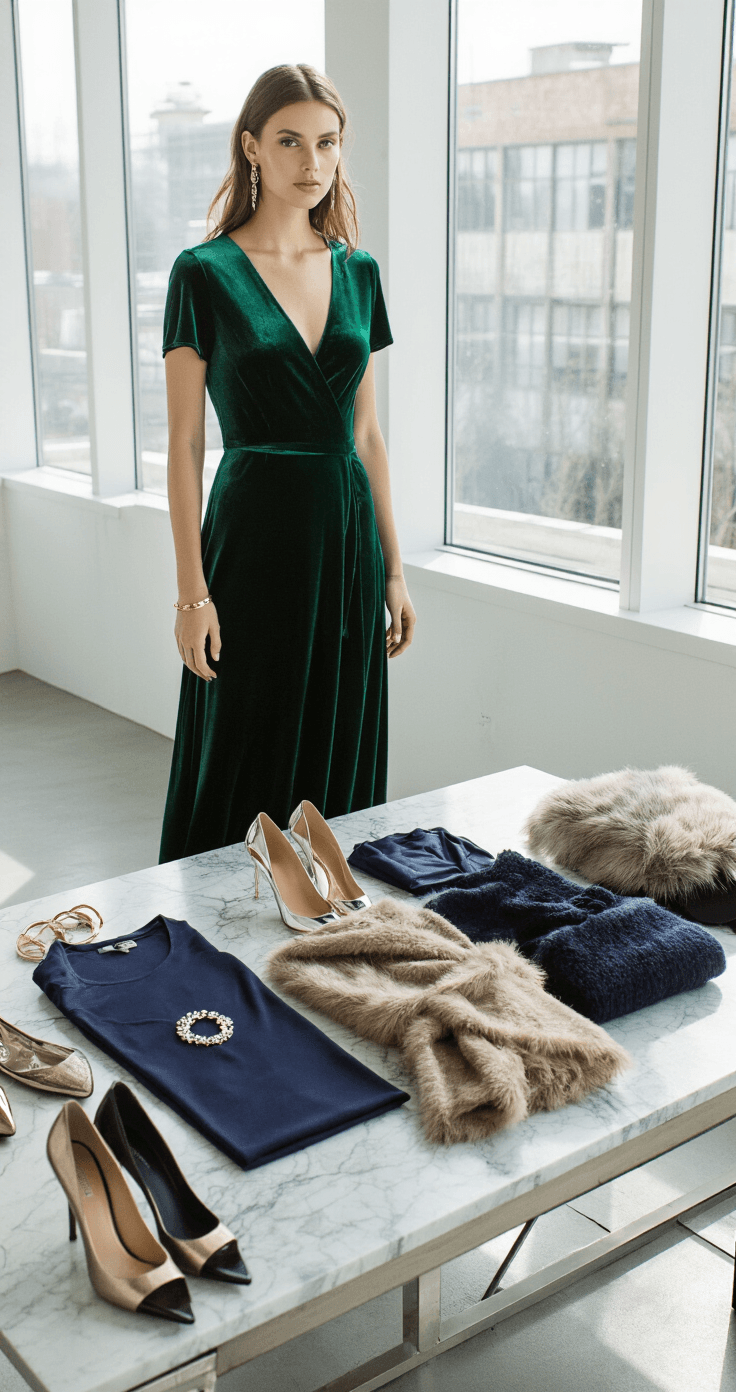
From my years dressing clients for winter galas, I’ve learned that deep jewel-toned velvet photographs like liquid luxury in candlelight — it flatters every skin tone and eliminates the need for complicated layering.
Deep Jewel Tones That Make a Statement
Color choice can make or break a winter dinner outfit.
Light pastels and bright neons just don’t feel right for the season.
Winter is all about rich, deep colors that complement the cozy, intimate atmosphere.
Burgundy: My Personal Favorite
Burgundy is such a stunning color for winter.
It’s romantic, it’s sophisticated, and it looks amazing on almost every skin tone.
I love wearing burgundy dresses because they feel festive without being too holiday-specific.
You can wear burgundy from November through February and it always feels appropriate.
Pair it with gold jewelry and you’ve got an instant winner.
Emerald Green: Bold and Beautiful
Emerald green is having a moment, and I’m here for it.
It’s vibrant without being too loud, and it photographs beautifully.
I find that emerald works really well in velvet—the combination of that rich color and luxe fabric is just stunning.
If you’re nervous about wearing such a bold color, start with a dress that has a simple silhouette.
Let the color be the statement piece.
Navy is probably the most versatile color in my winter wardrobe.
It’s formal enough for upscale dinners, but it’s not as stark as black.
Navy pairs well with both silver and gold jewelry, which gives you a lot of styling flexibility.
I love a navy dress with silver accessories for a cool, elegant vibe.
Or you can go navy with cognac brown boots for something a little more
As a stylist, I’ve seen how deep jewel tones photograph under winter restaurant lighting—they create this gorgeous dimensional glow on skin that flatters everyone, especially when you add that touch of gold at the decolletage to catch candlelight.
Want to keep this one?
We'll email you the link so you can find it again later.


[…] shelf for marginal plants and a deeper 18-inch center for water lilies and fish survival through winter freezes. 🛑 Avoid This: Avoid placing your pond directly under deciduous trees unless you enjoy […]