This post may contain affiliate links. Please see my disclosure policy for details.
Ferns on front porch displays transform ordinary entryways into inviting green sanctuaries, but I’ll be honest with you, I’ve killed my share of these beauties before figuring out what actually works.
You hang that gorgeous, full fern basket in April, and by July it looks like something from a horror movie. Brown fronds everywhere. Crispy edges that crumble when you touch them. I’ve been there, standing on my porch wondering what I did wrong while my neighbor’s ferns look like they belong in a botanical garden.
Here’s what I learned after years of trial, error, and eventually success.
Why Your Porch Location Actually Matters More Than You Think
Contents
Not all porches are created equal when it comes to ferns.
I used to think “shade-loving” meant I could stick a fern anywhere out of direct sunlight. Wrong.
Morning sun with afternoon shade is the sweet spot. East-facing porches are basically fern heaven because they get gentle morning light without the brutal afternoon rays that scorch delicate fronds.
My south-facing porch? That required some creative hanging to get the positioning right.
If your porch bakes in afternoon sun, you’ll need:
- Deeper overhang protection
- Strategic placement near columns or walls
- Consideration of switching to Kimberly Queen ferns instead of Boston ferns
Kimberly Queens handle sun and wind like champions compared to their more delicate Boston cousins.

The Watering Mistake Almost Everyone Makes
I used to water my ferns every Saturday like clockwork. Guess what? They still died.
Ferns don’t care about your schedule.
Stick your finger in the soil. Does it feel dry? Water it. Still moist? Leave it alone.
During summer, I check mine every single day because hot weather changes everything. Some days I water. Some days I don’t.
When you do water, do it right:
- Water until it pours out the drainage holes
- Keep watering for another 10-15 seconds
- Don’t just sprinkle the surface
I invested in a quality watering can with a long spout that lets me reach hanging baskets without creating a waterfall on my porch floor.
Pro move I learned from my grandmother: When rain is coming, I move my ferns off the porch into the yard. Rainwater has a lower pH that keeps fronds vibrant green in a way tap water just doesn’t match.

Humidity Is Non-Negotiable (But Easier Than You Think)
Ferns evolved in forests where moisture hangs in the air. Your front porch is not a forest.
I keep a simple spray bottle by my door and give my ferns a quick mist whenever I walk past. Takes five seconds. Makes a massive difference.
Signs your fern is begging for humidity:
- Brown, crispy edges on fronds
- Fronds that feel papery instead of supple
- Rapid drying between waterings
If your porch gets significant air conditioning draft or heating vent flow (yes, even on porches), your ferns will struggle no matter how much you water. I moved mine three feet to the left one summer and suddenly they thrived. Location matters that much.

Container Size: Go Bigger Than Feels Reasonable
My first fern lived in a cute 10-inch pot. It looked pathetic.
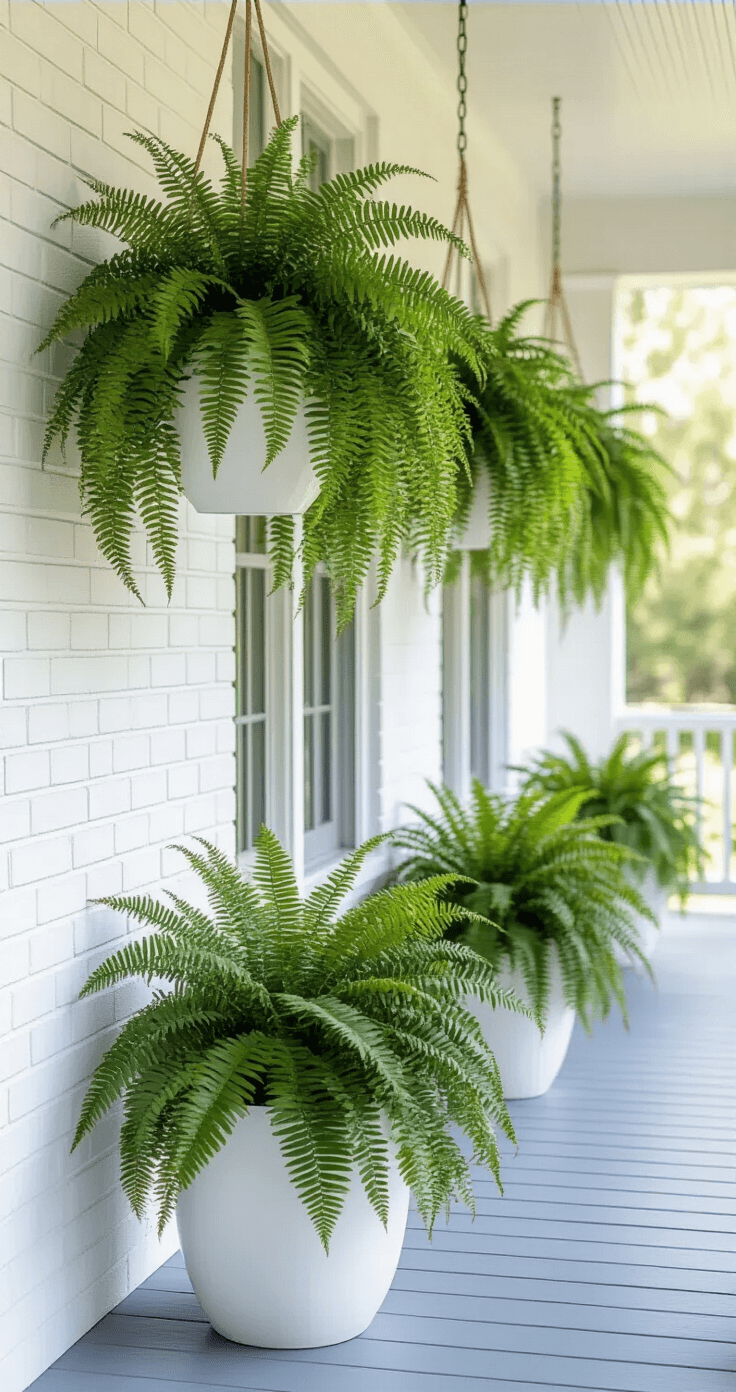
Ferns need room to spread their root systems and create that full, overflowing look we all want. I switched to large 14-inch hanging planters and the difference was dramatic.
Container checklist:
- Drainage holes (non-negotiable)
- At least 12-14 inches in diameter for mature plants
- Coconut coir liners for hanging baskets
- 1 inch of space between liner edge and soil surface
If drainage holes get clogged with soil (they will), poke them clear with a pencil. Seems obvious, but I didn’t figure this out for two years and wondered why my ferns rotted.
The Right Fern Makes All the Difference
Boston ferns are everywhere because they’re gorgeous. But they’re also drama queens.
I finally tried a Kimberly Queen fern after my fourth Boston fern casualty, and it was like switching from a high-maintenance relationship to a functional one. Kimberly Queens tolerate more sun, wind, and inconsistent watering.
Other ferns that actually worked for me:
- Button fern – compact, doesn’t demand constant humidity
- Rabbit’s foot fern – unique texture, great for decorative hanging baskets
- Autumn fern – handles temperature swings better
- Christmas fern – survives if you’re in partial shade zones
Skip these if you’re not experienced:
- Maidenhair fern (beautiful but impossibly finicky)
- Lady fern (toxic to pets, and I have a curious dog)
When Brown Fronds Happen (And They Will)
Even perfect care produces some brown fronds. It’s normal.
I used to panic and overwater, which made things worse.
Here’s what to do:
Cut brown fronds at the base using sharp pruning shears to prevent further stress on the plant. Make sure your tools are clean before trimming to avoid introducing bacteria. After pruning, check the soil moisture, palms don’t like soggy roots. Allow the top few centimeters to dry out before watering again, and mist occasionally if your indoor air is dry.