This post may contain affiliate links. Please see my disclosure policy for details.
Why Japanese Gardens Are Magic for Compact Spaces
Let’s get real. Most of us are struggling with:
– Tiny balconies
– Cramped urban patios
– Limited outdoor areas
– Zero gardening experience
Good news: A Japanese garden is your secret weapon for transforming these challenges into zen-like retreats.

🏠 Steal This Look
- Paint Color: Sherwin-Williams Rookwood Dark Green SW 2807
- Furniture: low-profile cedar meditation bench with slatted seat
- Lighting: paper lantern string lights with warm 2700K LED bulbs
- Materials: polished river rock, untreated cedar, crushed granite, moss, bamboo screening
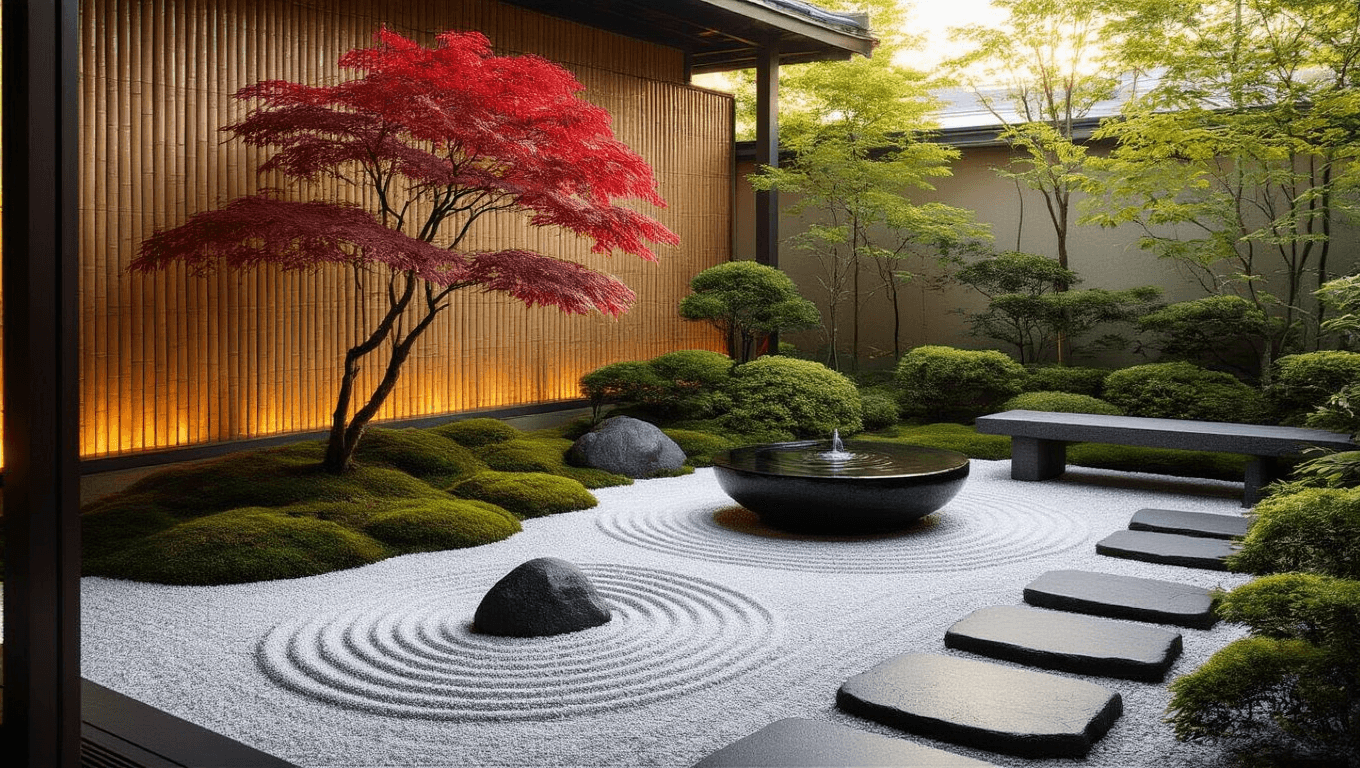
There’s something almost meditative about raking gravel patterns at dawn with coffee in hand—even a 6×8 foot corner becomes your daily reset button when designed intentionally.
The Zen Philosophy: More Than Just Looks
Japanese gardens aren’t just pretty. They’re a philosophy of:
– Harmony
– Simplicity
– Connection with nature
– Mindful design
Essential Elements for Your Miniature Zen Paradise
**Must-Have Components:**
– Thoughtful boundaries
– Strategic plant selection
– Minimal, meaningful decor
– Purposeful negative space

🎨 Steal This Look
- Paint Color: Benjamin Moore Quiet Moments 1563
- Furniture: low-profile wooden meditation bench or stone garden seat
- Lighting: paper lantern solar pathway lights or bamboo-framed outdoor sconce
- Materials: rough-hewn granite, untreated cedar, raked white gravel, moss, river stones
There’s something deeply grounding about stepping into a space that asks nothing of you except presence—this is the quiet power of a true Zen garden, even in the smallest urban corner.
Plant Selection: Nature’s Perfect Palette
**Top Plants for Small Japanese Gardens:**
– Japanese Maple (stunning color variations)
– Dwarf Evergreens
– Moss
– Ferns
– Mondo Grass
**Pro Tip:** Choose plants that create visual layers and texture without overwhelming your space.

🏠 Steal This Look
- Paint Color: Farrow & Ball Green Smoke 47
- Furniture: low stone or ceramic garden stool for contemplative seating
- Lighting: paper lantern-style outdoor pendant or solar-powered stone lantern
- Materials: rough-hewn stone, weathered cedar, velvety moss, fine gravel
There’s something deeply meditative about tending these plants—each pruning session becomes a quiet conversation with your garden rather than a chore.
👑 Get The Look
Design Secrets Most People Don’t Know
**Insider Techniques:**
– Use “forced diminishing perspective”
– Create depth with strategic rock placement
– Incorporate “borrowed scenery” from surrounding views
– Balance asymmetry with intentional design
### Step-by-Step Garden Creation
1. **Define Your Space**
– Measure your available area
– Identify primary viewing angle
– Decide on indoor or outdoor focus
2. **Create Boundaries**
– Bamboo screens
– Low hedges
– Minimalist fencing
3. **Layout Foundations**
– Stepping stones
– Gravel paths
– Subtle elevation changes

Save this article
Enter your email and we'll send it straight to your inbox.
4. Add Water Elements
– Tiny fountains
– Bamboo water spouts
– Small decorative basins
5. Accessorize Mindfully
– Stone lanterns
– Minimal seating
– Carefully placed ornaments

✎ Steal This Look
- Paint Color: Behr Mossy Gold PPU10-06
- Furniture: low-profile stone garden bench with weathered teak seat
- Lighting: solar-powered stone lantern with warm 2700K LED
- Materials: raked pea gravel, moss-covered boulders, weathered cedar, hand-forged copper accents
There’s something almost meditative about raking gravel patterns at dawn—this room asks you to slow down and participate rather than just observe.
Common Mistakes to Avoid
❌ **DON’T:**
– Overcrowd the space
– Use too many different colors
– Ignore vertical dimension
– Forget about seasonal changes
✅ **DO:**
– Embrace simplicity
– Focus on texture
– Create visual flow
– Think like nature
### Maintenance: Keeping Your Zen Garden Pristine
**Quick Care Tips:**
– Regular gentle pruning
– Minimal watering
– Annual soil refresh
– Seasonal plant rotation

🏠 Steal This Look
- Paint Color: Valspar Quiet Interlude 5002-1B
- Furniture: low-profile wooden meditation bench with hidden storage for garden tools
- Lighting: solar-powered stone pathway lanterns with warm 2700K LED
- Materials: unpolished river rock, aged cedar, moss, crushed granite, hand-thrown ceramic
This is the garden that teaches you patience—I’ve watched clients transform from anxious over-planters to confident editors who find joy in what they remove rather than what they add.
🛒 Get The Look
Budget-Friendly Transformation
**Affordable Hacks:**
– Use container plants
– DIY rock arrangements
– Thrift store ornaments
– Propagate your own plants
### Your Personal Zen Journey Starts Now
Remember, a Japanese garden is more than a design—it’s a meditation, a living artwork that evolves with you.
Your tiny space isn’t a limitation. It’s an opportunity for extraordinary beauty.
**Final Wisdom:** Nature doesn’t hurry, yet everything is accomplished. Your garden will grow, just like your patience.

🎨 Steal This Look
- Paint Color: PPG Stonehenge Greige PPG1002-3
- Furniture: low wooden meditation bench or stone garden seat
- Lighting: solar-powered paper lantern string lights or bamboo pathway lights
- Materials: river rocks, pea gravel, untreated cedar planks, moss, terracotta containers
There’s something deeply satisfying about building your sanctuary piece by piece, watching a cutting you rooted yourself become the centerpiece of your morning ritual—this garden becomes your story, not just a showroom.
Want to keep this one?
We'll email you the link so you can find it again later.