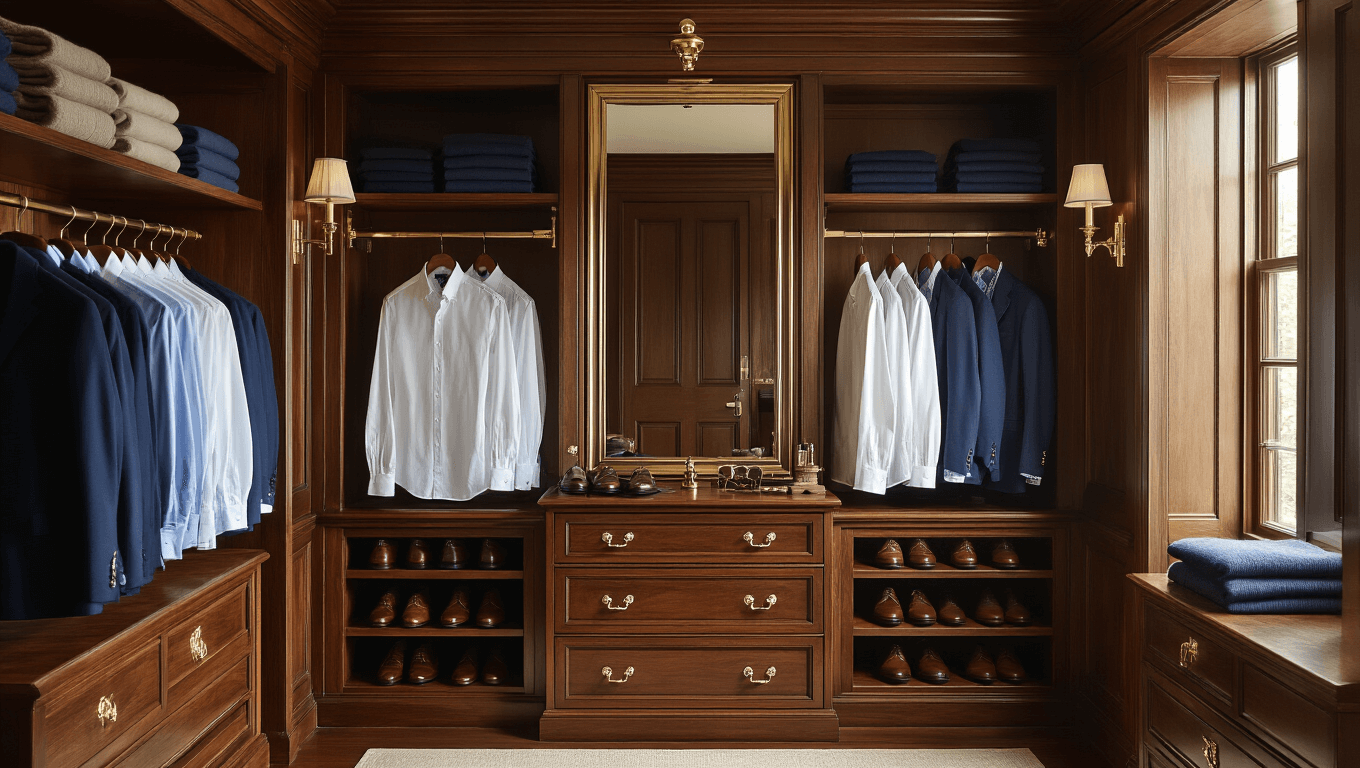
A luxurious wood-paneled dressing room featuring organized pressed Oxford shirts, tailored blazers, polished leather shoes, and cashmere sweaters, all highlighted by warm ambient lighting and rich mahogany furniture in a muted color palette.

Old Money Style For Men: A Complete Guide To Timeless Elegance

This post may contain affiliate links. Please see my disclosure policy for details.

The Essence of Old Money Style

Let’s be real – old money style isn’t flashy or in-your-face. It’s all about that quiet confidence that comes from wearing well-made, perfectly fitted pieces. Think of it as dressing like you’ve got nothing to prove, because your clothes do all the talking.
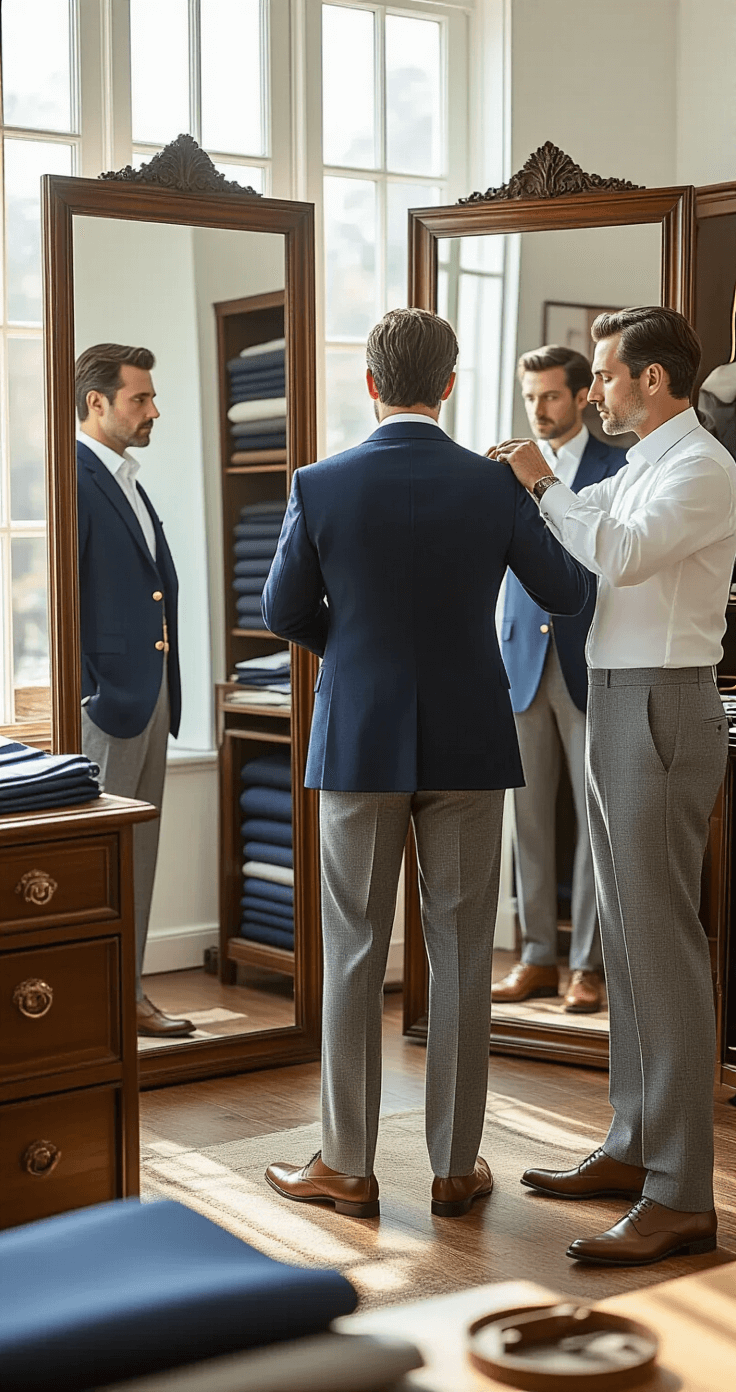
A distinguished gentleman is being fitted for a bespoke navy wool blazer in a sunlit tailor's studio, surrounded by premium fabrics and vintage wooden furniture, with precise tailoring details highlighted.

🌟 Pro Tip: Focus on fabric weight and drape—old money dressing relies on substantial materials that hold their shape beautifully, so opt for 14oz+ wool trousers and 2-ply cashmere or merino knits that feel substantial in hand.
✋ Avoid This: Avoid visible logos, contrast stitching, or synthetic blends that create unnatural sheen; these immediately signal new money trying too hard rather than inherited taste.

From two decades in styling, I’ve noticed the men who truly nail this aesthetic prioritize garment construction over brand names—have your trousers tailored to sit precisely at the natural waist with a slight break, and invest in shoe trees to maintain that polished patina.

Essential Wardrobe Pieces

Classic Blazers and Sport Coats
  • Custom-fitted or tailored wool blazers
  • Tweed jackets for fall and winter
  • Navy blue is your best friend here
  • Subtle patterns like herringbone or houndstooth
Quality Dress Shirts
  • Crisp white Oxford button-downs
  • Light blue dress shirts
  • Subtle stripes or solid colors
  • Always opt for 100% cotton

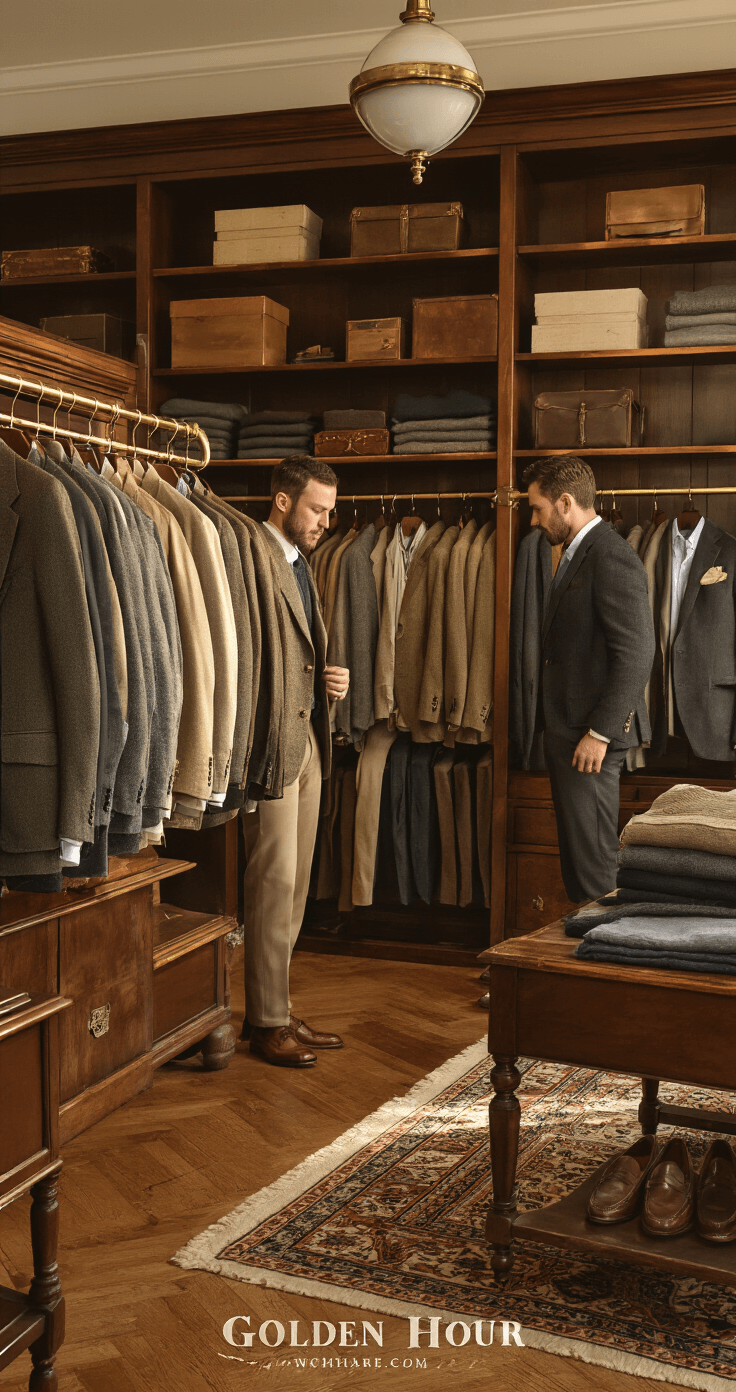
A well-dressed man browses classic tweed sport coats and cashmere sweaters in a sophisticated menswear boutique during golden hour, with warm light casting shadows on polished hardwood floors and outfits displayed on antique furniture.

Perfect Pants
  • Well-fitted chinos in khaki or beige
  • Dark dress pants
  • Classic-cut jeans in dark wash
  • Pleated trousers for a vintage touch
The Right Accessories
  • Leather dress shoes (Oxford, loafers, brogues)
  • Classic leather belt
  • Minimal jewelry (maybe just a watch)
  • Traditional tortoiseshell sunglasses

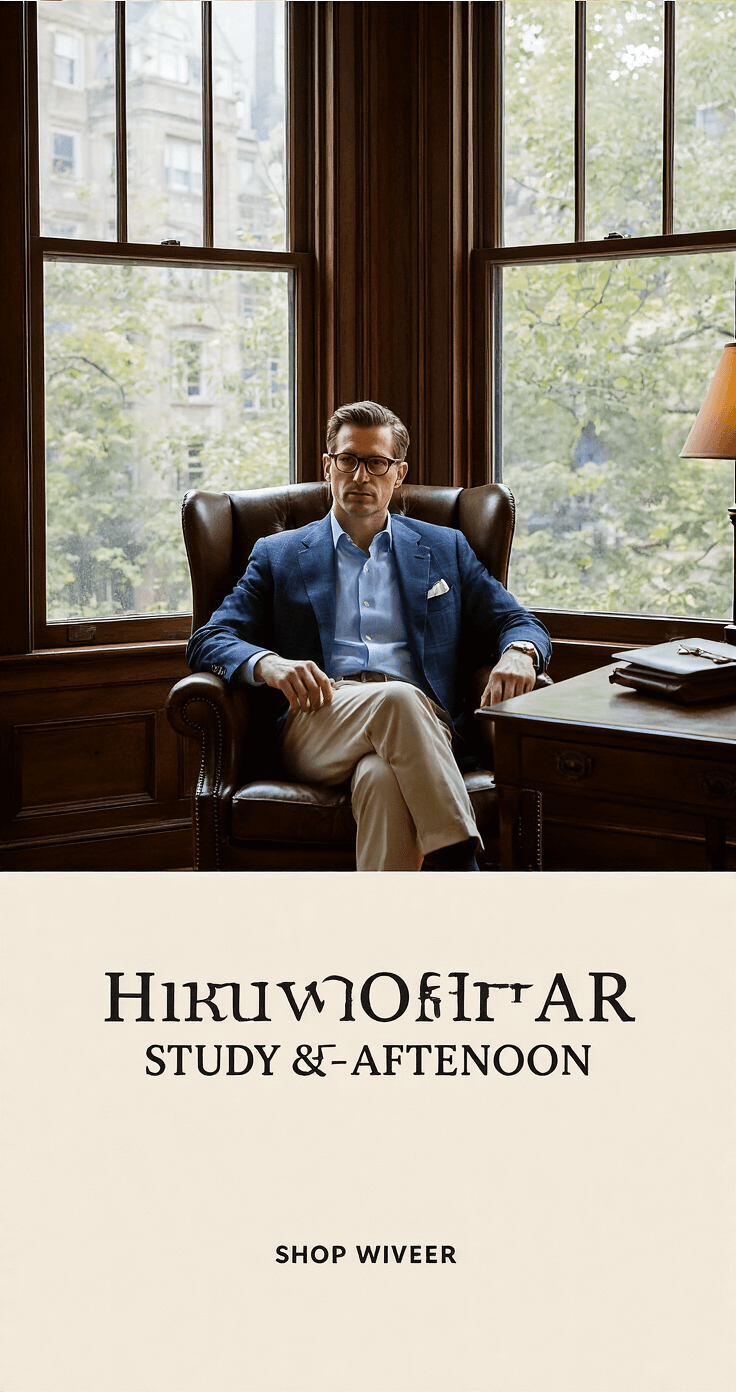
Gentleman in light blue Oxford shirt and navy blazer seated in leather wingback chair in a historic brownstone study, with leather briefcase and tortoiseshell glasses on a mahogany desk, bathed in filtered sunlight.

🌟 Pro Tip: Tuck your Oxford shirt using the military tuck—pinch excess fabric at the sides before buttoning your chinos—to achieve that bespoke, old-money silhouette without tailoring.
✋ Avoid This: Avoid visible logos, synthetic fabrics, or overly slim cuts that read trendy rather than timeless; old money dressing whispers wealth through quality, not branding.

From years in the fitting room, I’ve noticed men underestimate how a properly hemmed trouser transforms their presence—invest in a good tailor and your entire wardrobe elevates instantly.

🎁 Get The Look

Color Palette Tips

I’ve learned that sticking to these colors is key:

  • Navy blue
  • Beige
  • White
  • Gray
  • Brown
  • Dark green (in small doses)

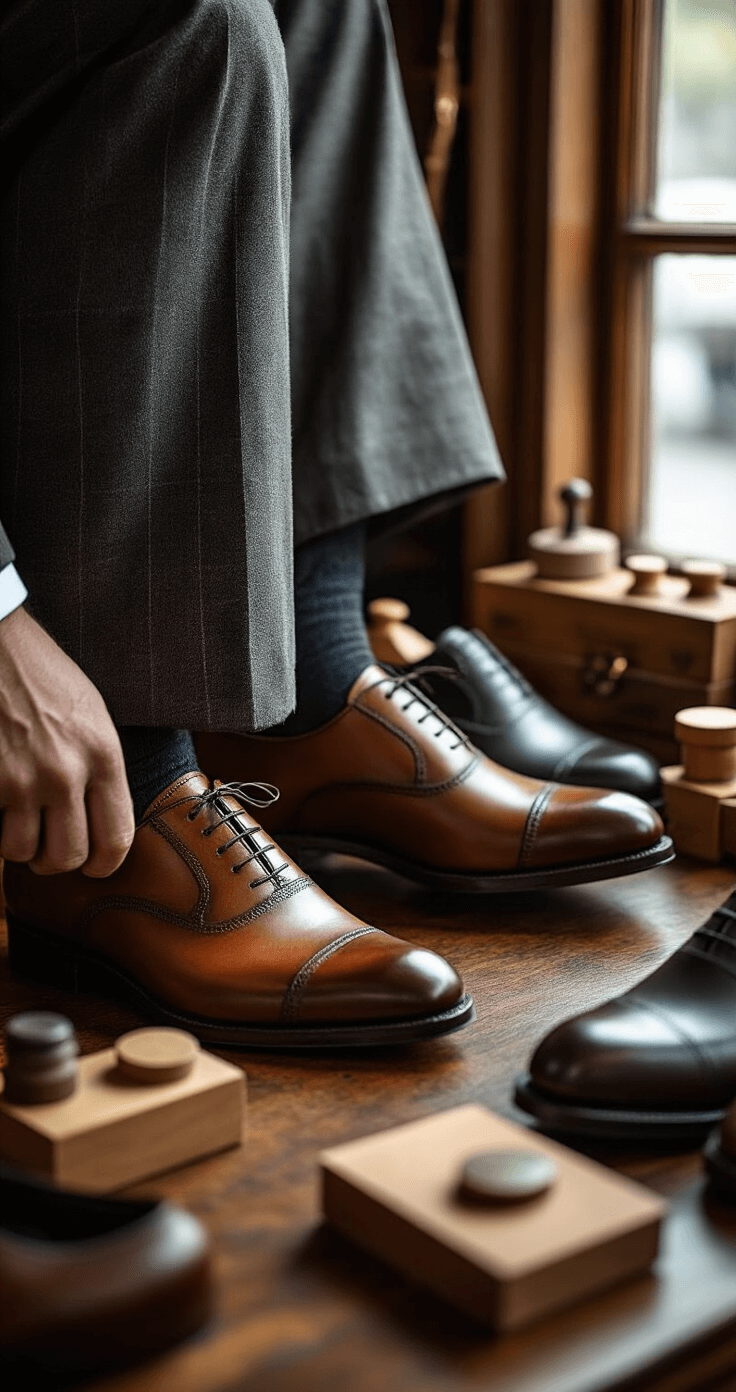
Close-up of burnished leather Oxford shoes being fitted in an upscale men's shoe boutique, highlighting the rich texture and craftsmanship, surrounded by traditional dress shoes in dark colors, vintage shoe forms, leather care products, and cedar shoe trees, all illuminated by soft morning light.

💡 Pro Tip: Layer textures within the same tonal family—pair matte wool trousers with a subtle sheen cashmere knit to create visual depth without breaking the restrained palette.
⛔ Avoid This: Avoid introducing black into this palette; it reads too harsh against the softer neutrals and disrupts the understated, inherited-wealth aesthetic you’re cultivating.

The beauty of this palette lies in its deliberate restraint—each color should look as though it has faded naturally over decades of wear, so prioritize pieces with a lived-in, sun-bleached quality rather than crisp factory brightness.

🛒 Get The Look

Styling Rules I Live By

1. Fit is Everything

Your clothes should fit like they were made for you. Not too tight, not too loose – just right.

2. Quality Over Quantity

Better to have three amazing blazers than ten mediocre ones. Trust me on this.

3. Skip the Logos

Old money style isn’t about showing off brand names. In fact, the more subtle, the better.

4. Invest in Basics

A good white shirt and well-fitted navy blazer will take you further than any trendy piece.
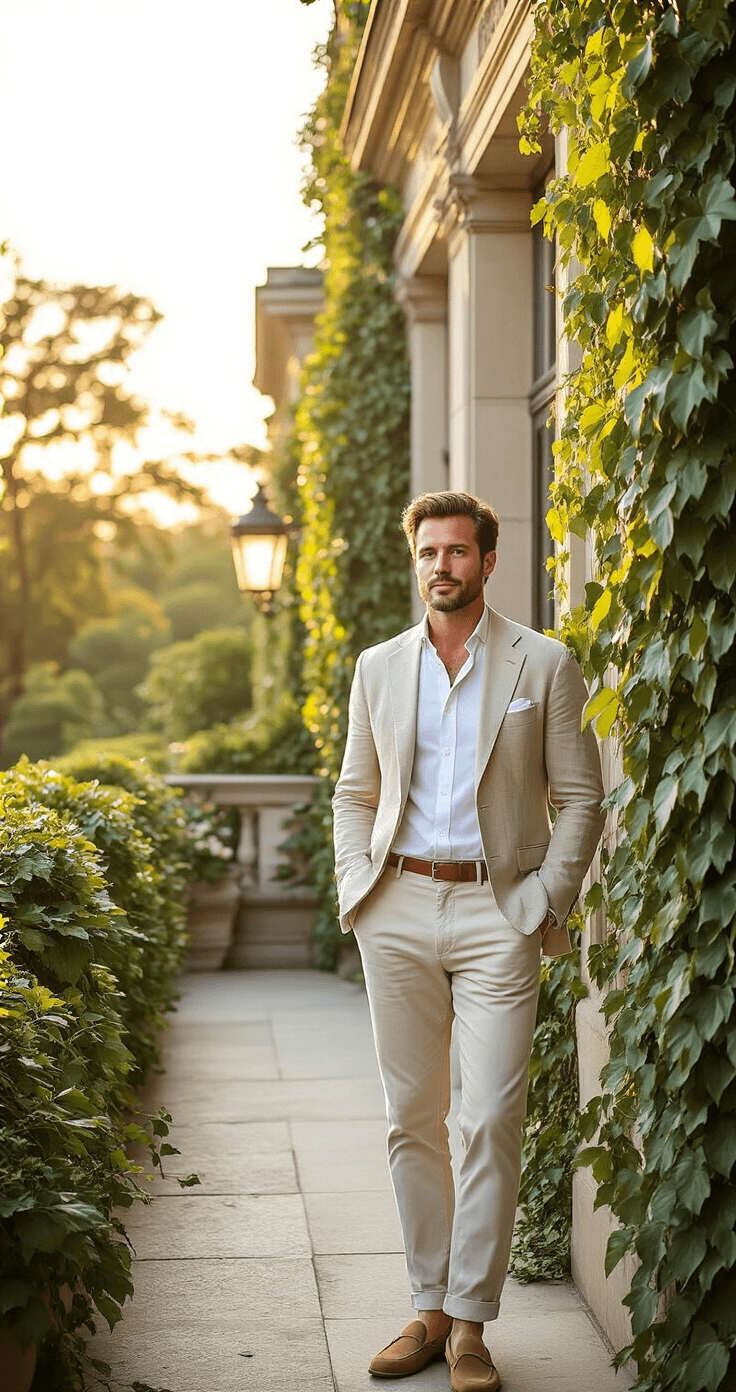
A gentleman in summer attire lounges on a private club terrace, surrounded by climbing ivy and classical architecture during the golden hour. He wears a light linen blazer, white cotton shirt, tailored beige chinos, and suede loafers without socks, with a beautifully blurred background enhancing the refined casual aesthetic.

🔎 Pro Tip: Have your trousers tailored with a slight break at the ankle—this precise length signals intentionality and separates old money polish from off-the-rack mediocrity.
🚫 Avoid This: Avoid visible logos, contrast stitching, or any branding that draws the eye; true luxury whispers rather than shouts.

From years in the fitting room, I’ve learned that men who nail old money style prioritize garment construction over label recognition—feel the weight of the fabric and examine the seams before you ever check the price tag.

👑 Get The Look

Common Mistakes to Avoid

  • Wearing anything too flashy or trendy
  • Visible brand logos
  • Overly tight or baggy clothing
  • Mixing too many patterns

Seasonal Adaptations

Summer
  • Light linen shirts
  • Cotton chinos
  • Loafers without socks
  • Light-colored blazers
Winter
  • Wool overcoats
  • Cashmere sweaters
  • Tweed jackets
  • Dark leather boots

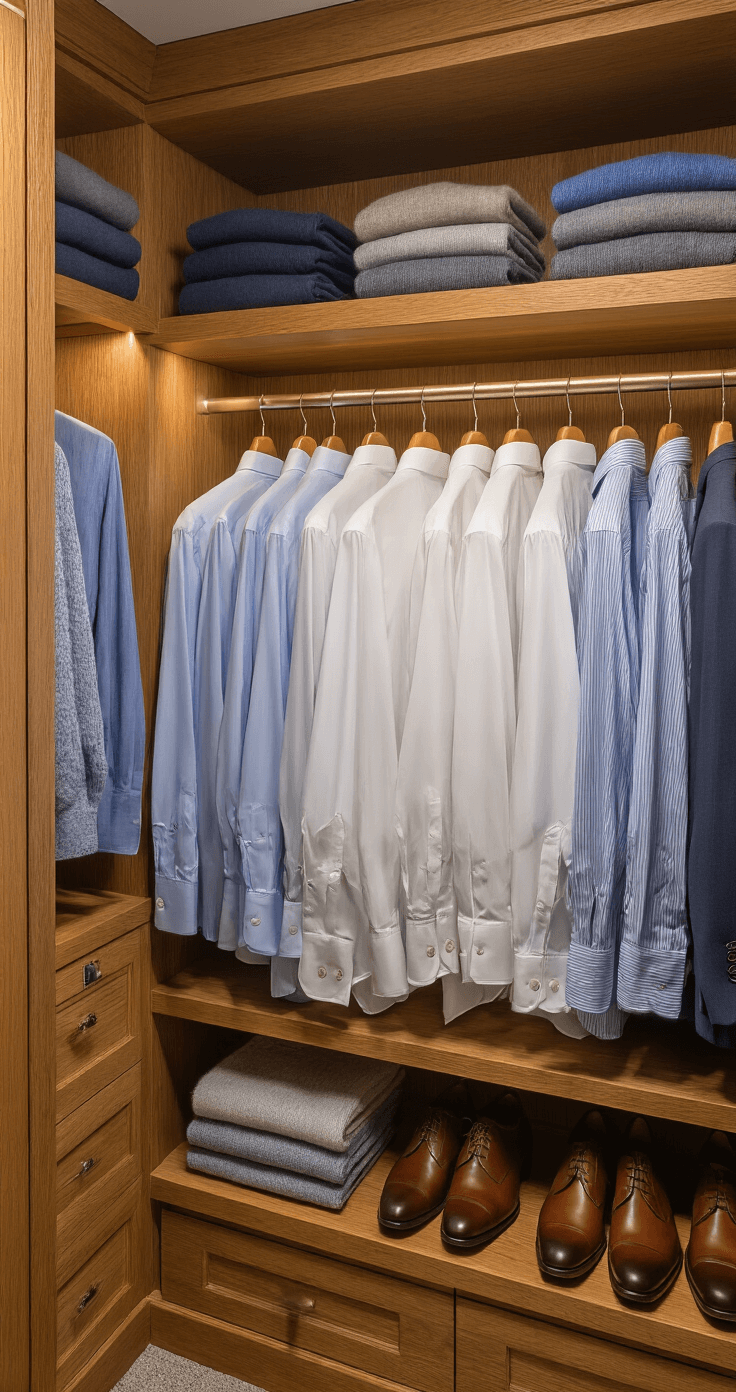
A neatly organized wood-paneled dressing room illuminated by soft ambient lighting, showcasing a wardrobe with pressed white and blue dress shirts arranged by color, along with folded cashmere sweaters on floating shelves and polished dress shoes, all emphasizing quality materials and meticulous organization.

⚡ Pro Tip: Roll the sleeves of your linen shirt to just below the elbow and leave the top two buttons undone for that effortless Mediterranean old-money ease.
⚠ Avoid This: Avoid synthetic fabrics that wrinkle unnaturally or trap heat—true old money summer dressing breathes and moves with you.

I’ve found that men who master the linen-chino-loafer trinity instantly read as generational wealth; it’s the uniform of yacht clubs and family compounds for a reason.

My Personal Tips

I’ve found that the best way to build an old money wardrobe is to start with the basics and slowly add pieces as you go. Don’t try to buy everything at once – focus on quality over speed.

Remember, old money style isn’t about looking rich – it’s about looking refined. It’s those small details that make all the difference: the shine of your shoes, the crispness of your shirt, the perfect break in your trousers.
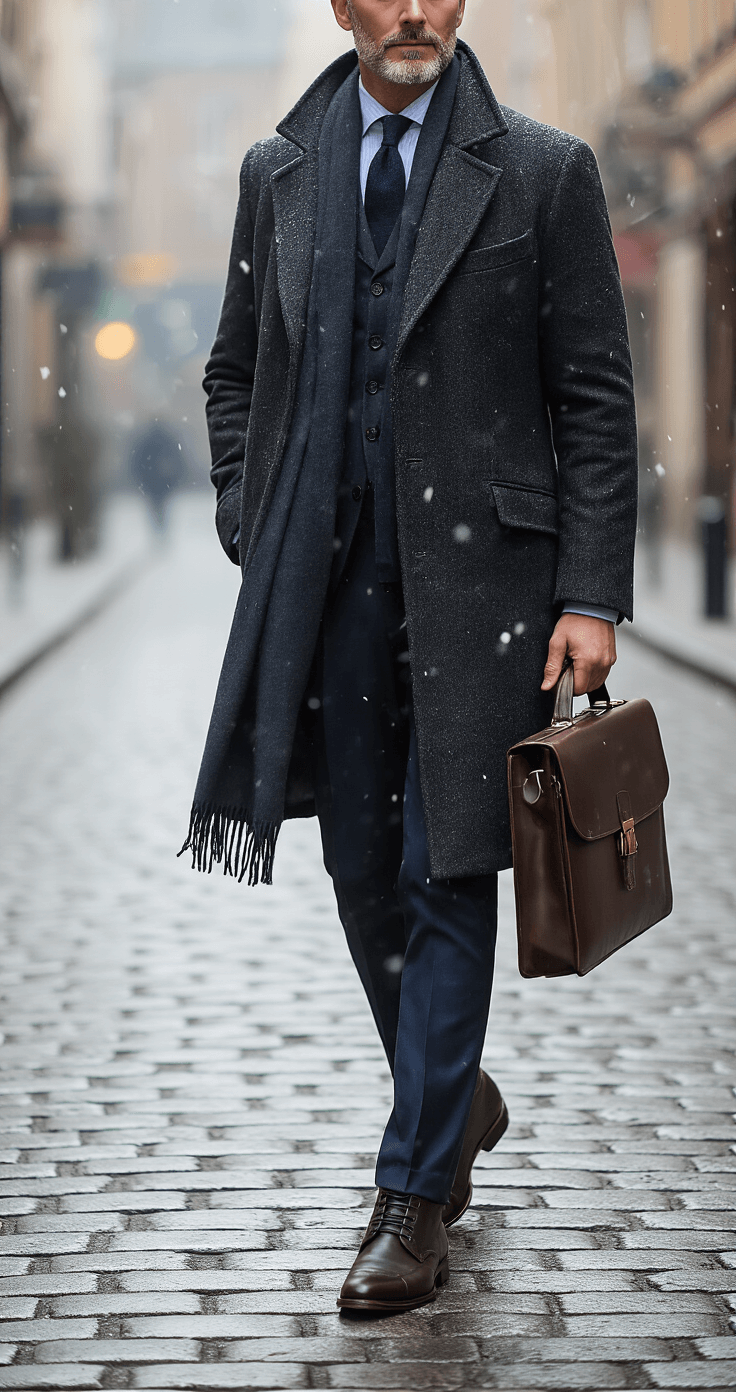
A distinguished gentleman in a charcoal wool overcoat and navy suit crosses a snowy cobblestone street, carrying a classic briefcase and wearing a cashmere scarf, with cool morning light illuminating the atmospheric winter scene.

⚡ Pro Tip: Press your shirt collar points down with a collar stay and ensure your tie knot sits flush against the collar band—this crisp collar-tie relationship signals intentional refinement more than any logo ever could.
❌ Avoid This: Avoid visible logos, synthetic fabrics, or overly slim silhouettes that read trendy rather than timeless. Skip the urge to match leathers exactly; slightly varied browns between shoes and belt create lived-in authenticity.

From years in tailoring rooms, I’ve learned that old money dressing lives in the negative space—the half-inch of shirt cuff beyond your jacket sleeve, the whisper of sock above your shoe. These margins are where confidence quietly announces itself.

👑 Get The Look

Final Thoughts

Building an old money wardrobe takes time and patience, but it’s worth it. Start with the essentials, invest in quality pieces, and remember – simplicity is the ultimate sophistication.

Feel free to experiment within these guidelines to find what works best for you. After all, the most important thing is feeling confident in what you wear.

Leave a Reply

Your email address will not be published. Required fields are marked *